
The Hidden Players Behind a Deadly San Antonio Truck Crash
Key Takeaways: Families can sue a freight broker after a fatal San Antonio truck crash when the broker exercised legal control over the carrier, driver, or operation that led to the wreck. Surviving spouses, children, and parents may pursue a wrongful death claim, while the decedent’s estate may bring a survival action. Liability extends through vicarious liability, negligent entrustment, and negligence per se. Exemplary damages may be available where gross negligence is shown. Most fatal crash claims must be filed within two years of death, and contracts cannot lawfully shorten that window. Preserving records and seeking experienced counsel early is critical.
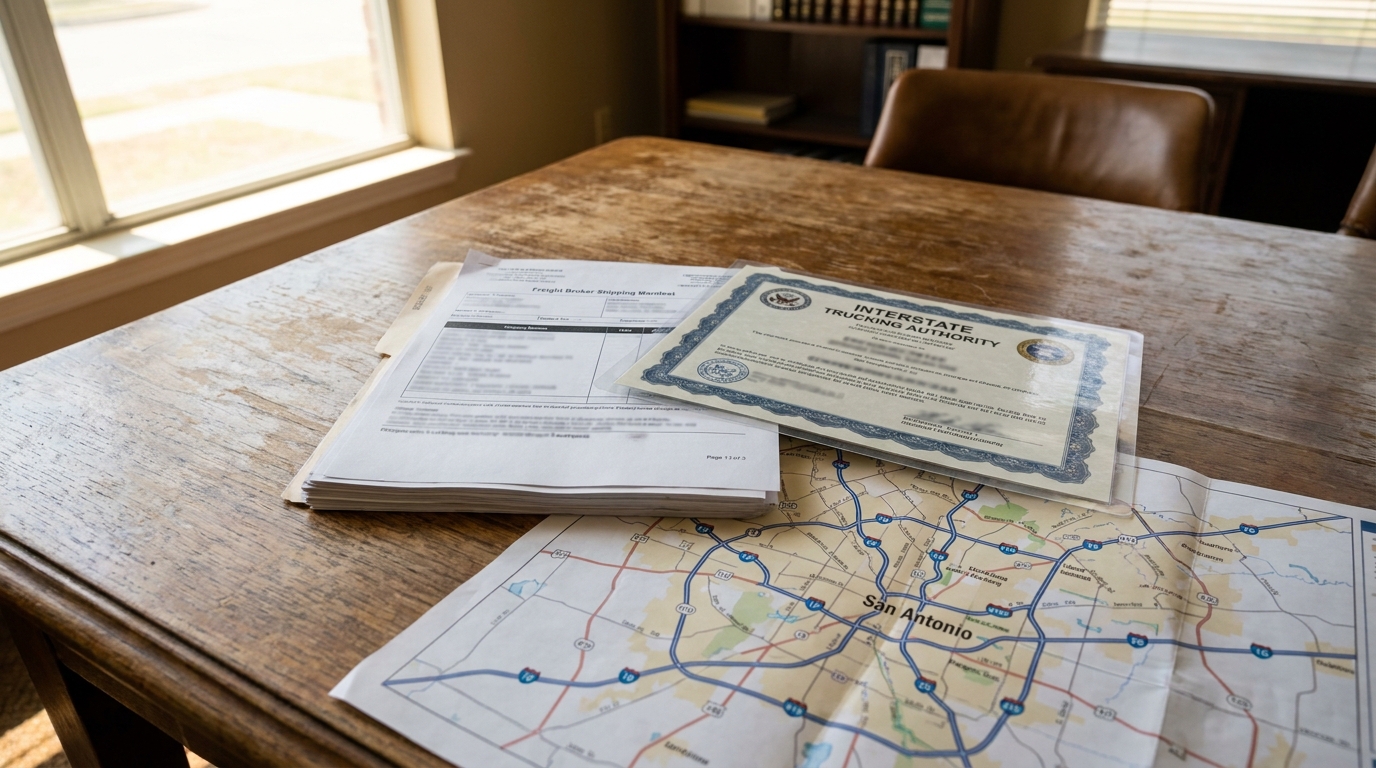
When a loaded 18-wheeler takes the life of someone you love, the trucking company and driver are rarely the only responsible parties. Freight brokers, companies that arrange shipments and select carriers, can be held accountable when their decisions contribute to a fatal collision. In Texas, families may sue a freight broker after a fatal San Antonio truck crash when that broker exercised legal control over the carrier, driver, or operation. The path is fact-intensive but can provide full accountability.
If you are grieving and searching for answers, Paula Wyatt and the team at Wyatt Law Firm stand ready to fight for you. Call us at 210-340-5550 or reach out through our confidential case review form to understand your rights.
Who Can Be Held Liable After a Fatal 18-Wheeler Wreck
Liability in any fatal crash hinges on proving "wrongful conduct." The standard varies by accident type, which matters when assessing fault against a trucking company or freight broker.
Texas law defines a "civil action" in commercial motor vehicle cases broadly. Under Texas Civil Practice and Remedies Code § 72.051, a civil action includes claims where a defendant operated a commercial motor vehicle or "owned, leased, or otherwise held or exercised legal control over a commercial motor vehicle or operator." This expansive definition opens the door to freight broker liability, as it may reach parties who controlled carrier or driver selection. The statute also defines "claimant" to include a decedent’s estate.
💡 Pro Tip: Identifying every potentially responsible party early matters. Freight brokers, motor carriers, and shippers each leave a paper trail, and preserving load confirmations, dispatch records, and carrier-vetting files quickly can be decisive.
How Employer and Operational Control Create Liability
Employer responsibility is central to commercial truck liability in Texas. Texas Civil Practice and Remedies Code § 72.054 addresses an employer defendant’s liability for an employee’s negligence in operating a commercial motor vehicle. When the employer stipulates the driver was its employee acting within the scope of employment, liability for ordinary negligence is based on respondeat superior. A freight broker who exercised operational control over a driver or carrier may fall within this framework.
This is where vicarious liability becomes critical. When a negligent driver causes a fatal wreck, the law may extend responsibility to the entity that controlled that driver’s work. Understanding vicarious liability in trucking accidents helps families see how accountability can extend beyond the driver.
Can Families Sue for Wrongful Death After a Truck Accident in Texas
Yes, and the question of who may sue is governed by the Texas Wrongful Death Act. Texas Civil Practice and Remedies Code § 71.004 provides that a wrongful death action is for the exclusive benefit of the surviving spouse, children, and parents of the deceased, and any one or more may bring the action.
Standing can become complicated when a marriage is informal. Texas recognizes common-law spouses, and proving such a marriage is fact-intensive. Documenting the relationship carefully can make a meaningful difference.
Learn more about foundational principles in our overview of Texas wrongful death claims.
💡 Pro Tip: If your relationship was a common-law marriage, gather evidence such as joint accounts, shared property records, and statements from people who knew you held yourselves out as married.
Two Claims Families Often Pursue Together
After a fatal San Antonio 18-wheeler accident, families commonly bring two distinct but related claims: a wrongful death action and a survival action. While often filed together, they are different claims with different statutory requirements. Both arise when death is caused by wrongful conduct.
Monetary damages are handled differently between the two claim types. The chart below offers a comparison.
| Feature | Wrongful Death Claim | Survival Action |
|---|---|---|
| Who recovers | Surviving spouse, children, parents | The decedent’s estate |
| Focus of damages | Family’s losses (companionship, support) | The decedent’s own pre-death losses |
| Common pairing | Often filed together in one lawsuit | Often filed together in one lawsuit |
The governing framework for both claims appears in the Texas wrongful death and survival statutes. Review the controlling text in the Texas wrongful death statute.
Holding a Driver’s Misconduct Against the Broker and Carrier
A truck driver’s conduct at the scene can directly shape a civil case. Under Texas Transportation Code § 550.021, any operator involved in a collision resulting in injury or death must immediately stop, return to the scene, render aid, and remain until legal duties are fulfilled. When death results, a failure to comply is a second-degree felony, and that violation can support a negligence per se theory against the driver, which may bolster claims against the employing carrier or freight broker.
Bifurcated Trials and Negligent Entrustment
Texas mandates a specific trial structure in commercial motor vehicle cases. Under Texas Civil Practice and Remedies Code § 72.052, a defendant can move to bifurcate the trial so that the jury decides liability and compensatory damages in the first phase and exemplary damages in the second. A finding that a driver was negligent is generally a predicate for derivative claims against the employer or another controlling party. This mechanism is relevant to escalating claims against freight brokers and trucking companies.
💡 Pro Tip: Negligent entrustment often turns on what the broker or carrier knew about a driver’s record. Demanding driver qualification files early can reveal ignored warning signs.
When Punitive Damages Enter the Picture
Texas law allows families to seek exemplary, or punitive, damages when they can show gross negligence or malicious conduct. Before a court authorizes discovery into a defendant’s net worth, Texas Civil Practice and Remedies Code § 41.0115 requires a claimant to first demonstrate a "substantial likelihood of success on the merits" of the exemplary damages claim. Once that threshold is met, a freight broker’s or trucking company’s financial exposure can be investigated. Read the relevant provisions in Texas law governing the framework for exemplary damages.
These remedies are not automatic. Gross negligence is a demanding standard, and whether the facts support it depends heavily on the crash circumstances.
The Deadlines That Can Make or Break Your Case
Texas generally imposes a two-year statute of limitations on personal injury and wrongful death claims. Under Texas Civil Practice and Remedies Code § 16.003(a), a person must bring suit for personal injury "not later than two years after the day the cause of action accrues." For a fatal crash, § 16.003(b) provides that a suit for injury resulting in death must be brought within two years, and the cause of action accrues on the date of death.
Two additional rules deserve attention. Limited tolling provisions may alter the standard period, though courts interpret these exceptions narrowly and they do not apply automatically. Separately, Texas Civil Practice and Remedies Code § 16.070 voids any contract that purports to shorten the time to sue to less than two years.
- File suit within two years of the date of death in most fatal crash cases.
- Do not assume a contract clause can cut your deadline below two years.
- Confirm whether any narrow tolling exception applies to your specific facts.
💡 Pro Tip: Treat the two-year clock as the outer limit, not the goal. Evidence in trucking cases can disappear quickly, so acting early protects both your deadline and your proof.
Frequently Asked Questions
1. Can a freight broker really be held responsible for a fatal crash?
Potentially, yes. If the broker held or exercised legal control over the carrier or driver as contemplated by Texas Civil Practice and Remedies Code § 72.051, liability may attach.
2. Who is allowed to file a wrongful death claim in Texas?
A surviving spouse, children, and parents may file. Texas Civil Practice and Remedies Code § 71.004 provides that a wrongful death action is for the exclusive benefit of these parties. Common-law spouses may qualify but must prove the marriage.
3. How long do San Antonio families have to sue?
In most cases, two years from the date of death. Texas Civil Practice and Remedies Code § 16.003(b) sets this window. Limited exceptions exist but are construed narrowly.
4. What is the difference between a wrongful death and a survival claim?
They compensate different losses. A wrongful death claim addresses the family’s losses, while a survival action pursues the decedent’s own pre-death damages. They are distinct claims often filed together.
5. Can we recover punitive damages from a trucking company?
Possibly, where gross negligence is shown. Under Texas Civil Practice and Remedies Code § 41.0115, families must first make a threshold showing before investigating a defendant’s net worth.
Standing With San Antonio Families When It Matters Most
Determining whether families can sue for wrongful death after a truck accident in Texas requires careful analysis of control, conduct, and timing. From the broad definition of legal control over a commercial vehicle to the strict two-year deadline and tools available for pursuing exemplary damages, Texas law offers grieving families real avenues toward accountability. Every case turns on its own facts, and seasoned guidance can help you understand which doctrines apply.
Paula Wyatt has built a reputation as a fierce advocate for the injured and grieving, recognized among the nation’s top trucking trial lawyers. If your family is facing the aftermath of a fatal San Antonio truck crash, the team at Wyatt Law Firm is prepared to stand in your corner. Call 210-340-5550 today or contact us through our secure online intake page to discuss how we can fight for the justice your loved one deserves.