
When an Oil Tanker Crushes a Family Car, the $1 Million Question Follows
A loaded petroleum tanker can weigh 80,000 pounds and carry thousands of gallons of flammable crude, so when one slams into a passenger vehicle on a San Antonio interstate or a two-lane road out in the Eagle Ford, the result is rarely a fender-bender. It is traumatic brain injury, spinal cord damage, catastrophic burns, and far too often a wrongful death. If you or someone you love is living through that nightmare, one number keeps surfacing: the MCS-90 $1 million minimum. Here is the truth most websites bury: that $1 million tied to an mcs-90 endorsement is a starting floor, not the value of your Texas oil truck crash case. Our San Antonio commercial truck accident lawyers treat it as the first dollar to fight for, never the last.
You should not have to decode federal insurance forms while you are grieving or sitting in a hospital. That is our job. Call Wyatt Law Firm at 210-340-5550 for a free consultation, or reach out through our contact page so we can start protecting your family today.
What Is the MCS-90 Endorsement?
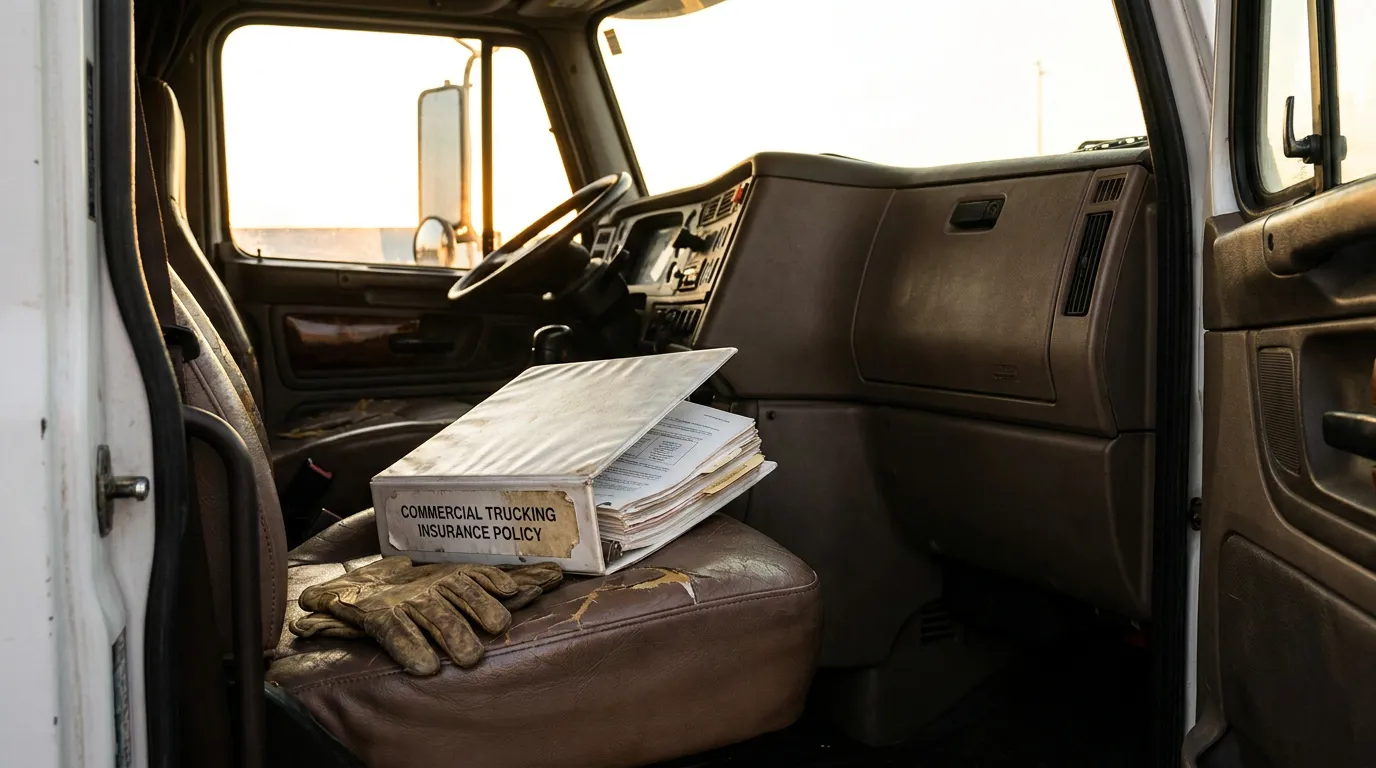
An MCS-90 endorsement is a federally required add-on to an interstate trucking company’s liability policy that guarantees payment to injured members of the public, even when a policy exclusion would otherwise let the insurer deny the claim. For oil and petroleum haulers, the minimum is $1 million per incident. It functions as a public-protection safety net, ensuring an injured person is not left with nothing because a carrier and insurer are fighting over coverage.
The endorsement exists because Congress did not trust motor carriers to voluntarily protect the public. For-hire motor carriers operating in interstate commerce must carry an MCS-90 endorsement or file an MCS-82 surety bond. The insurer generally must satisfy a final judgment up to the required limit and then seek reimbursement from the trucking company, rather than leaving you empty-handed while they litigate policy exclusions.
Not every carrier meets this obligation the same way. Most use insurance with the MCS-90 endorsement, some file an MCS-82 surety bond, and a small number qualify as self-insured. Whichever route an oil hauler chooses, the MCS-90 coverage oil transporters must maintain does not shrink the amount owed to the public.
The MCS-90 $1 Million Minimum for Oil Haulers: a Floor, Not a Ceiling
The federal system sets tiered minimums based on what the truck is hauling, and oil sits squarely in the $1 million tier. General non-hazardous freight in vehicles over 10,001 pounds requires $750,000, oil and certain hazardous cargo require $1,000,000, and the most dangerous loads such as explosives or radioactive materials require $5,000,000. You can review these federal financial-responsibility minimums directly through the FMCSA insurance filing rules. If you want to understand how the lower tier compares, our breakdown of the $750,000 minimum for general freight explains why cargo type changes everything.
These are per-incident floors, not per-victim caps, and that distinction can decide whether a family is made whole. A single tanker rollover can injure or kill multiple people, and one $1 million minimum policy may have to stretch across all of them. A single catastrophic injury requiring lifelong medical care can exhaust that amount on its own, long before any other victims of the same crash are compensated.
In many catastrophic oil truck crashes, $1 million does not come close to covering the real losses. Lifelong care for a spinal cord injury, repeated surgeries for third-degree burns, lost earning capacity, and the loss of a parent or child can push true damages far beyond the MCS-90 minimum limits. That is why we do not stop at the primary policy. We dig for excess and umbrella coverage, additional at-fault parties, and separate corporate defendants so your recovery reflects your losses, not an arbitrary federal floor.
💡 Pro Tip: Ask early whether the carrier maintains excess or umbrella layers above the MCS-90 minimum. Large oil hauling operations frequently do, and those layers are often where meaningful compensation for a catastrophic injury actually lives.
How Texas Law Forces Oil Truck Companies to Carry These Limits
Texas does not let oil haulers dodge these numbers, because state law bolts its own requirements onto the federal framework. Under the Texas Transportation Code Chapter 643, specifically Section 643.101, a motor carrier must maintain liability insurance in an amount set by the department up to the federal amount required under 49 U.S.C. Section 13906(a)(1). Because the truck is carrying hazardous oil, the required commercial truck insurance minimum climbs to the federal $1 million tier.
The statute is stricter for hazardous loads at the point of operation. Under Texas Transportation Code Section 643.057(c), a registered motor carrier may not transport a hazardous material without first showing evidence of insurance at least equal to the amount set under Section 643.101. Section 643.057(a) adds that every additional truck a carrier puts on the road must independently satisfy that requirement. This layered hazardous cargo financial responsibility rule creates documented proof of coverage we can demand vehicle by vehicle.
Out-of-State Oil Haulers Still Owe the Full Standard on Texas Roads
Many trucks running crude through the Permian Basin and Eagle Ford are registered elsewhere, but they do not get a discount for crossing a state line. Texas Transportation Code Section 648.102(a) directs the state to adopt rules that conform with 49 C.F.R. Part 387 for foreign commercial motor vehicles operating here. This means an out-of-state oil hauler that injures your family on a Texas highway is generally held to the same federal-based standard and the same Texas oil hauler liability rules as a local carrier.
How We Verify and Attack the Coverage After an Oil Truck Crash
Proving the money exists is only step one, and it is where a petroleum truck accident Texas claim is often won or lost. Federal proof of the required insurance is filed with the FMCSA using forms such as the BMC-91 or BMC-91X, and we pull those filings early to confirm exactly who insured the truck and for how much.
Oil truck cases turn on evidence that disappears fast, so we move quickly to lock it down. In an oilfield truck crash claim, the difference between a denied case and a full recovery frequently comes from the records the carrier would rather you never see. Paula Wyatt has spent more than 40 years fighting carriers and insurers and is recognized as a Top 10 Trucking Trial Lawyer, and that trial-ready posture drives how we investigate:
- Electronic logging device and black-box data showing speed, braking, and hours behind the wheel
- Maintenance and inspection records that may reveal ignored brake or tire defects
- Driver qualification and employment files that can expose negligent hiring
- Weight tickets and loading documents tied to overweight or improperly secured cargo
- Federal and state regulatory violations that support negligence and causation
Outcomes always depend on the specific facts, and no honest lawyer can promise a result. What we can promise is relentless work to identify every source of oil transport MCS-90 coverage and every responsible party, then present that proof to a jury if the insurer refuses to be fair.
Texas Comparative Fault: What Really Determines Your Recovery
Even a strong case runs through Texas’s proportionate responsibility system, and understanding it protects you from insurer manipulation. Under Texas Civil Practice and Remedies Code Section 33.001, part of the Chapter 33 proportionate responsibility framework, a claimant may not recover damages if found more than 50 percent at fault. This is the 51 percent bar, and it means a victim who is found more than 50 percent at fault can recover nothing, even against a $1 million MCS-90 policy.
If you are partly at fault but below that line, your award is generally reduced by your percentage of responsibility rather than eliminated. Insurers routinely try to inflate a victim’s share to slash what they pay. That is precisely why we investigate fault so aggressively, because shifting even a portion of blame back where it belongs can protect hundreds of thousands of dollars in your recovery.
Frequently Asked Questions
Is the $1 million MCS-90 minimum the most I can recover after an oil truck crash? No. It is a per-incident floor, not a per-victim cap. Catastrophic damages often exceed it, and we pursue excess coverage and additional defendants to reach full value.
Why do oil trucks carry $1 million instead of $750,000? The cargo drives the tier. Hazardous and petroleum loads trigger the higher federal minimum, and Texas Transportation Code Section 643.101 ties the required state limit to that federal standard.
Does an out-of-state oil hauler on a Texas highway still owe MCS-90 coverage? Generally yes. Texas Transportation Code Section 648.102 conforms to 49 C.F.R. Part 387 for foreign commercial vehicles, so out-of-state carriers are typically held to the same federal-based financial responsibility standard.
Can I still recover if I was partly at fault? In most cases yes, unless you are found more than 50 percent at fault under the Texas 51 percent bar. If you fall below that threshold, your award is reduced by your percentage of fault rather than barred entirely.
How do you prove the trucking company actually has the required coverage? We obtain the carrier’s FMCSA filings, such as BMC-91 or BMC-91X forms, and pair them with the policy, the MCS-90 endorsement, and evidence from the crash to confirm every available layer of coverage.
The Floor Is Where We Start, Not Where We Stop
The $1 million tied to an mcs-90 endorsement is a legally required minimum, and treating it as your ceiling is exactly the mistake insurers hope you will make. Texas law forces oil haulers to carry that coverage, but it does not cap what a catastrophically injured victim or a grieving family truly deserves. Between excess policies, multiple at-fault parties, and the proportionate responsibility rules that decide net recovery, the real value of your case depends on relentless investigation and a firm willing to try it. With more than $1 BILLION recovered for clients and a NO RECOVERY FEE, FREE CONSULTATION promise, Wyatt Law Firm brings that fight.
You have carried enough weight already, and you do not have to carry this alone. Let a team that knows the statutes, the science, and the courtroom stand between your family and the insurance machine. Never settle for less and demand what the law and your future truly require.