
MCS-90 Endorsement: Your Recovery Route When a Trucking Insurer Denies Your Claim
If you or someone you love was catastrophically hurt in a San Antonio truck crash and the insurer just sent a denial letter, the mcs-90 endorsement may still force that company to pay. A denial is not the end. When an interstate trucking company’s insurer tries to dodge responsibility by pointing to a policy exclusion, this federally required endorsement can override that exclusion and put money back within reach for the injured public. On I-35, I-10, and Loop 1604, when tens of thousands of pounds of steel collide with a passenger car, the results are often traumatic brain injuries, spinal cord damage, severe burns, or death.
You do not have to accept an insurer’s word as final. At Wyatt Law Firm, our San Antonio mcs-90 endorsement lawyer team has recovered more than $1 billion for injured Texans and grieving families. If a trucking insurer is stonewalling you, call 210-340-5550 or reach out through our free consultation request today. We are your voice, and we never settle for less than what your future demands.
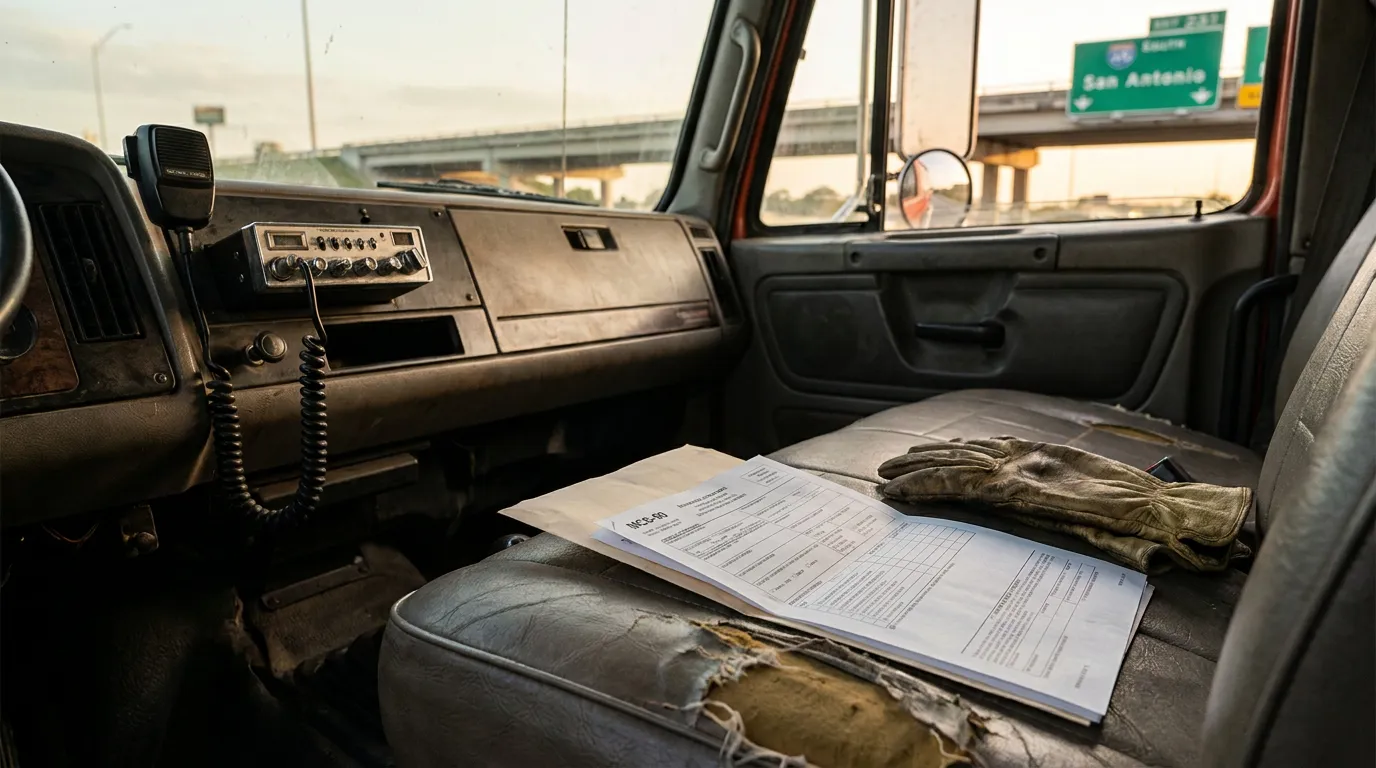
What Is the MCS-90 Endorsement? (Direct Answer)
The MCS-90 endorsement is a federally mandated attachment to an interstate motor carrier’s liability insurance policy. It obligates the insurer to pay an injured member of the public, up to the federal minimum amount, even when the underlying policy would otherwise deny the claim under an exclusion. The Federal Motor Carrier Safety Administration (FMCSA) requires this endorsement, whose form is prescribed at 49 C.F.R. § 387.15, primarily for for-hire interstate motor carriers of property as part of their proof of financial responsibility; private motor carriers are generally only subject to this requirement when transporting hazardous materials in interstate, foreign, or intrastate commerce, provided applicable vehicle weight thresholds are met.
For a family facing lifelong care after a paralyzing crash, MCS-90 coverage can be the difference between full recovery and financial ruin. The endorsement exists precisely because policies contain gaps, and federal law refuses to let those gaps fall on innocent victims.
How the MCS-90 Endorsement Overrides Policy Exclusions
The MCS-90 works like a surety promise to the public: the insurer must pay the injured party even if the policy’s fine print says the claim should be excluded. The insurer can later seek reimbursement from the trucking company, but that fight happens between the insurer and the carrier, not on the back of the crash victim.
Texas law reinforces this federal safety net. Under Texas Transportation Code § 601.072, the state establishes baseline minimum liability limits far lower than the federal amounts backing the MCS-90. Under Texas Transportation Code § 643.101(b), the Texas Department of Motor Vehicles has discretionary authority to set the amount of liability insurance required for motor carriers at an amount that does not exceed the amount required under federal regulations adopted pursuant to 49 U.S.C. § 13906(a)(1). Because state law defers to the federal framework, the endorsement’s override power carries real weight in San Antonio truck accident claims.
Common Exclusions the MCS-90 Defeats
Trucking insurers rely on a familiar playbook of exclusions to justify denials. The MCS-90 is designed to cut through these tactics when a member of the public is hurt. Common exclusions that generally cannot be used to deny payment to victims include:
- Use of a vehicle not listed or scheduled on the policy
- Operation by a driver the carrier failed to add or who was excluded
- Use of the truck outside the policy’s described scope
- Hauling cargo the policy did not contemplate
Each is an insurer’s escape hatch, and each is exactly what the endorsement was built to close. When the carrier operates in interstate commerce, these exclusions generally give way to the federal duty to pay injured third parties first.
The Limits: What the MCS-90 Does Not Do
The endorsement is powerful but not unlimited. First, the MCS-90 generally applies to interstate motor carriers, not purely intrastate operations. Second, it protects injured members of the public, not the trucking company or its own driver. Third, the insurer that pays under the endorsement can seek reimbursement from the carrier afterward. Fourth, courts generally treat the endorsement as a suretyship safety net triggered only when the underlying policy provides no coverage and either no other insurer is available to satisfy the judgment or existing coverage falls below federal minimums.
The endorsement does not raise total limits beyond the federal minimum. In many cases, injuries are worth far more than that minimum, which is why a full investigation into every available policy and coverage layer is essential. Outcomes depend on specific facts, including whether the trip qualified as interstate commerce.
Federal vs. Texas Coverage Minimums in a San Antonio Truck Crash
The gap between state and federal minimums is enormous, and it is why the endorsement can transform a case. Texas sets baseline financial-responsibility limits that any at-fault motorist must satisfy, but federal amounts backing the MCS-90 are far higher.
| Coverage Type | Amount |
|---|---|
| Texas minimum, one person (bodily injury/death) | $30,000 |
| Texas minimum, two or more persons | $60,000 |
| Texas minimum, property damage | $25,000 |
| Federal MCS-90, non-hazardous freight | $750,000 |
| Federal MCS-90, certain hazardous materials | $1,000,000 |
| Federal MCS-90, explosives/poison gas/radioactive | $5,000,000 |
The Texas figures come from Texas Transportation Code § 601.072(a), effective January 1, 2011, and you can review the underlying Texas financial responsibility limits directly. The federal minimums for motor carriers of property are set under 49 C.F.R. § 387.9. The FMCSA insurance filing requirements confirm that for-hire and interstate carriers must maintain an MCS-90 endorsement or an MCS-82 surety bond and file proof of coverage. A $30,000 state limit cannot begin to cover a lifetime of care after a spinal cord injury; the federal MCS-90 protection can.
💡 Pro Tip: Passenger carriers and household-goods movers face different rules. A passenger carrier may file an MCS-90B rather than an MCS-90, and household-goods carriers must carry additional cargo insurance. Confirming which endorsement applies is part of building the claim.
How a Texas Truck Accident Lawyer Activates MCS-90 Protection
Activating this protection takes aggressive, trial-ready investigation, not a polite phone call. The insurer will not volunteer the endorsement or admit the trip was interstate. A lawyer builds the record that forces the issue. Paula Wyatt, recognized as a Top 10 Trucking Trial Lawyer, leads a team that treats every catastrophic case as if it is going to a jury.
The investigation includes pulling FMCSA filings and the carrier’s full policy with every endorsement, dispatch records and bills of lading to prove interstate operation, and electronic logging device (ELD) and black-box data to establish fault. We also examine maintenance records, driver employment and training files, and regulatory violations. Our guidance on whether you should talk to the trucking company’s insurer walks through the risks. Every outcome depends on the facts, but evidence is what turns a denial into a recovery.
Don’t Let the Clock Run Out on Your Texas Deadlines
In Texas, you generally have two years to file suit, and missing that deadline can bar your recovery entirely. Under Texas Civil Practice and Remedies Code § 16.003(a), a person must bring a personal injury suit not later than two years after the cause of action accrues. Section 16.003(b) applies the same two-year window to wrongful death claims, with the cause of action generally accruing on the date of death.
Even where an endorsement provides a route around policy exclusions, the underlying lawsuit must still be timely filed. Courts generally interpret exceptions, such as tolling or the discovery rule, narrowly, and they do not apply automatically. You can read more about the Texas two-year filing period in the statute itself, but the safest course is to act quickly.
Frequently Asked Questions
Does the MCS-90 endorsement override policy exclusions in Texas? Generally, yes. When the trucking company operates in interstate commerce, the endorsement forces the insurer to pay an injured member of the public up to the federal minimum, even when a policy exclusion would otherwise defeat the claim. Courts generally apply it only when the policy provides no coverage and no other insurance is available, and the insurer may then seek reimbursement from the carrier.
What are the minimum MCS-90 coverage amounts? Under 49 C.F.R. § 387.9, federal minimums are $750,000 for non-hazardous freight, $1,000,000 for certain hazardous materials, and $5,000,000 for explosives, poison gas, or radioactive materials. The exact figure depends on what the truck was hauling.
Does MCS-90 apply to a local San Antonio delivery truck? Not always. The endorsement generally applies to interstate motor carriers, so applicability can turn on whether the specific trip was part of interstate commerce. A lawyer checks the carrier’s FMCSA filings and shipping records to determine this.
How long do I have to file a San Antonio truck accident claim? In most cases, two years from the date of the crash for injury claims and two years from the date of death for wrongful death claims, under Texas Civil Practice and Remedies Code § 16.003. Limited exceptions exist, and courts read them narrowly.
Can the insurer still fight my claim after paying under the MCS-90? The insurer’s dispute over exclusions generally shifts to a reimbursement fight with the trucking company. That means the coverage battle does not have to delay payment to you, though the full value of your damages must still be proven.
Turning a Denial Into a Fight You Can Win
A denial letter is a tactic, not a verdict. The mcs-90 endorsement exists to keep insurers from hiding behind fine print while catastrophically injured Texans and grieving families are left with nothing. When you pair the federal override with Texas statutory grounding and a relentless investigation, a claim that looked dead can come roaring back. Wyatt Law Firm has built its reputation in San Antonio by refusing to let corporate insurers write the ending.
You deserve an advocate who fights as hard as your recovery demands. With more than $1 billion recovered, no recovery fee unless we win, and free consultations, Wyatt Law Firm stands ready to hold the trucking company and its insurer accountable. If a San Antonio truck crash has upended your life, take the first step toward your fight and let us stand with you.