
Since 1990: How Wyatt Law Firm Builds Catastrophic Car Crash Cases
When a catastrophic car crash in San Antonio leaves someone with a traumatic brain injury, a severed spinal cord, or a family planning a funeral, the question isn’t whether a lawyer is needed, it’s which lawyer can withstand corporate insurance defense pressure and still build a case worth trying. Wyatt Law Firm has answered that question since 1990, when attorney Paula Wyatt founded the firm in San Antonio. Here’s how these cases are built: the statutes that control them, the evidence that decides them, and why families across South Texas turn this work over to a firm with a proven track record in catastrophic injury and wrongful death litigation.
If your family is facing permanent disability, months of surgeries, or the death of someone you love, do not carry this alone. The team at Wyatt Law Firm offers a free consultation to review what happened and explain your options. Call 210-340-5550 or reach out to our team now.
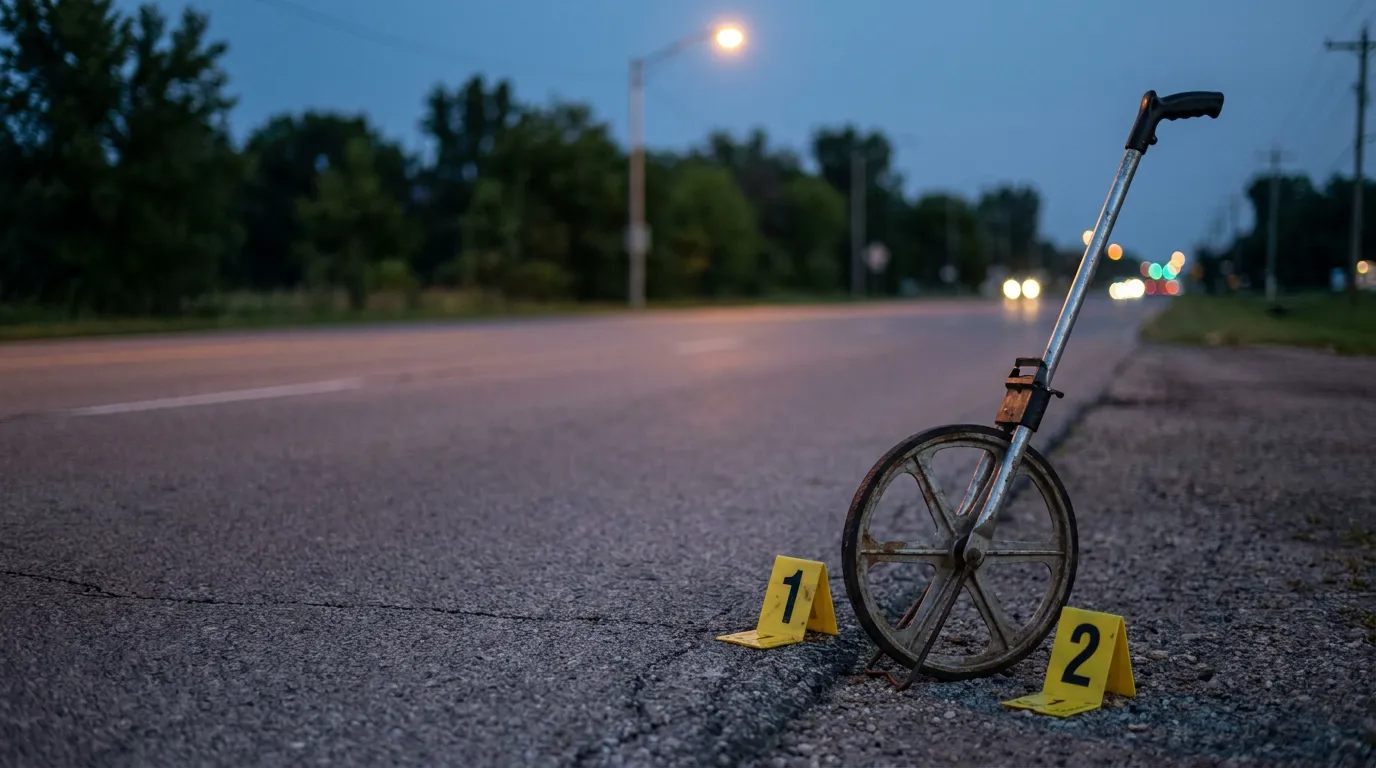
The Clock That Starts the Moment Metal Meets Metal
Texas gives most injury victims two years, and courts treat that deadline seriously. Texas Civil Practice and Remedies Code § 16.003(a) requires suit for personal injury "not later than two years after the day the cause of action accrues." Wrongful death claims under Chapter 71 follow § 16.003(b), generally requiring suit within two years of death, while a survival claim belonging to the estate generally runs from the date the underlying injury claim accrued. Deadlines should be calculated separately for each, since triggering dates and proper claimants differ.
Exceptions exist, but they are narrow. Courts interpret tolling doctrines and the discovery rule restrictively; they don’t apply automatically just because an injury took time to reveal itself. Statutes of limitation and statutes of repose are different mechanisms, one measures time from accrual, the other imposes an outer cutoff regardless of discovery. That distinction matters in crashes involving delayed-onset brain injuries or a defective vehicle component, where Texas imposes a separate products liability repose period measured from the date the product was first sold.
Claims against governmental entities follow a separate track. The Texas Tort Claims Act generally requires formal notice within six months, and many city charters impose even shorter periods, though a governmental unit’s actual notice of the injury can sometimes satisfy the requirement. This obligation doesn’t replace the civil limitations deadline; missing either can foreclose the claim.
💡 Pro Tip: Preserve the vehicle. Insurers and salvage yards move quickly, and once a catastrophically damaged vehicle is crushed or repaired, the crash reconstruction evidence inside it is gone permanently.
Proportionate Responsibility: The Fight Over Percentages
In Texas, the single most valuable thing an insurer can do is shift fault onto the injured person. Texas Civil Practice and Remedies Code Chapter 33 establishes proportionate responsibility, and § 33.001 bars a claimant from recovering damages if the trier of fact finds their percentage of responsibility greater than 50 percent. This is modified comparative negligence: a plaintiff may recover only if fault falls below that threshold, and under § 33.012 any recovery is reduced in proportion to the claimant’s assigned share of fault.
That rule explains why the earliest days of a catastrophic case matter so much. Every percentage point the defense pins on the victim reduces what a family recovers, and any finding above 50 percent eliminates recovery entirely. Adjusters know this, which is why they call quickly, request recorded statements, and probe for admissions about speed, distraction, or seat belt use, an area where Texas courts now allow evidence of nonuse to be considered on apportionment when supported by expert proof of causation.
Wyatt Law Firm builds against that strategy from the first week, listening to the client’s account, documenting the full extent of suffering, and preparing every file as though headed to mediation or trial. Understanding what evidence helps prove negligence in a San Antonio car crash is the difference between a defensible liability picture and a contested one.
Evidence that frequently carries weight includes:
- Event data recorder downloads showing speed, braking, and throttle before impact
- Independent crash reconstruction and scene mapping before roadway evidence degrades
- Surveillance, dashcam, and traffic camera footage requested before routine deletion
- Treating physician and life care planning testimony establishing permanent impairment
- Wage and vocational evidence documenting lost earning capacity
Seat Belt Syndrome Injuries and What Texas Law Actually Requires
Seat belt syndrome describes severe internal trauma a restraint can cause in a high-force collision: bowel perforation, mesenteric tears, lumbar spine fractures, and aortic injury. These are frequently missed in the ER because the visible sign is only a bruise. Internal damage often declares itself hours or days later, sometimes catastrophically.
Texas statutes define the terms these cases turn on. Under the Texas occupant restraint statutes, § 545.412 defines a "safety belt" as a lap belt and any shoulder straps included as original equipment or added to a vehicle, and defines "secured" by reference to manufacturer instructions. Section 545.413 cross-references that definition and makes it an offense for a person to allow a child younger than 17 to ride in a belt-equipped vehicle without being secured by a safety belt, and it cross-references § 547.601 for what counts as equipped. A violation is a traffic offense; whether it also supports civil negligence depends on the facts and proof of causation.
Why the Restraint Investigation Cannot Wait
Whether a belt was present, functional, properly worn, or defectively designed is answered by physical inspection, not an adjuster’s assumption. Buckle latch condition, webbing load marks, retractor function, and pretensioner deployment all leave forensic evidence that disappears once a vehicle is released, sold, or repaired.
The firm’s approach reflects decades of handling severe-impact collisions across Texas. With over 40 years of combined legal experience among its San Antonio injury attorneys, the firm treats restraint questions as both a liability and a potential product issue, depending on the facts. Whether a manufacturer belongs in a case depends on what inspection reveals and is subject to separate products liability rules, including federal preemption and the statute of repose.
💡 Pro Tip: If a hospitalized crash victim develops abdominal pain, fever, or new neurological symptoms after discharge, return to the ER immediately and describe the seat belt loading. Documented continuity of care protects both health and the causation record.
The Regulatory Backdrop Insurers Rely On
Texas’s Safety Responsibility law applies once a collision causes bodily injury, death, or property damage of at least $1,000. Texas Transportation Code § 601.151(a) sets that threshold for the statute’s financial responsibility and reporting consequences. That framework governs licensing, registration, and insurance obligations after a serious crash, it doesn’t create a cause of action or determine what a family may recover.
Coverage limits are often the first hard reality a catastrophic case encounters. Texas minimum liability coverage of $30,000 per person rarely approaches the cost of a spinal cord injury requiring lifetime attendant care. Identifying every available policy, commercial, employer, rideshare, underinsured motorist, is core case-building work, not an afterthought.
Wrongful Death Claims and Who Texas Allows to Bring Them
When a crash is fatal, Texas law creates a separate category of claimant. § 71.004 limits wrongful death claims to the surviving spouse, children, and parents, who may bring the action individually or together. If none of the eligible individuals begin the action within three calendar months after the death, the executor or administrator shall bring and prosecute the action unless all of those eligible individuals request that it not be filed. A related definition in § 71.051(h)(1), governing forum non conveniens, describes a "derivative claimant" as a person whose damages were caused by personal injury to or the wrongful death of another, a concept recurring throughout injury and wrongful death litigation.
Structuring these claims correctly protects surviving family members. Spouses, children, and parents may hold different interests, and survival claims belonging to the estate under § 71.021 are analytically distinct from the family’s wrongful death claims, since a survival claim compensates the decedent’s own pre-death losses and passes through the estate. Getting that structure right early prevents disputes later.
💡 Pro Tip: Ask the hospital for the complete billing record and full medical chart, not just the discharge summary. Families are routinely surprised by how much of the true damages picture lives in records they never requested.
What a Top 10 Trucking Trial Lawyer Recognition Signals in a Car Crash Case
Paula Wyatt was named a Top 10 Trucking Trial Lawyer in the Nation, and that recognition matters well beyond commercial vehicle cases. Trucking litigation is the most defense-heavy corner of vehicle injury law, where rapid-response teams, in-house counsel, and layered corporate insurance appear within hours of a wreck. A lawyer recognized among peers in that arena has been tested against the most resourced opponents in the field.
That national recognition reflects readiness, not a promise about outcome. It signals a lawyer who prepares cases for trial rather than a quick file closure. The firm has also sent its attorneys to trucking school to better understand commercial vehicle operation and the evidence these cases generate.
Catastrophic car crashes increasingly involve those same defendants. A delivery van, fleet vehicle, rideshare driver, or company car brings corporate defense infrastructure into what looks like an ordinary collision. Recognition earned against that infrastructure translates directly to the San Antonio car accident cases the firm handles.
Why You Should Choose Wyatt Law Firm
Founded in 1990, the firm has spent more than three decades standing with the injured and grieving in San Antonio and throughout Texas. The firm reports having recovered over $1 billion for injury victims, with published past results that include a $10.2 million wrongful death car accident result and a $4 million car accident result. These are past outcomes and do not predict future results, since every case depends on its own facts, evidence, and venue.
The firm’s focus is deliberately narrow: catastrophic injury and wrongful death. With nearly 40,000 crashes each year in the San Antonio area, most produce claims this firm does not take. The cases it does take involve hospitalization, surgery, permanent impairment, or death, and receive the preparation that level of harm demands.
Paula Wyatt built the practice around a simple commitment: prepare every case to be won, then negotiate from that position. Free consultations allow a team member to review the crash details, answer questions, and explain legal options with no obligation. Outcomes are never guaranteed, but preparation is.
Frequently Asked Questions
Common Questions About Catastrophic Car Accidents in San Antonio, Texas
1. Can I still bring a claim if I was partly at fault for the crash?
Generally yes, provided your assigned share of responsibility doesn’t exceed 50 percent. Under § 33.001, a claimant over that threshold is barred from recovering, and under § 33.012 any recovery below it is reduced proportionally. Because apportionment is decided on the evidence, early investigation is often decisive.
2. What if my serious injury was not diagnosed until weeks after the wreck?
Delayed diagnosis is common with brain injuries and seat belt syndrome trauma. The two-year period under § 16.003 generally runs from accrual, ordinarily the crash date, not the diagnosis date, and while the discovery rule can apply in limited circumstances, Texas courts construe it narrowly. Don’t assume an extension applies to your situation.
3. Does a claim against a city or public entity follow the same deadline?
No. Claims involving governmental entities carry separate notice requirements, generally six months under the Texas Tort Claims Act, often shorter under a city charter, distinct from the civil limitations period. Satisfying one doesn’t satisfy the other, and such claims also carry limited immunity waivers and damages caps, which is why they warrant immediate attention.
4. Was my seat belt defective, or did it just cause the injury?
Both are possible, and only a forensic inspection can distinguish them. A properly functioning belt can still cause severe internal trauma in a high-energy collision, while a defective buckle, retractor, or pretensioner may point toward a product claim. Whether a manufacturer is a proper defendant depends on the physical evidence and separate products liability standards.
5. Who can file a wrongful death claim after a fatal San Antonio crash?
§ 71.004 limits wrongful death claims to the surviving spouse, children, and parents, while § 71.021 gives the estate a separate survival claim for the decedent’s own pre-death damages. Siblings and other relatives are not statutory wrongful death beneficiaries under Texas law. Coordinating these interests early avoids conflict later.
Building the Case Your Family Deserves
Catastrophic crash cases are won on the details: the vehicle preserved before it was crushed, the footage requested before it was overwritten, the percentage of fault fought over before a jury ever sees it. Texas law sets hard deadlines under § 16.003, bars recovery under § 33.001 when a claimant’s responsibility exceeds 50 percent, and defines who may recover after a death under Chapter 71. Since 1990, this firm has built cases inside that framework for families facing traumatic brain injuries, spinal cord damage, amputations, and unimaginable loss. Every case turns on its own facts, and no result is ever promised, but thorough preparation is always within your control.
You do not have to figure out the next step alone. The attorneys at Wyatt Law Firm are ready to listen, investigate, and fight for what your family has lost. Call 210-340-5550 or schedule your free case review today.
Disclaimer: This content is for informational purposes only and is not legal advice. Every case is unique, and results may vary. Consult an attorney about your specific circumstances.