
The Forensic Record That Can Prove How Your Loved One Really Died
Key Takeaways: An autopsy report can help establish the medical cause of death, the mechanism and sequence of fatal injury, and whether alcohol, drugs, or a pre-existing condition contributed to a fatal Texas crash, making it potentially central to proving causation in a wrongful death case. Texas law directs when inquests and autopsies are ordered and reported, and Tex. Transp. Code § 550.081 requires medical examiners or justices of the peace to submit crash reports that include toxicology results, with supplements filed when testing is delayed. Those findings may connect directly to the legal elements under Chapter 71 of the Texas Civil Practice and Remedies Code, which governs both who may sue and what must be proven, and the same medical proof may support a separate survival action under Tex. Civ. Prac. & Rem. Code § 71.021 for conscious pain and suffering. A death certificate confirms the fact of death, but the autopsy report and statutory crash report can supply the detail litigation often demands. Autopsy evidence is generally strongest alongside accident reconstruction, black box data, and treating physician testimony, and it has real limits, since findings can be inconclusive or contested by defense pathologists. Families should consider acting early to preserve wreckage, gather records, and avoid recorded insurer statements while consulting counsel.
An autopsy report can help establish the medical cause of death, the mechanism of fatal injury, the sequence of trauma, and whether alcohol, drugs, or a pre-existing condition played any role in a fatal collision. In a Texas wrongful death case, that document can become the backbone of causation proof, potentially linking a trucking company’s negligence or a drunk driver’s impairment to the death of someone you loved. It is often among the most objective, hardest-to-attack evidence a grieving family may have.
If your family is facing this, you do not have to interpret forensic findings alone. The team at Wyatt Law Firm has spent decades standing between grieving Texas families and the corporate defendants and insurers who fight them. Call 210-340-5550 or contact us now to talk with someone who understands what these records mean.
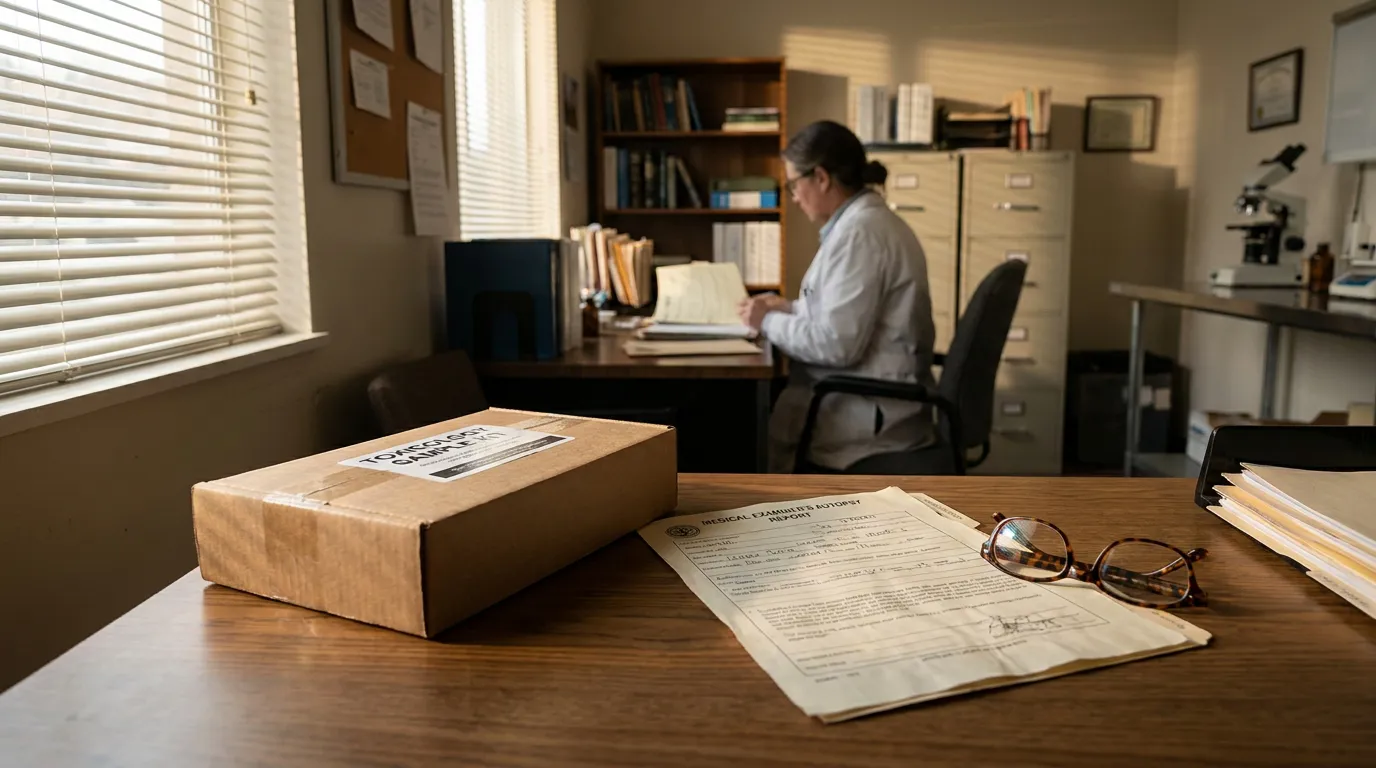
Why Autopsy Report Fatal Crash Evidence Carries So Much Weight
A defense lawyer can argue with a witness, but arguing with a forensic pathologist’s findings is far harder. Autopsy report fatal crash evidence generally identifies the specific anatomical injuries that ended a life, such as aortic transection from blunt force, catastrophic traumatic brain injury, or thermal injury and smoke inhalation in a post-collision fire. These findings can help a jury understand the violence of the impact in a way photographs alone cannot. Still, a pathologist’s report remains expert opinion evidence and is subject to challenge on reliability and qualification grounds.
The report may also answer questions insurers love to raise. Defense teams in catastrophic crash litigation frequently suggest that a heart attack, stroke, or unrelated medical event caused the crash or death. A thorough medical examiner report may support or undercut those theories, subject to the limits of what forensic examination can determine.
Where the Autopsy Report Actually Comes From
Most families never request an autopsy; the process often begins without them. Under Chapter 49 of the Texas Code of Criminal Procedure, deaths that are unnatural, accidental, or otherwise subject to inquest fall to a medical examiner in counties that have one, or to a justice of the peace acting as coroner where none exists, and that official may order an autopsy. Separately, an attending physician or health authority may, with survivor consent, request an autopsy when more information is needed, and the Texas Health and Safety Code autopsy provisions direct the health authority to order one if there are no survivors or survivors withhold consent, with results reported to the department (Tex. Health & Safety Code § 81.045(b)). That provision sits within the communicable disease chapter, so it won’t govern most collision cases.
That reporting requirement may matter more than families realize. Because autopsy findings become part of an official record, they can generally be obtained later and used as documentary evidence in a fatal accident case, subject to evidentiary rules and confidentiality restrictions. Access and timing may vary by county, the status of any criminal investigation, and who is requesting the records.
Fatal Crash Documentation Required by Statute
Texas builds a standardized paper trail after every traffic death. Tex. Transp. Code § 550.081(b) requires the medical examiner or justice of the peace to submit a written report to TxDOT, and § 550.081(c) specifies that the report must be submitted before the 11th day of each calendar month and must include the name of the deceased, a statement as to whether they were a vehicle operator, passenger, pedestrian, or other nonoccupant, and the date and county of the collision. The same statute reaches toxicology directly, requiring naming any laboratory that conducted testing and reporting the results. In impaired-driving and commercial trucking cases, this forensic evidence can be central to proving negligence, though admissibility still depends on proper predicate and expert interpretation.
When Toxicology Is Not Ready Yet
Delay doesn’t necessarily mean the record is closed. Tex. Transp. Code § 550.081(e) provides that if toxicological results aren’t available when the report is due, the examiner or justice must state "toxicological test results unavailable" and file a supplement once results arrive. Families are often distressed by an incomplete initial file, but supplementation is built into the Texas fatal crash reporting statute.
💡 Pro Tip: Ask early whether a supplemental toxicology report exists. Cases have turned on a supplement filed weeks later, and it is generally not automatically mailed to the family.
Connecting Autopsy Findings to the Legal Elements of Your Claim
Texas generally does not allow recovery simply because a death was tragic. The Texas Wrongful Death Act provides that a cause of action arises when an injury causing death was caused by another’s wrongful act, neglect, carelessness, unskillfulness, or default, and only if the injured person could have sued for the injury had they lived (Tex. Civ. Prac. & Rem. Code § 71.002, § 71.003). Proving the wrongful act caused the death is often precisely where autopsy and medical evidence become critical.
Standing is equally governed by statute. Under Tex. Civ. Prac. & Rem. Code § 71.004, the surviving spouse, children, and parents are the beneficiaries entitled to sue, and if none files within three months of death, the estate’s executor or administrator must generally do so unless a beneficiary requests otherwise. If you’re unsure whether you qualify, reviewing what constitutes an autopsy report wrongful death Texas claim is a reasonable first step.
Survival Actions Use the Same Medical Proof
A survival action under Tex. Civ. Prac. & Rem. Code § 71.021 is a separate claim that may travel alongside the wrongful death case. It may let the decedent’s heirs, representatives, or estate seek damages the deceased personally could have claimed, including conscious pain and suffering and pre-death medical expenses. Autopsy findings, emergency medical records, and scene evidence may help establish whether your loved one survived the initial impact and experienced conscious suffering, an issue that is fact-dependent and frequently contested.
Death Certificate vs Autopsy: Two Different Documents
Families often assume the death certificate settles causation. It rarely does in litigation.
| Document | Typical Content | Litigation Role |
|---|---|---|
| Death certificate | Summary cause and manner of death, date, place | May establish fact of death; limited detail |
| Autopsy report | Full anatomical findings, injury mechanism, toxicology | May support causation and injury sequence analysis |
| § 550.081 crash report | Decedent’s role in crash, location, toxicology results | May tie the death to the specific collision |
No single document wins a catastrophic case. Autopsy report fatal crash evidence is generally strongest paired with accident reconstruction, black box and electronic logging data, and treating physician testimony. Understanding what evidence wrongful death attorneys need helps families see how these pieces fit together.
Practical Steps for Families in the First Weeks
What you do early can affect what evidence still exists later. Vehicles get repaired or crushed, trucking companies may cycle out records, and memories fade. Consider the following:
- Request that the vehicle and all wreckage be preserved rather than released to a salvage yard
- Keep every medical record, EMS run report, and hospital bill from the final treatment
- Note the county and agency that handled the death investigation
- Avoid giving a recorded statement to an insurer before speaking with counsel
- Write down the names of anyone who witnessed the crash or the emergency response
💡 Pro Tip: If a medical malpractice question arises about care your loved one received before death, note that Tex. Civ. Prac. & Rem. Code § 74.001(a)(23) defines "physician" broadly, which can affect who may be named and can also trigger Chapter 74’s expert report and pre-suit notice requirements.
Limits of What Forensic Evidence Can Establish
An autopsy can be powerful, but it is not omniscient. Pathologists may reach findings that are qualified, inconclusive, or open to competing interpretation, particularly regarding timing of injury or whether a condition was pre-existing. Courts may weigh opposing forensic testimony, and defense teams routinely retain their own reviewing pathologists.
Outcomes depend heavily on the specific facts. No autopsy finding guarantees a result, and every case must be evaluated on its own record. Working with a wrongful death attorney in Texas early generally improves the odds that the full forensic picture is developed rather than assumed.
Frequently Asked Questions
1. Can we still pursue a claim if no autopsy was performed?
Potentially. Causation may be established through hospital records, emergency responder documentation, imaging, and reconstruction testimony, though the absence of an autopsy can make certain issues harder to prove.
2. Who has the right to obtain the autopsy report?
Access generally depends on your relationship to the decedent, county practice, applicable public information and confidentiality rules, and whether a criminal investigation remains open. Counsel can often obtain records through discovery when direct requests are refused.
3. Does toxicology showing our loved one had been drinking end the case?
Not necessarily. Texas applies proportionate responsibility under Chapter 33 of the Civil Practice and Remedies Code, which reduces recovery in proportion to the decedent’s share of responsibility and bars recovery only if that share exceeds 50 percent.
4. How long do we have to file a wrongful death claim in Texas?
The general limitations period for wrongful death and survival claims is two years from the date of death under Tex. Civ. Prac. & Rem. Code § 16.003(b), subject to exceptions for minors and the narrowly applied discovery rule. Claims against governmental entities generally require formal notice within six months under the Texas Tort Claims Act, or sooner under many city charters, and that notice deadline is separate from the filing deadline.
5. What if the autopsy report seems to contradict what we were told?
Discrepancies happen and may be worth investigating rather than accepting. A qualified pathologist retained by your legal team can review the underlying slides, photographs, and toxicology data, subject to whatever access the custodian or a court permits.
Standing Behind the Families Who Need Answers
An autopsy report can help establish the medical cause of death, illuminate the mechanism of catastrophic injury, and provide cause of death proof that may connect a defendant’s conduct to your loss. Combined with statutory fatal accident documentation under Tex. Transp. Code § 550.081 and the elements set out in Chapter 71 of the Texas Civil Practice and Remedies Code, it can form a foundation that insurers may find difficult to dismiss. But documents do not advocate for themselves, and families should not be left to decipher forensic language during the worst season of their lives.
Paula Wyatt has built a career confronting trucking corporations, insurers, and negligent operators on behalf of families devastated by preventable deaths. If you lost someone in a fatal crash in San Antonio or anywhere in Texas, reach out to Wyatt Law Firm at 210-340-5550 or schedule your consultation to have your case reviewed.
Disclaimer: This content is for informational purposes only and is not legal advice. Every case is unique, and results may vary. Consult an attorney about your specific circumstances.