
The Texas Rule That Forces Insurers to Pay When a Crash Destroys a Life
A catastrophic crash can shatter everything in seconds. When a San Antonio car accident leaves you or someone you love with a traumatic brain injury, severed spinal cord, or grief that never ends, the at-fault driver’s insurance policy is often too small to cover the damage. That gap is where a Stowers demand becomes one of the most powerful tools in Texas injury law. A Stowers demand texas strategy is a written offer to settle your claim within the at-fault driver’s policy limits, and if the insurer unreasonably refuses it, the insurer can later be forced to pay a verdict exceeding those limits. It turns the insurance company’s own gamble against it.
If you are facing a catastrophic crash claim, you are not powerless. The corporate adjuster hopes you will accept less than your case is worth, but you do not have to fight alone. Call Wyatt Law Firm at 210-340-5550 or reach out through our free consultation request to talk with a team that has recovered more than $1 Billion+ for Texas victims. Our stowers demand texas lawyer team knows how to build the kind of demand insurers cannot afford to ignore.
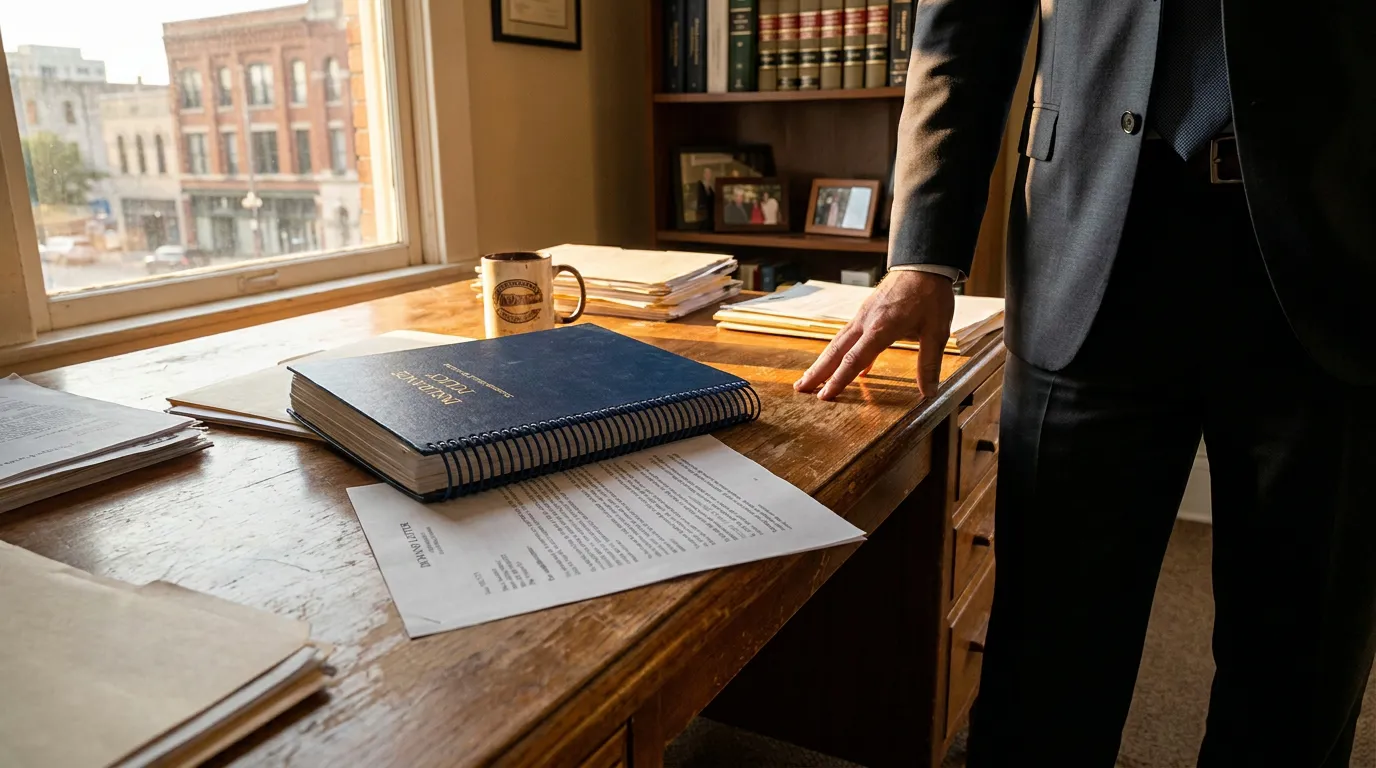
Stowers Demand Texas, Defined: The Rule That Makes Insurers Pay Above Policy Limits
A Stowers demand is a firm, written settlement offer that pressures an insurer to either pay within policy limits or risk a much larger jury verdict. It is a written offer to settle a Texas injury claim within the at-fault driver’s insurance policy limits. If the insurer unreasonably rejects it and a jury later returns a larger verdict, the insurer can be forced to pay the full amount, even above the policy limits. This gives a policy limits demand its teeth.
Where the Doctrine Comes From
The doctrine traces back to a 1929 Texas case involving Stowers Furniture. Courts have called it a landmark decision, and today the rule covers the broader body of Texas case law governing an insurer’s duty when settling third-party claims. Under it, an insured may recover the entire judgment against them if the insurer negligently failed to accept a settlement offer within the liability limits before judgment.
What "Excess Judgment" Means for the At-Fault Driver
An excess judgment is the amount a jury awards above what the insurance policy will pay. In the landmark 1929 Texas Stowers case, a claimant sought to collect a judgment of approximately $12,207 (plus costs) while the auto liability policy limit was only $5,000. That enormous gap is the exposure a Stowers demand is built to expose. When damages tower over coverage, excess judgment liability shifts real financial danger onto both the insurer and the insured.
When a Stowers Demand Applies After a Catastrophic San Antonio Car Accident
A Stowers demand generally applies when your damages far exceed the at-fault driver’s coverage. In the foundational 1929 Texas Stowers case, a furniture company’s truck was involved in an accident and the injured party sued for $20,000 against a $5,000 policy, illustrating how damages can exceed policy limits and exposing the insurer to liability for the full excess judgment. The demand fits inside the policy limits, but the true value of the harm blows past them.
Injuries That Blow Past Minimum Coverage
Catastrophic injuries routinely generate losses that dwarf a small auto policy. Cases that call for a policy limits demand typically involve:
- Traumatic brain injuries requiring lifelong care
- Spinal cord damage causing paralysis
- Amputations and loss of limb function
- Severe burns and permanent scarring
- Wrongful death of a spouse, parent, or child
When a family faces a lifetime of medical bills, lost income, and immeasurable grief, a minimum-limits policy cannot make them whole. That reality is why the Stowers demand matters in serious Bexar County crashes.
What Makes a Settlement Demand Letter Valid and Triggers the Insurer Duty to Settle
A valid Stowers demand must meet several strict conditions before it triggers the insurer’s exposure. Courts generally look for clear liability, an offer within the policy limits, an unconditional full release of the insured, and a reasonable deadline to respond. If any element is missing, the insurer may argue the demand was never proper. Precision in the settlement demand letter is everything.
Why Timing and Documentation Decide the Outcome
Timing shapes when your rights against the insurer actually mature. Texas law changed the older rule that required an insured to first pay part of the judgment before suing the insurer. The Texas Supreme Court eliminated that prepayment requirement and allowed suit from the time liability is fixed by final judgment. You can read how a Stowers claim accrues under Texas law in that decision. Because these rules are fact-sensitive, documentation of every offer, rejection, and deadline can decide the case.
💡 Pro Tip: Keep a dated record of every communication with the insurer. A clear paper trail showing a reasonable, within-limits offer and the insurer’s refusal is often the backbone of a later excess-judgment claim.
The Texas Insurance Law Framework Behind a Stowers Demand
Texas insurance law imposes a good-faith duty on insurers that complements the common-law Stowers doctrine. Under Texas unfair settlement practices law, specifically Tex. Ins. Code § 541.060(a)(2)(A), it is an unfair settlement practice for an insurer to fail to attempt in good faith to reach a prompt, fair, and equitable settlement once liability has become reasonably clear. This statutory duty reinforces why insurers cannot simply stonewall a legitimate demand.
Why Third-Party Claimants Rely on Stowers
The statute generally protects the insured, not the injured stranger who was hit. Tex. Ins. Code § 541.060(b) states that the unfair-settlement subsection does not provide a cause of action to a third party asserting claims against an insured under a liability policy. Texas courts have held that a third-party claimant has no direct extracontractual or excess cause of action against the at-fault driver’s insurer under this framework. Because those statutory doors are closed, the common-law Stowers demand remains the primary route to reach an insurer’s exposure above policy limits.
How Financial-Responsibility Limits Set the Ceiling
Texas financial-responsibility rules define the coverage ceiling a Stowers demand targets. Under Texas financial responsibility law, including Tex. Transp. Code § 601.151, that policy’s limits set what a demand asks the insurer to pay. Texas minimum auto coverage is commonly $30,000 per person, $60,000 per crash, and $25,000 for property damage. Commercial vehicles carry higher requirements, which is why understanding Texas truck insurance minimums can matter enormously in catastrophic-crash claims.
Excess Judgment Liability: What Happens If the Insurer Refuses a Reasonable Demand
When an insurer refuses a reasonable within-limits demand, it can be left holding the full verdict. Consider a real pattern from Texas litigation. An injured party made a firm written offer of $92,500, inside a $100,000 policy limit. The insurer refused. A jury then returned a verdict of $160,000. The insurer later tendered the $100,000 limit plus interest, leaving a $60,000 balance the insured had to answer for.
That $60,000 gap is the entire point of excess judgment liability. The insurer gambled. The insured paid the price. A Stowers demand ensures that when an insurer bets against a fair settlement and loses, the financial consequence falls where it belongs.
Why a San Antonio Injury Lawyer Should Handle Your Stowers Demand
A Stowers demand only frightens an insurer when it comes from a firm ready to try the case. Template letters and do-it-yourself demands rarely move corporate adjusters, because insurers know a demand carries weight only if the lawyer behind it will actually walk into a courtroom. That is where a seasoned San Antonio injury lawyer changes the equation. A single technical flaw can hand the insurer an escape hatch.
Wyatt Law Firm was built for exactly these fights. With 40 years of combined experience and more than $1 Billion+ recovered, we take on the insurers and corporate defendants who deny catastrophic claims. Paula Wyatt is a nationally recognized advocate and a Top 10 Trucking Trial Lawyer, and that trial readiness is what gives our demands their force. As a personal injury attorney team focused on catastrophic and wrongful-death cases, we do not treat serious harm as a routine file.
Frequently Asked Questions
What makes a Stowers demand valid in Texas? A valid demand generally requires clear liability, an offer within the policy limits, an unconditional full release of the insured, and a reasonable deadline to respond. Missing any element may let the insurer argue the demand never triggered its duty. Precise drafting matters.
How long do I have to make a Stowers demand after a Texas crash? Most Texas injury claims are subject to a two-year civil statute of limitations, and a Stowers demand is typically made before suit or trial. Deadline exceptions such as tolling are interpreted narrowly and do not apply automatically. Act quickly to preserve every option.
What happens if the insurance company ignores or refuses the demand? If the insurer unreasonably rejects a proper within-limits offer and a jury later awards more, the insurer may be exposed to the full excess judgment. In one case, a refused $92,500 offer became a $160,000 verdict, leaving a $60,000 excess balance.
Can I make a Stowers demand myself, or do I need a lawyer? You may attempt one alone, but a technically defective demand can forfeit the leverage the doctrine provides. Insurers respond to demands backed by a firm prepared to try the case. In serious cases, experienced counsel makes a meaningful difference.
Does a Stowers demand apply to commercial truck crashes? Yes, it can apply whenever damages exceed the at-fault party’s coverage, and commercial policies often carry higher limits. Because catastrophic truck crashes generate massive losses, the policy-limits analysis is frequently central to these claims.
Standing Between Insurers and the Families They Underpay
A stowers demand texas claim can be the difference between a lowball offer and full accountability after a life-altering crash. The doctrine, backed by decades of Texas case law and reinforced by the state’s good-faith settlement duties, exists to make insurers pay when they unreasonably refuse a fair, within-limits offer. For catastrophically injured victims and grieving families in San Antonio, that leverage can mean the resources needed to rebuild.
Make your case matter. Choose the team that insurers respect and injured Texans trust. Contact Wyatt Law Firm today, and remember our promise: no recovery, no fee, and a free consultation. You carry the injury. Let us carry the fight.