
Why "Crossing State Lines" Is Not the Whole Story After a Catastrophic Truck Crash
When an 80,000-pound 18-wheeler crushes a passenger vehicle on I-35 or Loop 1604, the physics are merciless, and injuries are often catastrophic: traumatic brain injury, spinal cord damage, amputation, or wrongful death. In the fight for full compensation, one technical question can decide whether a critical insurance layer is available. That is the heart of any mcs-90 endorsement truck accident dispute, and it turns on interstate commerce proof. Insurers know that if they can argue the truck was not "in interstate commerce," they may shrink what they owe. The team at Wyatt Law Firm exists to dismantle that argument with evidence, and our mcs-90 endorsement truck accident lawyer approach is built for these coverage battles.
In a Texas MCS-90 claim, a truck is "in interstate commerce" when the shipper’s fixed and persistent intent at transport’s start was to move goods across state lines, even if the crash happened on an intrastate leg. Proof includes FMCSA operating-authority records, BMC-91 or BMC-82 filings, bills of lading, dispatch logs, and electronic route data. If an 18-wheeler shattered your life, call Wyatt Law Firm at 210-340-5550 or reach us through our contact page to start building the proof today.
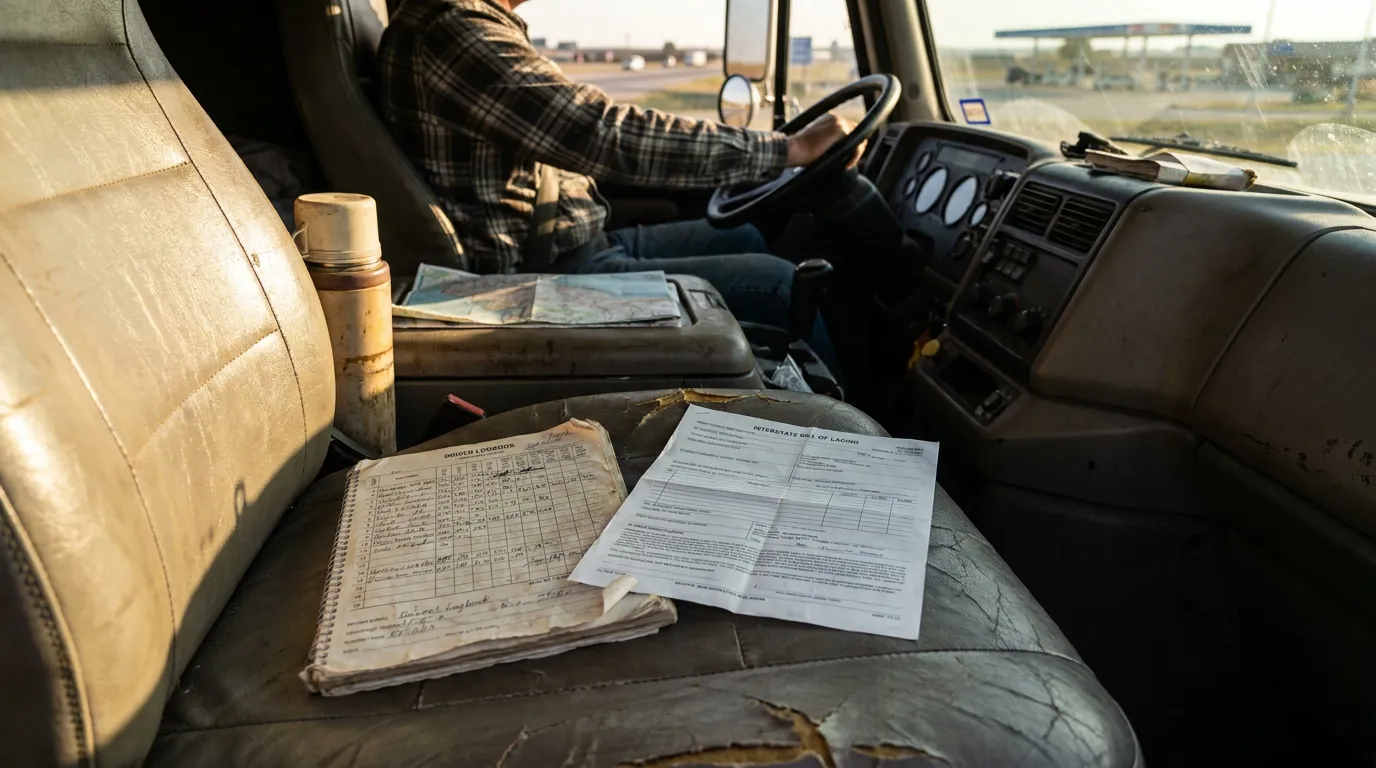
What "Interstate Commerce" Really Means (And Why the Border Test Fails)
Interstate commerce is a legal status, not a snapshot of where the wheels were at impact. Most competitor articles wrongly reduce it to "the truck crossed state lines." Courts look deeper, and that difference can protect your recovery. Getting truck in interstate commerce classification right is often the pivot point.
The "fixed and persistent intent" test
The controlling standard asks about intent when transportation begins, not the specific leg where collision occurred. FMCSA guidance establishes that an intrastate leg’s character depends on the shipper’s fixed and persistent intent when transportation began. A load picked up in Laredo destined for Oklahoma is generally interstate throughout, even during the Texas-only stretch. Proving interstate commerce frequently comes down to reconstructing original intent through paperwork.
When an intrastate leg still counts as interstate
A purely in-state movement can qualify as interstate commerce when part of a larger interstate journey. Courts and the Interstate Commerce Commission developed a test clarifying the legal status of intrastate portions of interstate trips. A short haul from a San Antonio warehouse to a rail yard may remain interstate if goods were always bound for another state. This doctrine gives victims a powerful tool for Texas trucking interstate commerce disputes that carriers would rather ignore.
The empty-truck rule
Even a truck carrying no cargo can operate in interstate commerce. FMCSA guidance explains that the vehicle itself counts as property being transported, so an empty commercial motor vehicle moving across or between states can be interstate. When fixed and persistent intent was to move the vehicle itself across state lines, later in-state driving may constitute interstate commerce. Courts have not uniformly applied this rule to deadhead trips, so analysis remains fact-specific.
The Evidence That Proves a Truck Was in Interstate Commerce
The proof is documentary, digital, and specific, and gathering it fast is where cases are won or lost. This is Wyatt Law Firm’s client-first, trial-ready evidence engine: we pursue records that force insurers to face the interstate reality. Strong interstate commerce evidence rarely comes from a single document but from layering sources.
Federal registration and operating-authority records
A carrier’s USDOT number and FMCSA operating authority are among the clearest signals of interstate operation. FMCSA sets insurance requirements under 49 CFR Part 387 for entities obtaining operating authority under 49 U.S.C. §§ 13906, 31138, and 31139, and will not grant authority until minimum financial responsibility is filed. Requirements vary by entity type, cargo, and vehicle. That registration trail is often the first piece of MCS-90 claim proof we secure.
Financial-responsibility filings
Federal filings a carrier uses to show financial responsibility double as evidence of interstate status. Motor carriers demonstrate coverage through forms such as BMC-91, BMC-91X, or BMC-82. Pulling these filings, alongside the underlying policy and endorsement, helps establish that the carrier operated interstate and that federal coverage should respond. Review federal minimum financial-responsibility limits through the FMCSA insurance filing requirements page.
Shipping documents that tell the real story
Bills of lading, dispatch logs, weight tickets, and invoices reveal where a load started and where it was headed. These records frequently expose an out-of-state origin or destination the carrier tries to downplay. A bill of lading naming a consignee in another state is compelling MCS-90 coverage proof. We line these documents against the driver’s route to show fixed and persistent intent.
ELD, GPS, and black-box route data
Electronic logging devices, GPS pings, and engine control module data map a truck’s movements with precision. This digital trail often confirms multi-state routing that paperwork alone might obscure, and it is central to modern truck litigation. Read our guide on how ELD records help win a San Antonio truck case. Preserving this data early matters because it can be overwritten or lost.
💡 Pro Tip: Send a written evidence-preservation demand to the carrier immediately. ELD, GPS, and black-box data can cycle out on a rolling basis, and once gone, reconstructing an interstate route becomes far harder.
How the MCS-90 Endorsement Truck Accident Coverage Works Once Interstate Commerce Is Proven
Once interstate status is established, the MCS-90 acts as a safety net that pays injured people even when the carrier’s policy would otherwise deny coverage. This is the payoff of proof work. It is also where decades of fighting corporate insurers, reflected in Paula Wyatt’s Top 10 Trucking Trial Lawyer recognition, translate into leverage for your family.
The statutory basis
The endorsement is a creature of federal law rooted in Sections 29 and 30 of the Motor Carrier Act of 1980. It obligates the insurer to pay any final judgment for public liability resulting from negligence in the operation, maintenance, or use of motor vehicles subject to federal financial responsibility requirements. Review the government’s form and language on the federal MCS-90 endorsement page. This federal footing is why MCS-90 endorsement Texas analysis lives or dies on interstate status.
Coverage attaches regardless of the vehicle or route
The MCS-90’s promise applies even if the specific truck is not described in the policy and regardless of route or territory. The insurer agrees to pay regardless of whether each vehicle is listed and regardless of where negligence occurred. The trigger is that the vehicle was engaged in interstate commerce subject to federal rules.
Minimum limits by cargo type
Federal minimums scale with what the truck was hauling. The chart below reflects common benchmarks when assessing an MCS-90 Texas truck claim.
| Cargo / Carrier Type | Minimum Public Liability |
|---|---|
| For-hire non-hazardous property (GVWR ≥ 10,001 lbs) | $750,000 |
| Certain hazardous materials | $1,000,000 |
| High-risk hazmat and explosives | Up to $5,000,000 |
The reimbursement mechanism
The MCS-90 works as a reimbursement device, which is why it never reduces your recovery. The insurer must pay third parties even where policy terms would exclude coverage, and the insured then agrees to reimburse the insurer for payments it would not otherwise have owed. That fight is between the carrier and its insurer, not your compensation.
Texas Law and the Interstate Versus Intrastate Line
Texas statutes reinforce that federal rules govern interstate trucks, making classification decisive in any Texas truck accident MCS-90 case. Under Tex. Transp. Code § 644.002(a), a federal motor carrier safety regulation prevails over a conflicting Texas provision for commercial vehicles operated in interstate commerce, while state rules apply to intrastate operation. Texas draws a sharp line: under Texas foreign motor carrier law, specifically Tex. Transp. Code § 648.103, a foreign motor carrier may not transport in intrastate commerce in Texas unless authorized to conduct interstate and foreign operations under federal law.
Identifying the right defendant matters as much as classification. Tex. Transp. Code § 646.001 defines a "motor transportation broker" as a person who sells, offers, provides, or negotiates cargo transportation by a carrier operated by another. Because the MCS-90 attaches to the motor carrier’s federally required insurance and not a broker’s role, sorting carrier from broker is essential. Layered Texas registration records under Tex. Transp. Code Chapter 643, which requires certain for-hire motor carriers to register with the state and file evidence of insurance, can further document operational scope.
Frequently Asked Questions
Does a truck have to physically cross state lines to be "in interstate commerce"? No. Courts apply the fixed and persistent intent test, asking what the shipper intended when transportation began. A load bound for another state can be interstate throughout, including any leg driven entirely inside Texas.
What documents prove a truck was in interstate commerce? Common proof includes the carrier’s USDOT number and FMCSA operating authority, BMC-91 or BMC-82 filings, bills of lading, dispatch logs, weight tickets, invoices, and ELD or GPS route data.
Can an empty truck be in interstate commerce? Yes, in many cases. FMCSA guidance treats the empty commercial motor vehicle itself as property being transported. When fixed and persistent intent is to move that vehicle across state lines, later in-state driving can qualify as interstate commerce.
How much coverage does the MCS-90 guarantee in Texas? Federal minimums generally start at $750,000 for larger non-hazardous property carriers, rising to $1,000,000 and up to $5,000,000 for certain hazardous materials. The exact figure depends on cargo and vehicle type.
Does the reimbursement clause reduce my compensation? No. The insurer must pay injured third parties first, then may seek reimbursement from the carrier for amounts it would not otherwise owe. That dispute is separate from your claim.
Turning Proof Into Full Accountability
The difference between a denied claim and full accountability often comes down to who does the evidentiary work. A strong mcs-90 endorsement truck accident case is not built on the "it never crossed state lines" myth. It is built on operating-authority records, federal filings, shipping documents, and route data that together deliver undeniable MCS-90 coverage proof. Outcomes always depend on specific facts, but the carrier’s insurer should never define the terms of your recovery through a technicality.
Paula Wyatt and Wyatt Law Firm have spent decades taking on corporate defendants and their insurers, recovering over $1 billion for the injured and the grieving. You do not pay unless we win, and you are not powerless in this fight. If a commercial truck has taken your health, your independence, or someone you love, reach out to Wyatt Law Firm and let us build the proof that forces the insurer to answer. Never settle for less.