
When a Load Breaks Loose on a San Antonio Highway
A fully loaded 18-wheeler can carry tens of thousands of pounds of steel, lumber, or machinery just feet from your windshield. When a trucking company ignores federal rules that keep cargo strapped down, the results are catastrophic. A shifting or falling load can trigger a rollover, bury a passenger car under debris, or crush everything in its path on I-10, Loop 410, or I-35. The 49 cfr 393.100 cargo securement standard exists to prevent exactly that, and when a carrier breaks it, that violation becomes powerful proof of fault for texas truck crash victims and their families.
This article explains what the 50 percent working load limit rule means for you, not for carriers trying to dodge blame. If you or someone you love suffered serious injury in one of these wrecks, call 210-340-5550 or reach our San Antonio team for a FREE CONSULTATION. NO RECOVERY FEE. With more than $1 BILLION recovered for Texas victims, the attorneys who handle our 49 cfr 393.100 cargo securement lawyer cases know how to hold negligent carriers accountable.
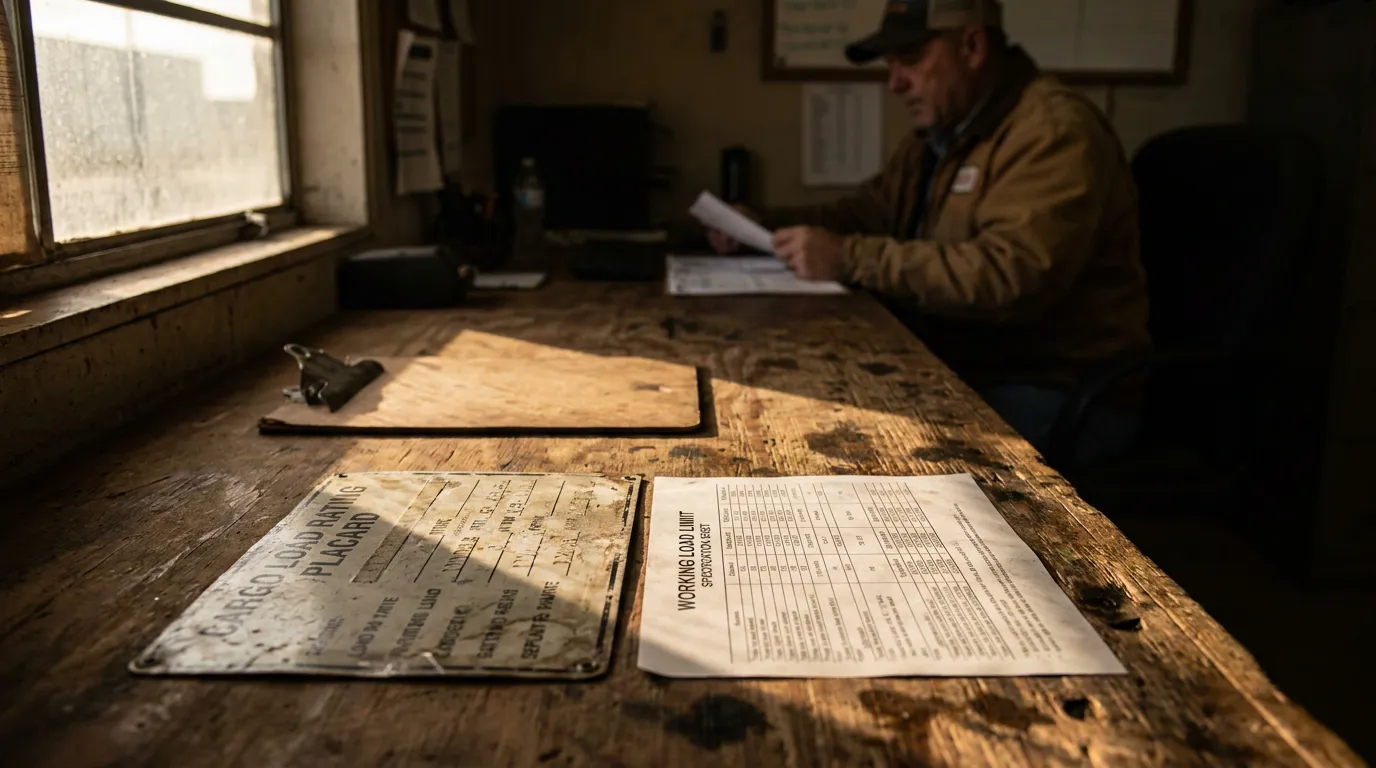
The 50% Working Load Limit Rule, Explained in Plain English
The 50% working load limit rule requires that the combined working load limit of all tie-downs securing a load equal at least half the cargo’s weight. It comes from federal cargo securement standards under 49 CFR Part 393, Subpart I, which spans Sections 393.100 through 393.136. When a trucking company breaks this rule and a load shifts or falls, that violation helps prove liability for a Texas truck crash victim’s injuries.
These federal trucking standards apply to commercial vehicles in interstate commerce with a gross vehicle weight rating of 10,001 pounds or more. That covers the tractor-trailers, flatbeds, and heavy rigs dominating San Antonio’s freight corridors. The working load limit cargo securement framework is not optional guidance, it is a binding safety floor, and falling below it puts everyone sharing the road in danger.
Working Load Limit vs. Aggregate Working Load Limit
Working load limit, or WLL, is the safe working capacity of a single tie-down component. Think of one chain, one strap, or one binder and how much force it can safely hold. Aggregate working load limit, or AWLL, is the combined WLL of every tie-down used for a single cargo item. The rule on tie-down aggregate strength requires that AWLL equal at least half the weight of the secured cargo, unless a specific commodity rule sets a different standard.
How the Math Works, in One Simple Example
The math is straightforward. Imagine a flatbed hauling a 40,000-pound coil of steel. Under the 50 percent rule, the tie-downs must have a combined working load limit of at least 20,000 pounds. If a carrier uses straps rated for far less, the load is effectively unsecured, and physics does the rest when the driver brakes hard or takes a curve too fast.
What 49 CFR 393.100 Cargo Securement Actually Requires
Section 393.100 sets the general duty that anchors this entire cargo securement rule. The regulation applies to trucks, truck tractors, semitrailers, full trailers, and pole trailers. Each commercial motor vehicle must be loaded and the cargo secured to prevent it from leaking, spilling, blowing, or falling from the vehicle. It also requires securement systems capable of preventing cargo from shifting in a way that affects the vehicle’s stability or maneuverability.
For victims, the point is not compliance paperwork, it is causation. When a carrier’s securement fails and a load escapes onto a San Antonio roadway, 393.100 gives your legal team a clear federal benchmark to measure that failure against. Texas also layers its own weight-permitting rules on top of these federal duties, showing how heavily regulated these heavy loads are.
Two Different "50% Rules" You Should Never Confuse
There are two separate 50 percent concepts in these cases, and mixing them up costs victims real money. The first is the federal securement rule governing tie-down strength. The second is Texas’s fault rule, which governs whether you can recover at all.
Texas follows a modified comparative fault standard codified in the Civil Practice and Remedies Code. Under Texas’s modified comparative fault rule in § 33.001, a claimant may not recover damages if his percentage of responsibility is greater than 50 percent. If you are found 51 percent or more responsible for the crash, Texas law generally bars financial recovery.
| The Two "50% Rules" | What It Governs | Source |
|---|---|---|
| 50% Working Load Limit | Strength of tie-downs vs. cargo weight | 49 CFR Part 393, Subpart I |
| 50% Fault Bar | Whether an injured party can recover | Tex. Civ. Prac. & Rem. Code § 33.001 |
How a Cargo Securement Violation Proves Fault in a Texas Truck Crash
A cargo securement violation can serve as strong evidence of negligence in a Texas truck crash case. When a carrier ignores a federal safety rule designed to protect the public and that failure causes harm, courts may treat the violation as evidence of a breach of duty. Establishing truck accident liability still requires proving causation and damages under the specific facts, but a documented unsecured cargo accident rooted in a rule violation gives victims a compelling starting point. Paula Wyatt, recognized among the Top 10 Trucking Trial Lawyers, has spent decades taking these arguments to corporate defendants and their insurers.
Who Can Be Held Accountable
More than one party is often responsible when unsecured cargo causes a catastrophic wreck. Depending on the facts, liability may extend to the driver, the motor carrier, the shipper or loader, and even a maintenance provider whose neglected equipment contributed to the failure. Under Texas law on carrier liability in § 72.054, an employer may be held liable under respondeat superior for its employee’s negligent operation of a commercial motor vehicle within the scope of employment.
The Evidence We Move Fast to Preserve
Critical proof in these cases can disappear within days, so speed matters enormously. A trial-ready team knows to demand the following before it is overwritten or discarded:
- Electronic logging device and black-box data showing speed, braking, and hours
- Weight tickets and bills of lading documenting the actual load
- Driver vehicle inspection reports and maintenance records
- Driver qualification, training, and employment files
Understanding how regulatory breaches translate into accountability is central to building these claims. Our overview of what happens when a carrier ignores FMCSA rules explains how these violations strengthen a victim’s case. Preserving this evidence early is one of the most important steps in any serious truck crash claim.
The Catastrophic Injuries Unsecured Cargo Causes
When tons of freight break free, the injuries are rarely minor. Rollovers, jackknifes, and falling-debris strikes routinely produce traumatic brain injuries, spinal cord damage, paralysis, amputations, and death.
One of the most devastating outcomes is a crush injury. Medical literature explains that crush injuries arise from prolonged external force on soft tissues, resulting in muscle death and systemic complications known as crush syndrome. When heavy or shifting cargo pins a victim, the consequences can be permanent and life-threatening, which is why these cases demand full valuation of long-term medical and life-care needs.
Texas Deadlines: Why Time Matters After a San Antonio Truck Crash
Texas generally gives truck crash victims two years to file a personal injury lawsuit. Under Tex. Civ. Prac. & Rem. Code § 16.003(a), a person must bring suit for personal injury not later than two years after the day the cause of action accrues, typically the date of the collision. Once that period expires, and unless a narrow legal exception applies, the injured person generally loses the right to sue for money damages.
For fatal crashes, the same two-year period applies to wrongful death claims. Under § 16.003(b), a suit for injury resulting in death must be brought within two years, and the cause of action accrues on the death of the injured person. In limited circumstances, the discovery rule may delay when the clock starts if an injury or its cause could not reasonably have been discovered right away, but courts interpret such exceptions narrowly. These deadlines are strict, so acting quickly protects your rights.
💡 Pro Tip: Administrative or insurance reporting steps are separate from a civil lawsuit deadline. Meeting one does not satisfy the other, so confirm both apply to your situation early.
Frequently Asked Questions
What is the 50% working load limit rule for truck cargo? It requires that the combined working load limit of all tie-downs securing a load equal at least half the cargo’s weight, so the securement system can control the freight during normal driving.
Is 49 cfr 393.100 a federal or Texas rule, and does it apply in San Antonio? It is a federal FMCSA regulation. It applies to qualifying commercial motor vehicles operating in interstate commerce and is enforced on Texas roads including San Antonio’s freight corridors.
Who is liable if unsecured cargo caused my crash, the driver or the trucking company? Often both, and sometimes more. Depending on the facts, the driver, the motor carrier, a shipper, a loader, or a maintenance provider may share responsibility, and Texas § 72.054 can allow an injured party to pursue the employer under respondeat superior.
How long do I have to file a truck accident lawsuit in Texas? Generally two years from the date the cause of action accrues under § 16.003(a). For wrongful death, the two-year period generally runs from the date of death, subject to narrow exceptions.
Does a cargo securement violation guarantee I win my case? No. A violation can be strong evidence of negligence, but you must still prove causation and damages under your specific facts.
Talk to San Antonio’s Fiercest Truck Accident Team
The 50 percent working load limit rule was written to keep freight where it belongs, and when a carrier ignores it, the people it hurts deserve a relentless advocate. You now know the difference between the federal securement standard and Texas’s comparative fault bar, who can be held accountable, and why acting before the two-year deadline matters. What comes next is the fight for full compensation, and that is where a proven texas truck accident attorney makes the difference. Paula Wyatt and her team stand with the injured and the grieving, never the corporations and insurers on the other side.
Never settle for less, because we are your voice when it matters most. If unsecured cargo shattered your life or took someone you love, let the team at Wyatt Law Firm stand and fight for you. We pursue whole-health recovery for our clients, and you owe no fee unless we win.