
How The FMCSA ELD Manual Rollback Changes The Fight For An 18 Wheeler Accident Attorney San Antonio Families Trust
Key Takeaways: In July 2026, changes to the FMCSA in-cab ELD manual guidance have raised new questions about how driving-hour data will be recorded and preserved after a catastrophic truck crash. The federal hours-of-service limits themselves have not changed, only how compliance is documented in certain situations. For San Antonio victims, that shift can affect the availability of the electronic evidence that often proves driver fatigue and carrier negligence. Texas still applies a proportionate responsibility system, and a claimant found more than 50 percent at fault may recover nothing. Time limits under the Texas Civil Practice and Remedies Code remain strict, so early action to preserve telemetry matters. Wyatt Law Firm helps injured Texans and grieving families move quickly to secure proof.
The July FMCSA in-cab ELD manual rollback has sent a ripple of concern through the trucking safety community, and for good reason. Electronic logging devices have become a central source of truth in serious truck crash litigation, capturing the driving hours that reveal whether a fatigued or over-scheduled driver caused a devastating collision. When federal documentation guidance loosens, families in San Antonio who are already facing traumatic brain injuries, spinal cord damage, or the loss of a loved one may find that the very records they need are harder to obtain. That is why understanding this development now, before evidence disappears, can be pivotal.
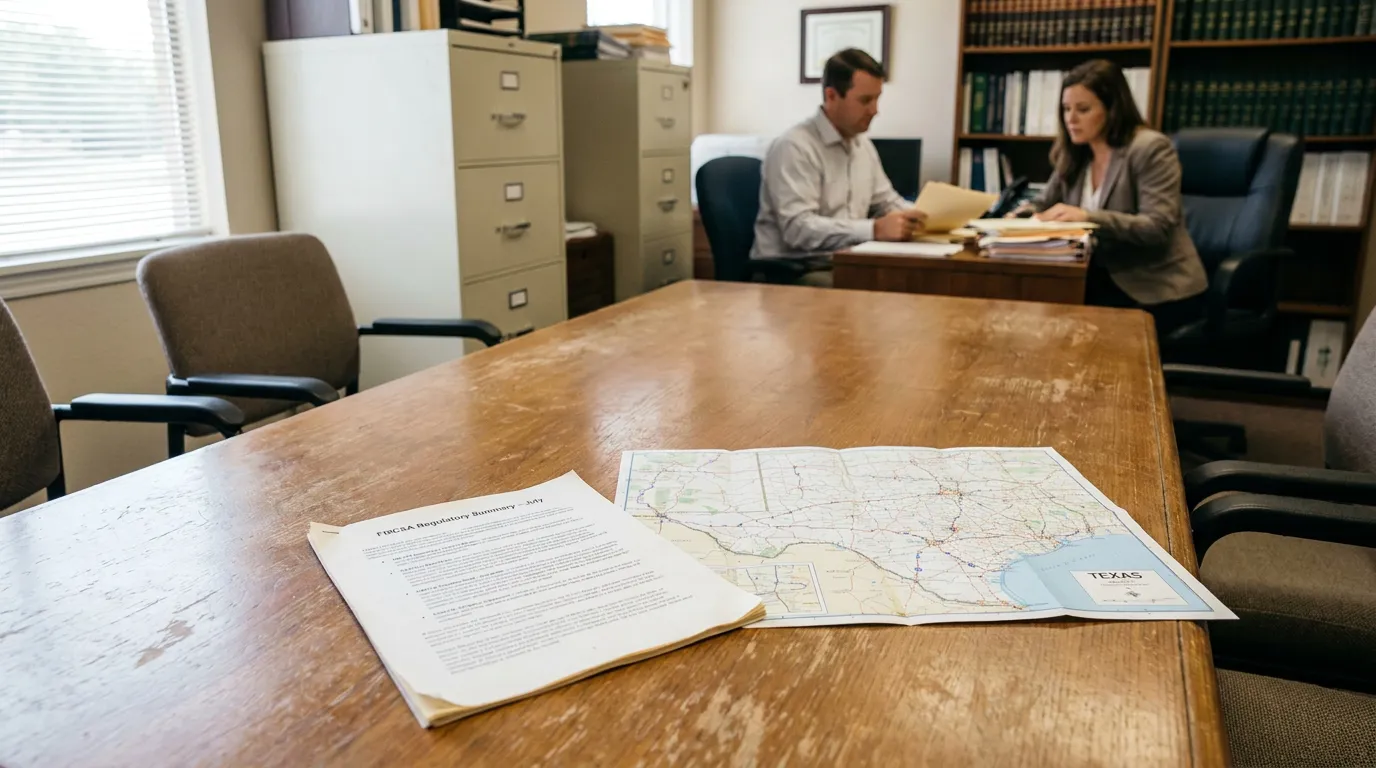
The Legal Ground Beneath Texas Truck Crash Claims
To understand what the rollback does and does not do, start with the purpose of the device itself. The Federal Motor Carrier Safety Administration describes electronic logging devices as the mechanism for recording a driver’s records of duty status, the hour-by-hour account of time spent driving, on duty, and at rest. Critically, the ELD final rule does not change any of the basic hours-of-service limits or their exceptions. It governs how driving time is recorded and enforced, not how many hours a trucker may legally stay behind the wheel.
That distinction matters enormously for liability. A rollback in in-cab documentation guidance does not give carriers permission to run fatigued drivers, and it does not erase the underlying safety rules that a negligent trucking company may have violated. It can, however, complicate the evidentiary picture. The mandate already carries limited exceptions, including short-haul time-card drivers, drivers who keep paper records of duty status no more than 8 days in any 30-day period, drive-away-tow-away operations, and vehicles with engines older than model year 2000, which means not every truck on Interstate 35 or Loop 410 carries the same electronic trail.
Texas law adds its own framework on top of these federal rules. The state maintains a dedicated statute, Section 72.054 of the Texas Civil Practice and Remedies Code, addressing liability for employee negligence in operating a commercial motor vehicle. The related definitions in Section 72.051, added by the Legislature in 2021, broadly define a commercial motor vehicle used in interstate or intrastate commerce, and this subchapter as a whole contemplates the use of video and electronic evidence in commercial-vehicle cases. This is precisely the kind of claim in which in-cab data, driver logs, and telemetry become decisive proof.
A San Antonio Family’s Worst Night
Picture a family driving home along US-281 when a fully loaded 18-wheeler fails to slow for stopped traffic. The force of an 80,000-pound tractor-trailer against a passenger vehicle is catastrophic, leaving a parent with a spinal cord injury and a teenager with a traumatic brain injury that will require a lifetime of care. In the chaotic days that follow, the carrier’s insurer moves fast, and the family is left wondering how a driver could have missed slowed traffic in broad daylight.
Fatigue is often the hidden answer, and the electronic record is often the proof. If the truck’s logging data shows the driver had been on the road far beyond safe limits, that ELD evidence in a truck crash can transform a disputed case into a compelling one. When documentation guidance loosens or records are incomplete, families like this one need counsel who know how to demand preservation of every available data source before it is overwritten or lost.
Why ELD Evidence Can Decide A Serious Injury Truck Claim
Electronic logging data is frequently the backbone of proving truck accident negligence. In a high-value, catastrophic injury case, the difference between a fatigued driver and a rested one can be the difference between full accountability and a denied claim. Commercial vehicle telemetry, when preserved, tells a story that a driver’s memory and a carrier’s paperwork often will not.
The Records That Matter Most
Serious cases are built on more than a single data point. A trial-ready investigation typically pursues a layered evidentiary record so that no single missing file defeats the claim. In many catastrophic truck crash matters, counsel seeks to preserve:
- Electronic logging device data and hours-of-service proof
- Engine control module and telematics or GPS records
- Driver qualification, training, and employment files
- Vehicle maintenance and inspection histories
- Dispatch records, weight tickets, and post-crash inspection reports
Each of these categories can corroborate the others. If in-cab logging documentation is reduced or contested, telematics and dispatch records may still reveal how long a driver worked and how a carrier scheduled the route. This redundancy is exactly why an experienced legal team sends preservation demands early and, when necessary, seeks court intervention to prevent spoliation.
How This Rollback Builds On Earlier Federal Changes
The July guidance is not the first shift to raise proof concerns this year. Earlier federal action already prompted questions about hours-of-service documentation, and we examined those issues in our analysis of the May 7 ELD revocations affecting Texas suits. Read together, these developments underscore a broader trend toward relaxed in-cab documentation that injured Texans should not have to shoulder alone.
Texas Fault Rules And The Race Against The Clock
Texas uses a modified comparative fault system, and it can be unforgiving in disputed cases. Under the state’s proportionate responsibility law, judges and juries assign each party a percentage of fault and reduce a claimant’s recovery accordingly. Texas has replaced the old rule of pure contributory negligence; the governing framework now appears in Chapter 33 of the Texas Civil Practice and Remedies Code.
The threshold is the part that can end a case entirely. Section 33.001 provides that a claimant may not recover damages if that claimant’s percentage of responsibility is greater than 50 percent. In a case where a carrier tries to shift blame onto an injured driver, missing or reduced logging documentation can influence how fault is allocated, which is why strong ELD and telemetry evidence often carries decisive weight in a serious injury truck claim.
Time is the other adversary that never rests. Texas statutes of limitations are codified in the Civil Practice and Remedies Code, and generally a victim who does not file within the applicable period will likely lose the ability to pursue the claim in court. Courts interpret exceptions such as tolling or the discovery rule narrowly, and those exceptions may apply only in limited circumstances, so no injured person should assume a deadline is automatic or extended. A skilled 18 wheeler accident attorney San Antonio families rely on can confirm the specific deadline that applies to a particular set of facts.
How Does This Impact Me?
Does The Rollback Mean The Trucker Can Drive Unlimited Hours Now?
No, the underlying hours-of-service limits remain in force. The FMCSA guidance addresses in-cab documentation, not the legal ceiling on driving time. A driver who exceeds those limits and causes a catastrophic crash may still be liable, and a carrier may still bear responsibility under Texas commercial-vehicle liability law.
Will Missing ELD Data Ruin My Case?
Not necessarily, because strong cases rarely rest on one source alone. When in-cab records are reduced or unavailable, telematics, engine data, dispatch logs, and maintenance files can help reconstruct what happened. The key is acting quickly so that a preservation demand reaches the carrier before any records are overwritten.
Could I Lose Compensation If The Carrier Blames Me?
Possibly, and that is why fault evidence is so important in Texas. Because a claimant found more than 50 percent at fault may recover nothing, and any share of fault reduces recovery, defending against blame-shifting is central to protecting a catastrophic injury claim. Preserved electronic evidence can be pivotal in disputed-fault situations.
How Long Do I Have To File In Texas?
Texas imposes firm filing deadlines under the Civil Practice and Remedies Code. The exact period depends on the facts, and missing it generally forfeits the right to sue. Because exceptions are read narrowly and applied only in limited circumstances, confirming your deadline early with counsel is the safest course.
What Should I Do Right Now?
Focus first on medical care, then on protecting evidence. Keep records of your treatment and expenses, avoid recorded statements with the carrier’s insurer, and consult counsel promptly so preservation letters can go out. Outcomes always depend on the specific facts, so early legal guidance is valuable.
Standing With Injured Texans After The Rollback
The July FMCSA in-cab ELD manual rollback is a documentation change, not a shield for negligent carriers. For San Antonio families facing life-altering injuries or the death of a loved one, the practical takeaway is urgency: the electronic proof that often exposes driver fatigue and carrier misconduct can vanish if no one acts to preserve it. Texas fault rules and strict filing deadlines only raise the stakes. With the right approach to commercial vehicle telemetry and hours-of-service proof, injured Texans can still hold powerful trucking companies accountable. You can learn more about how the firm handles these matters on our catastrophic truck accident practice page.
If a commercial truck has changed your family’s life, you do not have to face the insurers alone. Paula Wyatt and the team at Wyatt Law Firm bring decades of experience and a proven track record of fighting corporate defendants on behalf of the seriously injured and the grieving. To discuss how this development may affect your situation, call 210-340-5550 or contact us today to request a confidential consultation.