
When a Mother Survives and Her Unborn Baby Does Not: The Hidden Chemistry of Prenatal CO Exposure
Key Takeaways: Fetal carboxyhemoglobin levels run higher than a mother’s because fetal hemoglobin binds carbon monoxide more tightly and clears the gas more slowly than adult hemoglobin. This means an unborn baby can suffer prolonged poisoning even if the mother’s hospital readings appear low. Texas law may allow families to pursue wrongful death and personal injury claims when an unborn child is harmed or killed by carbon monoxide exposure due to another party’s negligence. Because evidence like faulty furnaces or vents disappears quickly, prompt investigation and expert reconstruction are essential to proving liability. Families affected by prenatal carbon monoxide poisoning should act quickly to preserve evidence and protect their legal rights before strict deadlines expire.
Fetal carboxyhemoglobin runs higher than a mother’s because fetal hemoglobin binds carbon monoxide more tightly than adult hemoglobin, and the fetus clears the gas far more slowly. A pregnant woman can leave an emergency room with a modest chart reading while her unborn child has absorbed a poisonous dose that keeps circulating long after her own levels fall. In a San Antonio apartment with a cracked furnace heat exchanger or a hotel room next to a malfunctioning pool heater, that biological lag can mean the difference between a scare and a devastating loss.
If you or someone you love suffered carbon monoxide poisoning while pregnant, the team at Wyatt Law Firm is ready to listen. Call 210-340-5550 or reach out for a free consultation to discuss what happened and what evidence needs to be preserved right now.
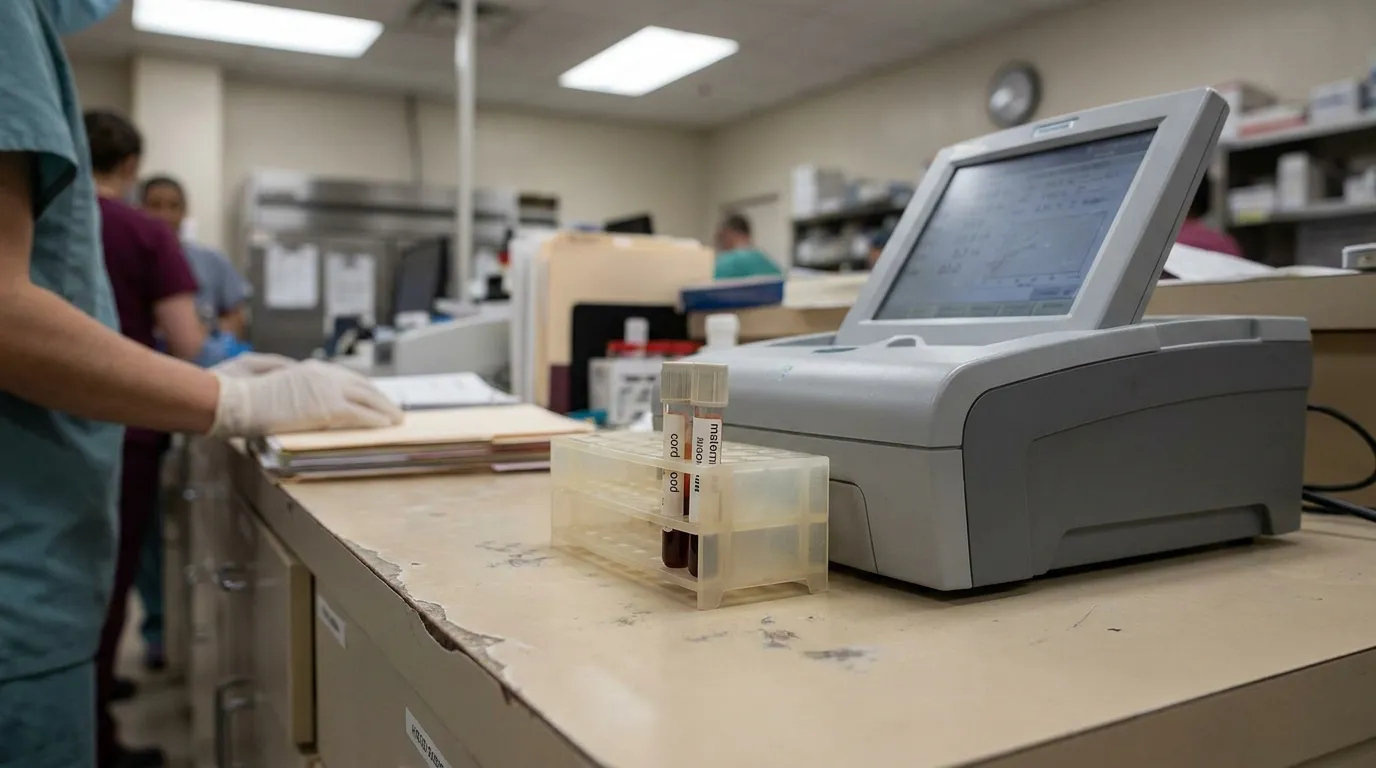
The Science Behind Fetal Hemoglobin CO Binding
Fetal blood is built to pull oxygen away from maternal blood, and that same design makes it dangerously efficient at absorbing carbon monoxide. CDC clinical guidance notes that fetal hemoglobin has greater affinity for carbon monoxide than adult hemoglobin, allowing carboxyhemoglobin to reach higher concentrations in fetal blood than in the mother’s, and that elimination from fetal blood occurs more slowly than from maternal blood.
That slower clearance creates a prolonged exposure window maternal test results simply do not capture. A mother’s COHb level may drop steadily once she’s removed from the source and placed on oxygen, while the fetus continues sitting in a toxic environment for hours longer. For anyone trying to understand carbon monoxide poisoning diagnosis and treatment, this delay is the single most important clinical fact in a pregnancy case.
Because of that risk, the CDC advises pregnant patients with CO poisoning receive supplemental oxygen for longer durations than non-pregnant patients. When treating providers fail to follow that clinical guidance for carbon monoxide poisoning, the consequences can include stillbirth, neurological injury, or permanent developmental harm. Whether any particular treatment decision fell below the standard of care generally requires qualified medical review.
Why Maternal Readings Understate Unborn Baby CO Harm
Insurance adjusters often look for a low maternal number. They may point to a single carboxyhemoglobin reading taken hours after rescue and argue the exposure was mild, ignoring the timing of the draw, oxygen already given in the ambulance, and the fundamental difference between maternal and fetal blood chemistry.
In many cases, the most persuasive medical proof comes from reconstruction rather than a single lab value. Treating physicians, toxicologists, and combustion engineers can work backward from the source, ventilation conditions, and exposure duration to estimate peak levels. Courts may consider that reconstruction alongside symptom documentation, fetal monitoring strips, and placental pathology.
| Factor | Maternal Blood | Fetal Blood |
|---|---|---|
| CO binding affinity | Lower | Higher |
| Peak COHb concentration | Lower | Higher |
| Clearance speed | Faster | Slower |
| Response to oxygen therapy | Quicker | Delayed, requiring longer treatment |
How Texas Law Treats Fetal Injury and Death
Texas generally recognizes a wrongful death cause of action when a person’s death results from another’s wrongful act, neglect, carelessness, unskillfulness, or default. Under Tex. Civ. Prac. & Rem. Code § 71.002, a wrongful death cause of action arises where a person’s wrongful act, neglect, carelessness, unskillfulness, or default causes an individual’s death. Section 71.003(a) conditions the subchapter’s application on the injured individual having been entitled to bring an action had they lived or been born alive, and § 71.001 defines ‘individual’ to include an unborn child at every stage of gestation and ‘death’ to include failure to be born alive, thereby permitting wrongful death actions for the death of an unborn child.
The statute also limits who may bring the claim. Section 71.004(a) states that an action under the subchapter is for the exclusive benefit of the surviving spouse, children, and parents of the deceased, and § 71.004(b) identifies those same beneficiaries as the parties who may bring the suit. Section 71.003(a) addresses the subchapter’s application, providing that it applies only if the injured individual would have been entitled to bring an action had they lived. Wrongful death statutes are state-specific and vary in who may bring a claim and what damages are recoverable, so a Texas wrongful death claim generally must be analyzed under Texas authority.
A Criminal Carve-Out That Does Not Limit Civil Claims
Texas Penal Code §§ 19.06 and 22.12 provide that criminal homicide and assault statutes do not apply to the injury or death of an unborn child if the conduct charged is committed by the mother. That carve-out sits in the criminal code and addresses prosecution of the mother. It generally does not shield a negligent landlord, hotel operator, property manager, or equipment manufacturer from civil liability for a prenatal CO poisoning.
Air Contaminant Migration and Premises Claims
When carbon monoxide travels from one property into another, a separate Texas standard applies. Section 75.002(h) provides that an owner, lessee, or occupant of real property may be liable for trespass from migration of any air contaminant, other than odor, only upon a showing of actual and substantial damages. That provision matters when CO from a neighboring generator, boiler room, or industrial source seeps into a residence.
How Texas Statutes Treat Serious Harm to Children
Texas generally defines actionable harm to a child broadly in other contexts, which helps frame severity. Tex. Fam. Code § 261.001(1)(C) defines abuse to include physical injury resulting in substantial harm, or the genuine threat of it. That definition arises in child-welfare law rather than tort law, but it illustrates that Texas statutes generally treat substantial physical harm to a child as a serious legal matter.
Building CO Blood Testing Evidence in a Texas CO Injury Claim
Texas statutory law strictly regulates medical evidence in toxic exposure cases, highlighting the need for precise clinical documentation. The asbestos claim standards in Tex. Civ. Prac. & Rem. Code Chapter 90 require claimants to provide specific pulmonary function test results. While that chapter governs long-term asbestos exposure rather than acute CO poisoning, it shows how Texas civil litigation demands rigorous, objective medical testing to prove injury, meaning securing timely carboxyhemoglobin blood tests rather than relying solely on symptom reports.
Evidence in these cases disappears quickly, and landlords rarely preserve it voluntarily. Furnaces get replaced. Maintenance logs get "lost." Detectors that were never installed cannot be photographed after the fact.
Preserve or request the following as early as possible:
- Every emergency room record showing carboxyhemoglobin levels, the exact time of each blood draw, and oxygen administered before the draw
- Fetal monitoring strips, ultrasound reports, and any placental pathology
- Maintenance and repair records for furnaces, water heaters, boilers, generators, and vented appliances
- Fire department, EMS, and utility company response reports documenting ambient CO readings
- Photographs of detectors, vents, flues, and the appliance suspected as the source
💡 Pro Tip: Ask the hospital for the precise timestamp of every blood draw, not just the result. A 12% reading taken four hours after rescue tells a very different story than a 12% reading taken on arrival.
Proving Liability After Carbon Monoxide Poisoning While Pregnant
A Texas CO injury claim based on negligence generally turns on four elements: duty, breach, causation, and damages. A landlord generally owes duties to tenants regarding premises condition; a hotel owes duties to guests. Alternatively, a manufacturer may face strict products liability where a defective heater, generator, or vent design was unreasonably dangerous and allowed gas to accumulate.
Causation is generally where prenatal CO toxicity cases are won or lost. The defense may argue any pregnancy complication was coincidental. Countering that typically requires obstetric records, toxicology analysis, and testimony connecting the documented exposure to the specific injury. Legal scholarship published in the Texas Wesleyan Law Review archive at Texas A&M’s law repository has examined how Texas courts approach these prenatal injury questions.
Damages in catastrophic cases can include medical costs, future care for a permanently disabled child, lost earning capacity, mental anguish, and wrongful death damages where a child does not survive. Outcomes depend entirely on the specific facts, the strength of the evidence, and applicable insurance coverage. No attorney can promise a result, and anyone who does should raise a red flag.
Deadlines That Can End a Case Before It Starts
Texas generally applies a two-year limitations period to personal injury and wrongful death actions, subject to important exceptions. Claims involving minors, claims against governmental entities, and claims where the harm was not immediately discoverable may be governed by different rules. Texas courts generally interpret tolling and discovery-rule exceptions narrowly, and exceptions may not apply automatically.
Administrative complaints to a code enforcement or health agency are generally separate from a civil lawsuit. Filing a complaint with a city or state agency generally does not preserve your civil deadline unless a statute expressly says so. If you believe a Texas carbon monoxide case may exist in your family’s situation, the safer course is to have the timeline evaluated promptly rather than assuming an extension applies.
Frequently Asked Questions
1. Why is fetal carboxyhemoglobin higher than the mother’s level?
Fetal hemoglobin binds carbon monoxide more strongly than adult hemoglobin, so the gas concentrates in fetal blood. The fetus also eliminates carbon monoxide more slowly, meaning levels can stay elevated after maternal readings have already dropped.
2. Can a family bring a claim in Texas if an unborn child died from CO exposure?
Texas law defines ‘individual’ to include an unborn child at every stage of gestation and ‘death’ to include failure to be born alive, generally permitting wrongful death actions for the death of an unborn child, with § 71.004 identifying the surviving spouse, children, and parents as the parties who may sue. Whether a particular claim succeeds depends on proof of negligence, causation, and damages.
3. What if my carboxyhemoglobin reading looked low at the hospital?
A low maternal reading does not necessarily reflect peak exposure or the level the fetus absorbed. The timing of the blood draw and any oxygen given beforehand can substantially lower the recorded value.
4. Who can be held responsible for a prenatal CO poisoning in San Antonio?
Depending on the facts, potentially responsible parties may include landlords, property management companies, hotel operators, HVAC contractors, or appliance manufacturers. Liability generally requires showing that a party owed a duty and breached it in a way that caused the harm.
5. How quickly should a family act after a suspected exposure?
As soon as possible. Physical evidence such as furnaces and vents is often repaired or replaced within days, and Texas limitations deadlines generally run in the background regardless of how overwhelming the situation feels.
Your Family’s Loss Deserves a Full Accounting
Carbon monoxide does not announce itself, and its worst damage in pregnancy often occurs in a body that cannot signal distress. The chemistry that makes fetal blood so efficient at capturing oxygen is the same chemistry that makes it vulnerable to a colorless gas leaking from equipment someone else was responsible for maintaining. Texas law may provide real avenues for accountability, but those avenues generally depend on evidence gathered early and interpreted correctly.
Paula Wyatt has spent decades standing between grieving families and the corporate defendants and insurance companies who would rather the story end with a low lab value. If your family is facing the aftermath of carbon monoxide poisoning while pregnant, Wyatt Law Firm in San Antonio is prepared to fight for the full truth. Call 210-340-5550 or schedule your free case review today.
Disclaimer: This content is for informational purposes only and is not legal advice. Every case is unique, and results may vary. Consult an attorney about your specific circumstances.