
Carbon monoxide is one of the deadliest threats hiding inside Texas homes. The CDC describes CO as an odorless, colorless gas that kills without warning. Each year, more than 400 Americans die from unintentional CO poisoning not linked to fires, while over 100,000 visit emergency departments. In Texas, where gas-powered heating systems and older appliances remain common, the risk of catastrophic CO exposure is alarmingly real. Severe poisoning can cause traumatic brain injuries, permanent neurological damage, organ failure, and death. Understanding why this silent killer is so dangerous could save your life or help you take legal action if negligence caused your family harm.
If you or a loved one has suffered serious injury from carbon monoxide exposure in a Texas home, Wyatt Law Firm is ready to fight for the compensation you deserve. Call 210-972-9279 or reach out to our team today for a consultation.
Why Carbon Monoxide Is Called the Silent Killer in Texas
Carbon monoxide earns its grim reputation because human senses cannot detect it. You cannot see it, smell it, or taste it. Unlike a gas leak that carries an added odorant, CO provides zero warning before it begins displacing oxygen your body needs to survive. When CO enters the air, your body replaces oxygen in red blood cells with carbon monoxide, causing oxygen deprivation that can damage the brain, heart, and other vital organs within minutes.
The danger is compounded by how common CO sources are inside Texas homes. Gas-burning furnaces, portable generators, and charcoal grills all produce this poison gas. Appliances that are not properly vented, particularly in tightly sealed rooms, can build lethal CO amounts before anyone realizes something is wrong. In San Antonio, where winters bring cold snaps and summer storms knock out power, residents often turn to backup heating and generators that dramatically increase CO exposure risks.
💡 Pro Tip: If multiple people in your household develop flu-like symptoms simultaneously that improve when you leave the home, carbon monoxide may be the cause. Leave immediately, call 911, and seek medical evaluation.
Common Sources of Carbon Monoxide in San Antonio Residences
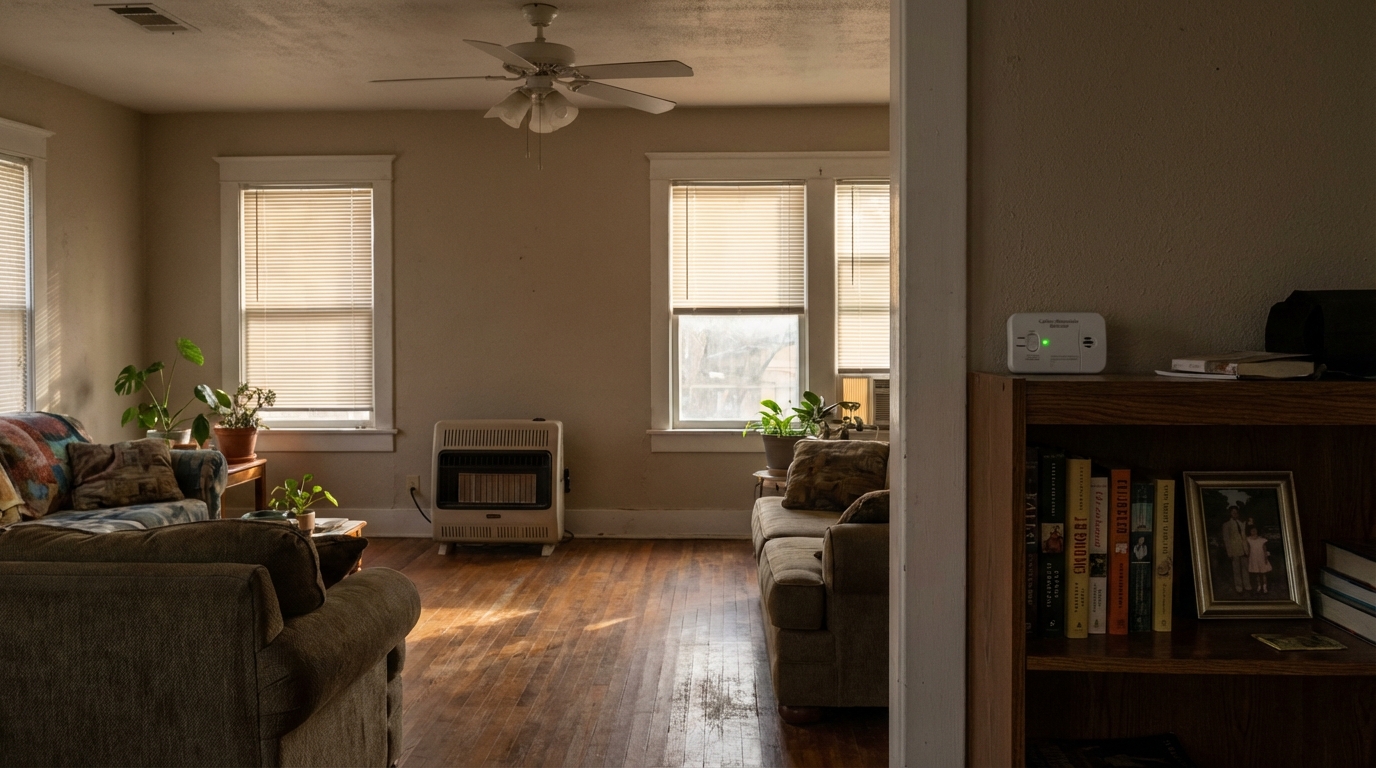
Texas homes contain numerous appliances capable of producing dangerous CO levels. Gasoline-powered equipment, charcoal grills, wood stoves, fireplaces, gas space heaters, and kerosene lanterns all generate carbon monoxide during operation. When these items operate in enclosed or poorly ventilated spaces, CO accumulates rapidly.
Unvented gas space heaters pose a particularly severe threat. Many older San Antonio homes and rental properties still rely on these units, especially where upgrading HVAC systems is cost-prohibitive.
CO Source | Common Location | Key Risk Factor |
|---|---|---|
Gas furnaces | Utility closets, attics | Cracked heat exchangers, poor venting |
Portable generators | Garages, patios, enclosed areas | Running indoors during power outages |
Gas water heaters | Utility rooms, closets | Blocked or deteriorated flue pipes |
Unvented space heaters | Bedrooms, living rooms | No external venting by design |
Charcoal grills | Garages, covered patios | Indoor use during cold weather |
Wood-burning fireplaces | Living areas | Blocked or unmaintained chimneys |
💡 Pro Tip: Never run a car engine inside a closed garage, even with the door partially open. CO can accumulate to dangerous levels faster than most people realize and seep into connected living spaces.
How CO Poisoning Symptoms Disguise a Deadly Threat
One of the most dangerous aspects of carbon monoxide poisoning is that its symptoms closely mimic the flu. The CDC notes that CO symptoms include headache, dizziness, weakness, nausea, vomiting, chest pain, and confusion. This resemblance leads many victims to delay seeking emergency care.
Prolonged exposure produces progressively worse outcomes. Early exposure causes headaches and sleepiness. Continued exposure brings nausea, vomiting, and heart palpitations. At high concentrations, victims lose consciousness and face death. People who are sleeping or intoxicated may die from CO poisoning before experiencing symptoms, making nighttime bedroom exposure particularly catastrophic.
Vulnerable Populations Face Even Greater Risk
Certain groups are far more likely to suffer severe or fatal outcomes from CO exposure. Infants, the elderly, and people with chronic heart disease, anemia, or breathing problems face elevated risk from even moderate CO levels. For families caring for aging parents or young children, a malfunctioning furnace or blocked vent can create a medical emergency in hours. Learn more about the critical signs of CO poisoning to protect those most at risk in your household.
💡 Pro Tip: If you are pregnant, have a heart condition, or care for infants or elderly family members, consider purchasing a digital CO detector that displays real-time parts-per-million readings.
The Disproportionate Impact on Low-Income San Antonio Communities
Carbon monoxide dangers do not affect all communities equally. Research shows a socioeconomic gradient in CO exposure risk, with low-income and socially vulnerable communities facing disproportionate CO exposure due to older housing, inadequate ventilation, and fewer resources to mitigate risks.
Older rental properties in underserved neighborhoods may have outdated or poorly maintained heating systems, deteriorating ventilation, and absent CO detectors. Tenants often lack the resources or authority to demand repairs. When a landlord or property owner fails to maintain safe living conditions and a tenant suffers catastrophic CO poisoning, that property owner may bear legal responsibility under Texas premises liability law.
How Negligence Leads to CO Injury Claims
Under Texas law, property owners and landlords owe a duty of care to maintain safe premises. When they breach that duty by failing to inspect, repair, or properly vent gas appliances, and that breach causes CO exposure resulting in serious injury or death, victims may pursue a civil claim. Key evidence often includes maintenance logs, inspection reports, medical records, and testimony from professionals with extensive experience in CO poisoning cases in Texas.
💡 Pro Tip: If you suspect CO exposure caused your injuries, preserve everything. Photograph the appliances, request maintenance records in writing, and keep copies of all medical records and bills.
Treatment for Severe CO Poisoning and Long-Term Consequences
Severe carbon monoxide poisoning can cause permanent, life-altering damage even when victims survive. Treatment for serious cases may include hyperbaric oxygen therapy, which saturates the blood with pure oxygen to compensate for oxygen deficiency. Each year in the United States, more than 100,000 people visit emergency departments for accidental carbon monoxide poisoning, over 14,000 are hospitalized, and roughly 400, 543 die from accidental (non-fire-related) CO exposure.
Survivors of significant CO exposure frequently face lasting neurological injuries including memory loss, cognitive impairment, personality changes, and difficulty with motor function. In severe cases, prolonged oxygen deprivation leads to conditions comparable to traumatic brain injury. The lifetime medical costs and lost earning capacity can be staggering, which is why pursuing full compensation through a carbon monoxide poisoning lawyer is so important for affected families.
How a Carbon Monoxide Poisoning Lawyer Can Help Your Case
An experienced carbon monoxide poisoning lawyer understands the complex intersection of premises liability, products liability, and toxic exposure law these cases demand. CO injury claims in San Antonio require thorough investigation into who owned, maintained, and inspected the equipment or property responsible for exposure.
Victims of CO poisoning in Texas may pursue compensation for:
Past and future medical expenses, including emergency care, hospitalization, and rehabilitation
Lost wages and diminished future earning capacity
Physical pain and mental anguish
Loss of consortium for affected family members
Wrongful death damages when CO exposure proves fatal
Texas imposes a two-year statute of limitations on personal injury claims. Waiting too long may jeopardize your ability to recover compensation. Consulting with a carbon monoxide attorney in San Antonio as soon as possible can help preserve your legal options.
💡 Pro Tip: Texas follows a modified comparative fault rule. If a defendant argues you share responsibility for your CO exposure, your recovery will be reduced by your percentage of fault, and if you are found more than 50% responsible, you are barred from recovering damages.
Prevention Steps Every Texas Household Should Take
The CDC recommends several steps to reduce CO danger in your home. Install battery-operated or battery backup CO detectors near every sleeping area and replace them every five years. Check batteries at least twice a year. Never use a gas stove or oven to heat your home, and never run a portable generator inside an enclosed space.
Frequently Asked Questions
1. What should I do immediately if my CO detector alarm sounds?
Leave your home immediately and call 911. Do not attempt to locate the source of the CO leak. Once outside, account for all household members and seek medical evaluation, even if no one feels symptomatic. Early medical documentation strengthens both your health outcomes and any potential legal claim.
2. Can I file a lawsuit if my landlord failed to install CO detectors?
You may have grounds for a premises liability claim. Texas does not currently impose a statewide statutory requirement for landlords to install carbon monoxide detectors, though some local jurisdictions have adopted such requirements. If your landlord failed to maintain safe conditions and that failure resulted in CO exposure causing serious injury, Texas law may allow you to pursue damages. The strength of your claim depends on lease terms, applicable local ordinances, the landlord’s knowledge of the hazard, and evidence of negligence.
3. How long do I have to file a CO poisoning injury claim in Texas?
Texas generally imposes a two-year statute of limitations for personal injury claims, measured from the date of injury. However, the discovery rule may apply in limited circumstances where the injury was not immediately apparent. Contacting a carbon monoxide poisoning lawyer promptly is essential to protecting your rights.
4. What types of damages can CO poisoning victims recover?
Victims of serious CO exposure may be entitled to compensation for medical bills, lost wages, pain and suffering, and long-term care costs. In wrongful death cases, surviving family members may also recover funeral expenses, loss of companionship, and loss of future financial support.
5. Who can be held liable for CO poisoning in a rental property?
Potentially liable parties may include landlords, property management companies, maintenance contractors, and appliance manufacturers. Liability depends on who owed a duty of care, who breached that duty, and whether the breach caused the CO exposure. An attorney with extensive experience in CO injury claims can investigate your case to identify all responsible parties.
Protecting Your Family and Your Legal Rights After CO Exposure
Carbon monoxide remains one of the most dangerous and deceptive hazards in Texas homes. Its invisibility, its ability to mimic common illness, and its potential to cause catastrophic brain injuries and death make it a threat that every San Antonio family should take seriously. When negligence by a landlord, property owner, or manufacturer allows CO to harm you or someone you love, Texas law provides a path toward accountability and compensation.
Wyatt Law Firm stands with families devastated by carbon monoxide poisoning in San Antonio and throughout Texas. If you believe negligence caused your CO exposure, call 210-972-9279 or contact us now to discuss your case with a dedicated legal team that fights relentlessly for the injured.