
Why I-35 in San Antonio Is One of the Most Dangerous Corridors for 18-Wheeler Crashes
Interstate 35 cuts through the heart of San Antonio, carrying a relentless stream of commercial trucks hauling goods between Mexico and the central United States. This corridor is one of North America’s busiest freight routes, and the sheer volume of 18-wheelers sharing lanes with passenger vehicles creates conditions ripe for catastrophic collisions. Texas roads had approximately 1.35 deaths per 100 million vehicle miles traveled in 2024 compared to the national average of about 1.19 per 100 million VMT in 2024. Combined with I-35’s commercial traffic density, this creates a stretch where deadly 18 wheeler crashes in Texas occur with devastating frequency.
If you or a loved one suffered catastrophic injuries in a commercial truck accident in San Antonio, Wyatt Law Firm is prepared to fight for the full compensation your family deserves. Call 210-340-5550 or reach out to our team today to discuss your case.
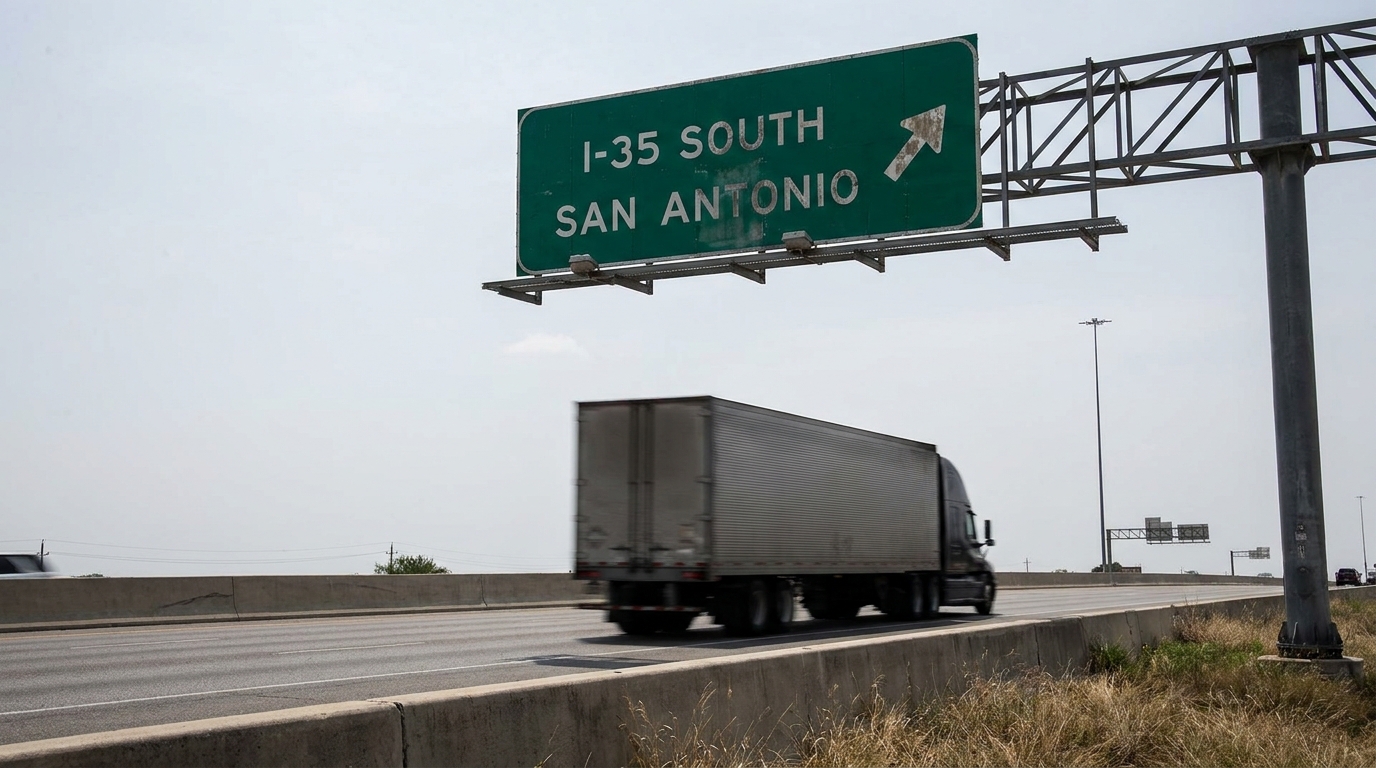
The Physics of Destruction: Why 18-Wheelers Cause Catastrophic Injuries
The single most important factor that makes semi truck wrecks on I-35 in Texas so lethal is the massive weight disparity between commercial trucks and passenger vehicles. A fully loaded 18-wheeler can weigh up to 80,000 pounds under federal regulations, while the average passenger car weighs roughly 4,000 pounds. When an object twenty times heavier strikes a smaller vehicle at highway speeds, the smaller vehicle’s occupants absorb almost all the destructive force.
The injuries reflect that extreme force. Truck accident injuries often involve brain or spinal cord damage, causing permanent disabilities affecting the ability to walk, speak, work, or live independently. Survivors of I-35 truck crashes in San Antonio frequently face traumatic brain injuries, crushed limbs requiring amputation, severe burns, and internal organ damage demanding emergency surgery and lifelong medical care.
💡 Pro Tip: If you are hospitalized after a truck crash, ask a trusted family member to photograph the accident scene, the vehicles involved, and any visible road conditions as soon as possible. Physical evidence on a busy highway like I-35 can disappear within hours.
How Truck Driver Negligence Fuels Deadly Collisions on I-35
Dangerous driver behavior is a leading contributor to catastrophic truck crashes on San Antonio’s stretch of I-35. Truckers may speed through congested zones, drive while excessively fatigued after violating hours-of-service limits, abuse alcohol or drugs, or become distracted behind the wheel. Each behavior dramatically increases collision likelihood and severity, particularly on a high-speed interstate where traffic conditions shift rapidly.
Fatigue is an especially insidious danger on long-haul freight corridors. I-35 serves as a primary artery for cross-border commerce, meaning many truck drivers have been on the road for extended periods before reaching San Antonio. Fatigued drivers experience delayed reaction times comparable to intoxicated drivers, and at 65 miles per hour, even a one-second delay in braking can mean the difference between a near-miss and a fatal 18 wheeler collision in San Antonio.
Speeding and Reckless Driving in Construction Zones
San Antonio’s I-35 corridor has been subject to significant ongoing construction, creating additional hazards. When 18-wheeler drivers ignore reduced speed limits, narrow lanes, and shifting traffic patterns in active construction zones, the consequences can be catastrophic. The combination of excessive speed and reduced maneuverability leaves almost no margin for error.
💡 Pro Tip: Texas law may impose enhanced penalties and liability considerations when crashes occur in active construction zones. If your crash happened in a work zone on I-35, make sure your attorney investigates whether the truck driver violated posted construction zone speed limits.
Crash Types Unique to 18-Wheelers That Make I-35 Wrecks So Severe
Commercial trucks are involved in crash types that simply do not occur between two passenger vehicles, and each carries devastating consequences.
Rollover and Jackknife Accidents
A truck’s higher center of gravity makes it far more susceptible to rollover accidents. A rolling 18-wheeler can strike multiple vehicles across several lanes or rupture fuel tanks, causing fires or explosions. Equally dangerous are jackknife 18-wheeler crashes, which occur when the trailer swings to the side at a 90-degree angle during sudden stops. On a packed stretch of I-35, a jackknifing trailer can sweep across multiple lanes and create chain-reaction pileups.
Underride and Override Crashes
Underride accidents are among the most devastating crash types unique to large trucks. These occur when a passenger car slides under the side or rear of a truck trailer, often shearing off the roof and killing or critically injuring occupants. Override accidents present the inverse danger: a truck runs over the rear of a passenger vehicle, potentially crushing the car beneath its massive weight.
| Crash Type | How It Happens | Why It Is So Deadly |
|---|---|---|
| Rollover | Truck tips due to high center of gravity, speed, or sharp turns | Can strike multiple vehicles; may cause fires or explosions |
| Jackknife | Trailer swings 90 degrees during sudden braking | Sweeps across lanes, triggering multi-vehicle pileups |
| Underride | Car slides under the side or rear of a truck | Shears off vehicle roof; often fatal |
| Override | Truck rides over the rear of a smaller vehicle | Crushes the passenger vehicle beneath the truck |
| Cargo spill | Improperly secured or hazardous cargo breaks free | Falling debris causes secondary crashes; toxic spills endanger wide areas |
Hazardous Cargo Spills and Explosions
Tanker trucks carrying flammable or toxic substances pose risks beyond the initial impact. Accidents involving these vehicles can lead to fires, explosions, or spills of hazardous materials that threaten crash victims, bystanders, emergency responders, and neighborhoods near the interstate. Overloading increases loss-of-control accidents, and falling debris may strike other vehicles or cause secondary crashes.
💡 Pro Tip: If your crash involved a tanker truck or hazardous materials, the trucking company’s insurance carrier may attempt to minimize the environmental and health exposure you suffered. Document all symptoms, even those appearing days or weeks later, and seek immediate medical evaluation.
Who Can Be Held Liable After a Catastrophic Truck Crash in San Antonio
Truck accident cases involve a far wider range of potentially liable parties than ordinary car accidents. A commercial truck accident in San Antonio may involve negligence by the driver, the trucking company, a cargo loading crew, a third-party maintenance provider, or even the manufacturer of a defective truck component.
Maintenance failures are a significant and often hidden cause of preventable crashes. Trucking companies and their drivers have financial incentives to cut corners on inspections and maintenance. A thorough investigation can uncover these failures by securing inspection logs, maintenance records, and electronic logging device data before evidence can be destroyed or altered.
- The truck driver (for speeding, fatigue, distraction, or impairment)
- The trucking company (for negligent hiring, inadequate training, or pressure to violate safety rules)
- Third-party maintenance companies (for defective repairs or missed inspections)
- Cargo loading companies (for improperly loaded or overloaded freight)
- Vehicle or parts manufacturers (for defective brakes, tires, or other components)
💡 Pro Tip: Trucking companies are required to maintain certain records under federal motor carrier regulations, but those records may be overwritten or discarded on short timelines. An attorney experienced in these cases can send a spoliation letter to preserve critical evidence immediately after the crash.
How Texas HB 19 May Affect Your 18 Wheeler Accident Attorney San Antonio Case
Texas House Bill 19, signed by Governor Abbott on June 16, 2021, changed the procedural landscape for commercial truck accident lawsuits. Under HB 19, a defendant may move for bifurcated trials: the first phase determines liability and compensatory damages, while the second addresses exemplary damages and corporate accountability. Evidence against the employer is generally restricted during the first phase. Critics warn this law creates a perverse incentive for commercial vehicle companies to avoid investing in available safety measures.
For victims of catastrophic truck crashes, HB 19 adds procedural hurdles requiring careful legal strategy. An 18 wheeler accident attorney in San Antonio who understands these requirements can build a case designed to clear the first liability phase and hold corporate defendants fully accountable in the second.
💡 Pro Tip: Because HB 19 requires a two-phase trial, gathering strong evidence of the truck driver’s individual negligence is more critical than ever. Do not delay consulting an attorney, as early investigation can make or break the path to holding the trucking company responsible.
Frequently Asked Questions
1. Why are 18-wheeler crashes on I-35 more dangerous than regular car accidents?
The primary reason is the extreme weight difference between an 18-wheeler and a passenger car. A loaded commercial truck can weigh 80,000 pounds, greatly increasing catastrophic injury risk. I-35’s high speeds and heavy traffic compound the danger, leaving smaller vehicles virtually defenseless in direct impacts.
2. What types of injuries are most common in San Antonio truck accidents?
Brain and spinal cord injuries are among the most common and devastating outcomes. These frequently cause permanent disabilities affecting a victim’s ability to work, care for themselves, or perform daily activities. Victims also suffer amputations, severe burns, and crush injuries requiring extensive surgical intervention.
3. Can I sue the trucking company, or only the driver?
Under Texas HB 19, the trial may be bifurcated so that the truck driver’s liability and compensatory damages are determined in the first phase, and claims for exemplary damages and employer accountability proceed in the second phase. This adds a procedural step limiting certain evidence against the employer initially, but does not eliminate corporate accountability.
4. What should I do immediately after an 18-wheeler crash on I-35?
Seek emergency medical attention first, even if injuries seem minor. Many catastrophic injuries, including traumatic brain injuries and internal bleeding, may not present obvious symptoms immediately. Then document the scene, obtain the truck driver’s information and company name, and contact an attorney before speaking with any insurance representative.
5. How long do I have to file a truck accident lawsuit in Texas?
Texas generally imposes a two-year statute of limitations for personal injury claims under Texas Civil Practice and Remedies Code § 16.003. Consult an attorney well before the deadline, as truck accident cases require substantial investigation that takes time to complete.
When the Worst Happens on I-35, You Need a Relentless Advocate
A catastrophic 18 wheeler accident in San Antonio can change your family’s life in an instant, leaving you facing devastating injuries, mounting medical costs, and a legal process designed to protect the very companies whose negligence caused your harm. Paula Wyatt and the Wyatt Law Firm have built a proven track record fighting trucking companies and their insurers on behalf of families suffering through this crisis. You do not have to face this fight alone.
Call Paula Wyatt at 210-340-5550 or contact Wyatt Law Firm now for a case evaluation. The sooner you act, the sooner critical evidence can be preserved and your fight for justice can begin.