
The oil rig worker death rate in Texas continues to outpace every other state in the nation, and Midland-Odessa sits at the center of the crisis. Federal data confirms that the Permian Basin, responsible for roughly 40% of U.S. oil production, accounts for approximately 30% of all oilfield fatalities nationwide. For families of rig workers, well-servicing crews, and contract laborers across West Texas, these are not abstract statistics. They represent loved ones who left for a shift and never came home. Recent CDC injury surveillance data, OSHA hazard analyses, and Texas regulatory requirements paint a detailed picture of where danger comes from, who bears the greatest risk, and what legal options exist when operators and contractors fail to protect their workers.
Why the Oil Rig Worker Death Rate Remains Alarmingly High in Texas
Texas recorded the highest number of severe oil and gas extraction injuries of any state, accounting for 54% of all reports nationally. That figure, 1,134 severe injuries in the reporting period, dwarfs the numbers from North Dakota (221, or 10.5%) and Oklahoma (171, or 8.1%). The CDC’s surveillance findings reveal a troubling pattern: the workers most exposed to catastrophic harm are not operators in corporate offices but contract crews performing hands-on labor at the wellsite.
Contact with objects and equipment was the leading cause of severe injuries, responsible for 60.9% of all incidents. Slips, trips, and falls followed at 17.6%. OSHA’s analysis of common wellsite incidents identifies struck-by and caught-in/between hazards as typically high during most phases of well drilling and servicing. When aging Permian Basin infrastructure meets production pressure, workers get hurt at rates far exceeding the national average.
The oil and gas extraction industry has historically carried a fatality rate seven times higher than the U.S. workforce average. Motor vehicle crashes account for nearly 29% of all oilfield deaths, followed by being struck by objects (roughly 22%) and explosions (over 14%). In the Midland-Odessa corridor, these risks are amplified by heavy truck traffic on narrow rural roads, chronic driver fatigue, and understaffed safety operations on active well pads.
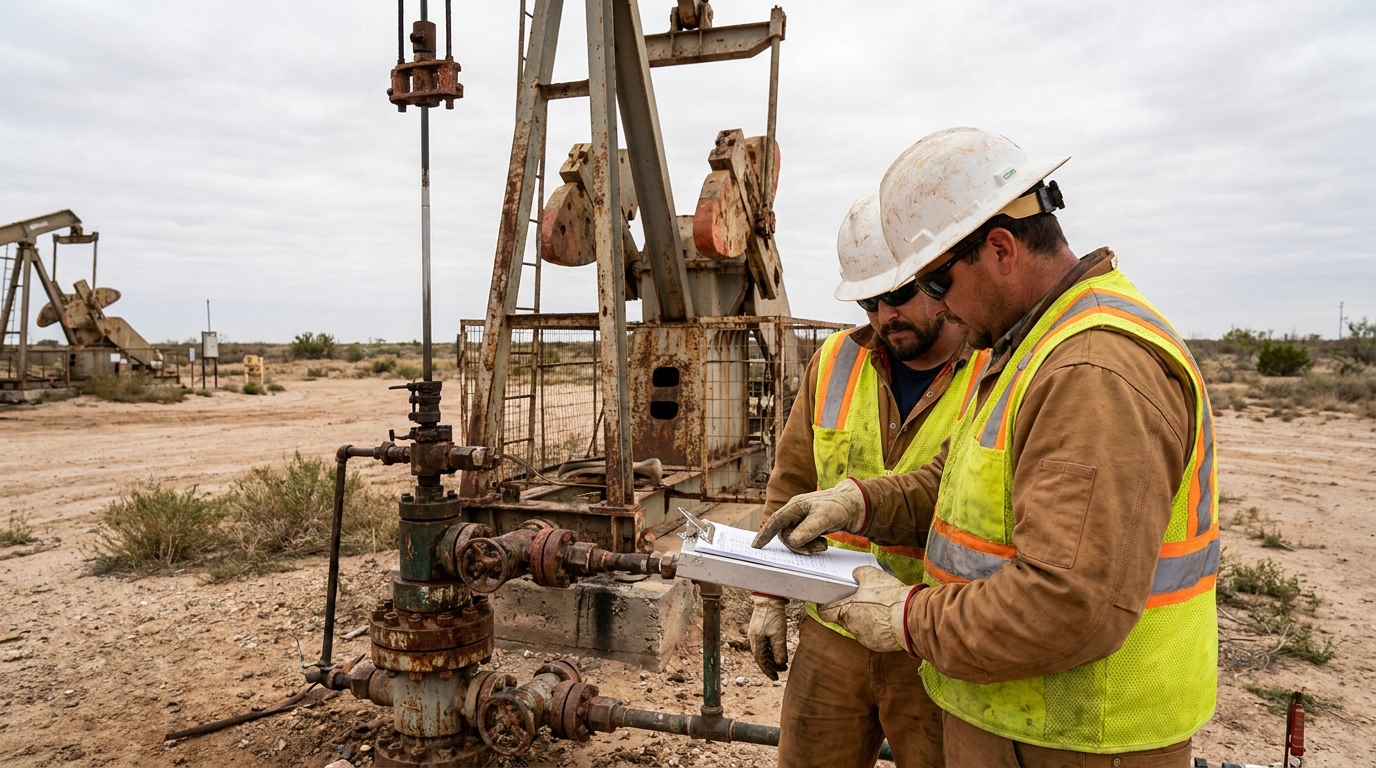
When a Contract Worker Doesn’t Come Home: A Midland Family’s Nightmare
Consider a scenario all too familiar in Midland-Odessa. A 34-year-old well-servicing crew member, employed by a third-party contractor, is dispatched to perform maintenance on aging pump equipment at a lease site south of Odessa. The wellsite has outdated wiring. No formal safety briefing is conducted. During the job, corroded piping gives way, and the worker is struck by heavy equipment, crushing his hand and forearm.
He is rushed to Medical Center Hospital, where surgeons amputate two fingers. His employer carries workers’ compensation, but benefits barely cover surgical bills, let alone lost earning capacity or long-term rehabilitation. What he may not realize is that a separate third-party negligence claim against the site operator or equipment manufacturer could provide significantly greater compensation. The key is identifying who controlled the worksite conditions and acting before the statute of limitations expires.
This reflects the data: contract workers in well-servicing companies accounted for 70.1% of all severe oil and gas extraction injuries, and 42.6% of severe injury reports involved an upper extremity, with 86.1% of those involving the hands.
The Hazards Driving Injuries and Deaths on Permian Basin Well Sites
Toxic Gas Exposure and Confined Spaces
Well gases including hydrogen sulfide (H2S), sulfur dioxide, carbon dioxide, carbon monoxide, and volatile organic compounds can escape from the well itself. Except for methane (which is lighter than air) and carbon monoxide (which has approximately the same density as air), these gases are heavier than air and settle in low-lying areas around the wellsite, particularly dangerous on aging wells with compromised seals. Workers entering confined spaces such as tanks and cellars without proper atmospheric monitoring face sudden incapacitation or death.
Falls, Fires, and Electrocution
Falls from derricks, masts, tanks, and other elevated equipment remain a persistent hazard at well sites. OSHA data confirms that rig floors and elevated platforms regularly expose workers to fall risks, particularly during maintenance on older Permian Basin infrastructure. Fires and explosions are a leading cause of fatalities, a risk that escalates when equipment is corroded or degraded. Electrocution hazards are most frequently caused by:
- Lack of awareness of electrical hazards
- Improper training
- Use of inappropriate equipment, including inappropriate PPE
Contract Workers Bear the Greatest Burden
The data is unambiguous: contract workers face elevated risks compared to direct employees of operating companies. They often have less information about their work environment, less job-specific training, less access to safety equipment, and no union representation. In the Permian Basin, where operators routinely cycle through multiple service contractors on a single well, this creates dangerous gaps in accountability. When injuries occur, oilfield accidents in the Texas Permian Basin frequently involve disputes over which entity bears responsibility.
Texas Regulatory Framework: What the Law Requires of Operators
Under Texas Natural Resources Code Chapter 91, the Railroad Commission of Texas is required to adopt and enforce rules for the operation, abandonment, and proper plugging of wells to prevent pollution of surface and subsurface water. Operators must maintain financial security, bonds, letters of credit, or cash deposits, to ensure well plugging obligations are met. When operators default, the Oil-Field Cleanup Fund may be used for plugging abandoned wells and enforcing pollution-prevention rules.
The statute also mandates identifying abandoned wells that pose high contamination risk, including prioritizing wells with compromised casings. These regulatory obligations matter to injured workers because failures in well maintenance, abandoned-well management, and equipment integrity are often central to establishing negligence in a third-party oilfield injury claim.
The Oil Rig Worker Death Rate and the Third-Party Claim Advantage
Many oilfield workers assume that workers’ compensation is their only remedy after an on-the-job injury. In Texas, that assumption can cost families hundreds of thousands, or even millions, of dollars. Texas does not require employers to carry workers’ compensation insurance. If your employer is a non-subscriber, you may have the right to sue them directly for negligence.
Even when workers’ compensation benefits are available, a third-party claim may exist against the site operator, a drilling contractor, an equipment manufacturer, or another entity whose negligence contributed to the injury. Third-party claims are not subject to the same damage caps as workers’ compensation, meaning they can include compensation for full lost earning capacity, pain and suffering, disfigurement, and, in wrongful death cases, loss of companionship. The CDC’s severe injury surveillance data reinforces why these claims matter: machinery was the leading source of injury at 30.1%, and oil drilling rigs and machinery were specifically involved in 20.5% of all injuries.
Texas imposes a two-year statute of limitations on most personal injury and wrongful death claims. Courts interpret tolling exceptions narrowly, and waiting too long to investigate the facts can be fatal to a claim. Government administrative deadlines operate on separate and often shorter timelines.
How Does This Impact Me?
What does the oil rig worker death rate data mean for my potential claim?
The federal data documenting Texas’s disproportionate share of oilfield injuries and fatalities can strengthen a negligence claim. It may help establish that an operator or contractor knew, or should have known, about elevated risks at their worksite and failed to implement adequate safety measures. Statistical evidence combined with site-specific safety violations can be powerful in proving your injury was foreseeable and preventable.
I’m a contract worker, can I sue the site operator who hired my employer?
In many cases, yes. Contract workers may pursue third-party claims against site operators, equipment owners, or other entities that controlled the conditions leading to the injury. Because contract workers often receive less training and safety information than direct employees, the duty of care owed by the site operator may be significant.
Does workers’ compensation prevent me from filing a separate lawsuit?
Not necessarily. Workers’ compensation in Texas, when available, generally bars claims against your direct employer, but does not prevent you from suing a negligent third party such as a site operator, equipment manufacturer, or another contractor. If your employer is a non-subscriber, additional options may be available.
What should I do immediately after an oilfield injury?
Seek medical attention first, then preserve evidence. Document the scene if possible, report the injury to your supervisor in writing, and avoid giving recorded statements to insurance representatives before consulting an attorney. Critical evidence, maintenance logs, safety inspection records, training documentation, is often controlled by the operator and can disappear quickly if not preserved through proper legal channels.
How long do I have to file a claim after an oilfield injury in Texas?
Texas generally imposes a two-year statute of limitations on personal injury and wrongful death claims. However, the discovery rule may extend this deadline in limited circumstances, for example, when an injury caused by toxic exposure is not immediately apparent. Courts interpret these exceptions narrowly. Separate deadlines may apply to administrative complaints filed with OSHA or other government agencies.
What Midland-Odessa Oil Field Workers and Families Should Do Now
The oil rig worker death rate in the Permian Basin is not improving fast enough, and contract workers performing well-servicing operations bear the heaviest burden. Aging infrastructure, toxic gas exposure, machinery hazards, and systemic underinvestment in safety training continue to produce preventable injuries and deaths. For workers and families in Midland-Odessa affected by an oilfield accident, understanding the difference between a workers’ compensation claim and a third-party negligence action can be the single most important factor in securing adequate compensation.
Outcomes in oilfield injury cases depend on the specific facts, the evidence preserved, and the legal strategy pursued. The information in this article is intended for general educational purposes, not as a substitute for professional legal counsel.
If you or a loved one has been seriously injured or lost a family member in an oilfield accident in the Midland-Odessa area, Wyatt Law Firm can help you understand your options. Call 210-340-5550 to speak with an experienced oilfield injury attorney, or contact us today to schedule a free consultation.