
The Wall of Blame Every Injured Oilfield Worker Runs Into
After a blowout, explosion, or catastrophic fall on a Texas rig, injured workers and grieving families expect answers, not a legal wall built to protect property owners. Instead, many hear that a statute called Chapter 95 lets the property owner walk away. That is by design. Understanding chapter 95 property owner liability texas rules is the first step toward tearing that wall down, and this shield has cracks. If you were hurt while working on someone else’s oil and gas property, the law gives you a path to hold that owner accountable, and our chapter 95 property owner liability texas lawyer team knows how to walk it.
Injured on an oil field and hitting a wall of blame-shifting? Call Wyatt Law Firm at 210-340-5550 for a free, no-obligation review, or reach us through our free consultation request page. A life-changing injury calls for a game-changing attorney. We fight. You focus on healing.
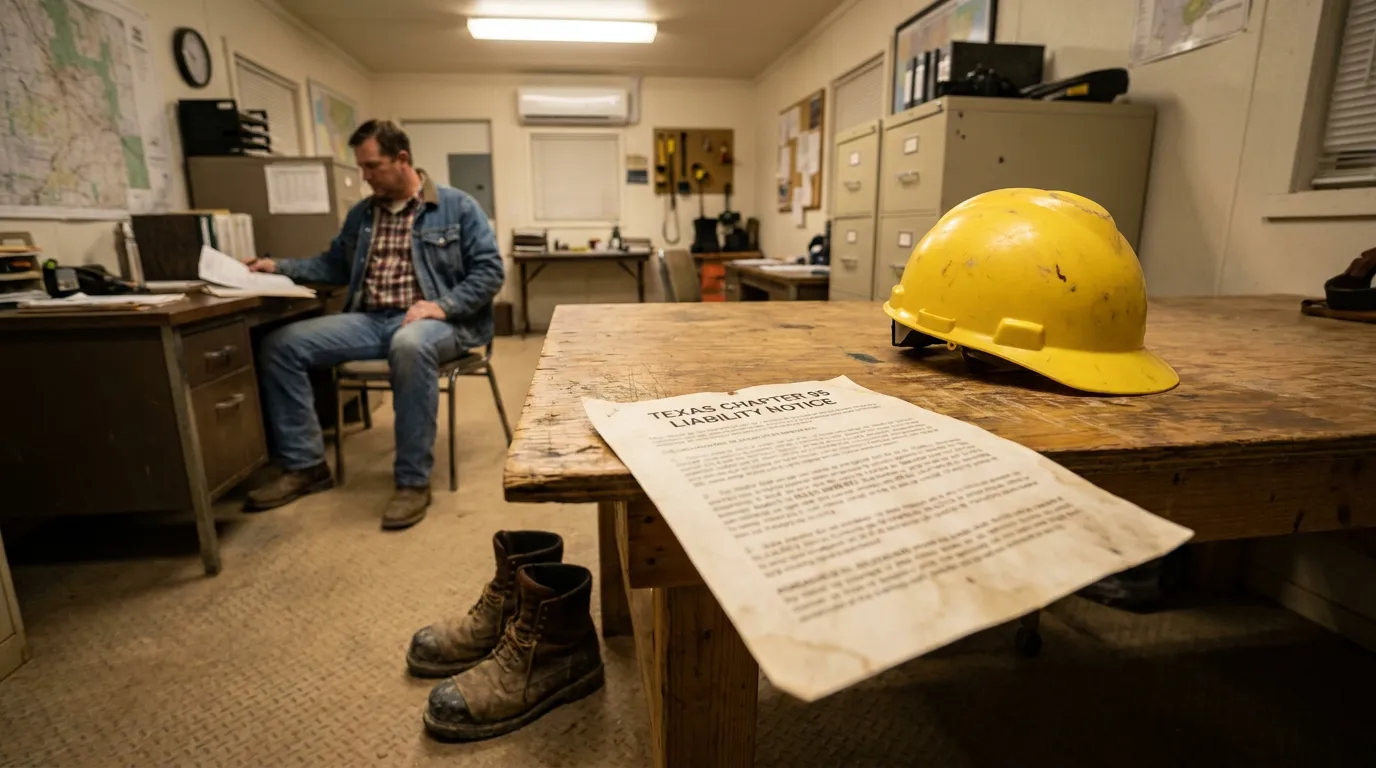
What Is the Texas Chapter 95 Liability Shield?
Chapter 95 is a Texas law that protects commercial property owners from many injury and death claims brought by contractors and their workers. Codified at Tex. Civ. Prac. & Rem. Code §§ 95.001 through 95.004, it became effective September 1, 1996. In plain terms, if you were hurt while building, fixing, or changing something on an owner’s property, this statute makes the owner harder to sue.
Here is the core of it:
Chapter 95 of the Texas Civil Practice and Remedies Code shields commercial property owners from liability when a contractor, subcontractor, or their employee is injured or killed while constructing, repairing, renovating, or modifying an improvement on the property. An injured oilfield worker can overcome it only by proving the owner both (1) retained some control over how the work was performed and (2) had actual knowledge of the danger and failed to adequately warn.
The Chapter 95 liability shield exists because lawmakers decided owners who hire independent contractors should not answer for every hazard on a busy job site. Under §95.003, a property owner is not liable for a contractor’s injury unless a plaintiff meets both statutory prongs. You can read the full statute in the Texas Civil Practice and Remedies Code Chapter 95. The shield is strong, but it is not absolute.
Why Chapter 95 Property Owner Liability Texas Rules Hit Injured Workers Hardest
This statute matters because it often stands between a catastrophically injured worker and full compensation. Texas oilfield workers whose employers subscribe to workers’ compensation generally cannot sue their own employer for negligence. That pushes an injured worker toward the one defendant who may still be answerable: the property owner or operator who controlled the site. Property owners know this, which is why they raise the Chapter 95 defense so aggressively in a Texas Chapter 95 oilfield injury case.
An oilfield worker injury in Texas rarely means a minor bruise. These are amputations, severe burns, spinal cord damage, traumatic brain injuries, and wrongful death caused by heavy equipment and volatile energy. When the injury is this serious, the fight over Chapter 95 decides whether a family can rebuild. This is why understanding whether oil field workers can file third-party claims in Texas matters so much, because that third-party path is the claim Chapter 95 is built to block.
The Two-Part Exception That Defeats the Shield
To overcome Chapter 95, an injured worker generally must satisfy a demanding two-part test under §95.003, and both parts must be proven. Miss either one, and the shield holds. Meet both, and the owner can be held liable.
Prong 1: Property Owner Control Over How the Work Was Performed
The first prong requires proof that the owner exercised or retained some control over the manner in which the work was performed. Under §95.003(1), this means more than the right to order work to start or stop or to inspect progress. Courts look for meaningful direction over how the crew did the dangerous task, and that control may be actual or based on a contractual right to control. Property owner control can appear in contracts, daily safety directives, or an operator dictating methods and equipment on the rig.
Prong 2: Actual Knowledge of the Danger and Failure to Warn
The second prong requires proof that the owner had actual knowledge of the danger or condition that caused the injury and failed to adequately warn. Under §95.003(2), "actual knowledge" means the owner truly knew about the hazard, not merely that a careful owner should have known. This is a strict standard, though courts have recognized actual knowledge may be established through circumstantial evidence. Meeting this Chapter 95 exception often turns on documented complaints, prior incidents, or safety reports showing the owner knew a blowout preventer, scaffold, or chemical line was dangerous and stayed silent.
When Chapter 95 Does Not Apply at All
Sometimes the smartest move is showing the shield never covered the claim in the first place. Chapter 95 governs property owner liability only under narrow conditions. Section 95.002 limits the chapter to claims arising from the "condition or use of an improvement to real property" where the contractor constructs, repairs, renovates, or modifies that improvement. Injuries outside that nexus may sit entirely beyond the statute.
The definition of who the shield protects is also narrower than owners admit. Under §95.001(3), a "property owner" is a person or entity that owns real property primarily used for commercial or business purposes, and in Ineos USA, LLC v. Elmgren (2016) the Texas Supreme Court held the protection does not extend to the owner’s employees or agents.
A significant development came in 2021. In Los Compadres Pescadores, LLC v. Valdez, the Texas Supreme Court issued a mixed ruling confirming Chapter 95 can reach a dangerous condition near an improvement and, importantly for workers, affirmed liability against the property owner. The Court limited the statute to injuries arising from a dangerous condition of the specific improvement being worked on rather than generalized workplace hazards, and confirmed that a worker’s failure to obtain a separate jury finding on actual knowledge does not automatically defeat liability when evidence conclusively establishes that knowledge. You can review a defense-side analysis of how the Texas Supreme Court narrowed Chapter 95’s protections for context. As Paula Wyatt puts it: "When no one is accountable, no one is safe."
Evidence That Wins an Oilfield Accident Claim
Winning an oilfield accident claim under Chapter 95 comes down to building proof that satisfies both prongs and ties the hazard to a catastrophic result. The statute sets a high bar, so evidence must be precise, preserved early, and organized for trial.
Key evidence often includes:
- Master service agreements and site contracts showing who controlled the work and safety methods
- Incident reports, OSHA findings, and prior complaints proving the owner’s actual knowledge
- Witness and coworker testimony about who gave orders on the rig
- Medical records and expert causation proof linking the hazard to permanent disability, severe burns, or wrongful death
💡 Pro Tip: Preserve everything as soon as possible. Photos, text messages, safety-meeting notes, and equipment logs can disappear fast after a serious oilfield incident, and a written request to preserve evidence can protect your rights before records are lost.
How a San Antonio Oilfield Attorney Fights Chapter 95 for You
Overcoming this shield takes a Texas oilfield attorney who reads the statute as a challenge, not a stop sign. Wyatt Law Firm was founded in 1990 by Paula Wyatt, a fierce trial lawyer recognized among the Top 10 Trucking Trial Lawyers and known for decades of standing up to corporate defendants and insurance companies. Our firm has recovered more than $1 billion for clients across Texas in catastrophic injury and wrongful death matters. That record reflects real courtroom fight.
Rooted in San Antonio with reach across Texas, we protect injured oilfield worker rights where competitors go quiet. We investigate control and actual knowledge, retain the right professionals, and prepare every file as if it is going to trial. Outcomes depend on specific facts, and no lawyer can promise a result. What we promise is relentless, prepared advocacy. For us, it’s personal.
Frequently Asked Questions
Does Chapter 95 stop me from suing after an oilfield injury in Texas? No. It limits property owner liability, but it contains a two-part exception under §95.003. If you prove the owner controlled how the work was done and actually knew about the danger, you may still pursue the owner.
What are the two things I must prove to overcome Chapter 95? You must prove both control and actual knowledge. The owner exercised or retained control over how the work was performed and had actual knowledge of the dangerous condition yet failed to adequately warn. Both are required.
What is the difference between "actual knowledge" and "should have known"? Only actual knowledge counts under §95.003(2). "Should have known" describes what a reasonable owner might have discovered, which is not enough. Texas courts treat this as a strict standard, though actual knowledge can be shown through circumstantial as well as direct evidence.
Can I still file a claim if I am getting workers’ compensation? Often, yes. A third-party claim against a property owner or operator is generally separate from workers’ comp benefits you receive from your employer. Learn more in our overview of third-party claims for oil field workers.
Do I owe anything up front to hire Wyatt Law Firm? We handle these cases on a contingency fee, which means if we don’t win your case, you don’t pay a thing. Your focus should be recovery, not invoices.
Standing Up When the Powerful Hide Behind a Statute
Chapter 95 was written to protect commercial property owners, but it was never meant to erase the rights of a worker maimed or killed on the job. The chapter 95 property owner liability texas framework is a shield, not a verdict. With proof of property owner control and actual knowledge, and with the limits courts have recognized since 2021, catastrophically injured workers and grieving families in Texas still have a path to accountability and the compensation they deserve.
You do not have to face the operators and insurers alone. Wyatt Law Firm has recovered more than $1 billion for injured Texans, and we are ready to fight for you on a contingency fee, meaning you owe nothing unless we win. Learn how our team can stand in your corner by visiting Wyatt Law Firm. Let Us Fight for You. Get the Compensation You Deserve.