
If You Were Hurt on a Rig, Here Is What the Operator’s Insurer Will Say
If you were catastrophically injured on an Eagle Ford rig or lost someone you love in a blowout, explosion, or crush accident, you deserve straight answers about the law standing between you and justice. One of the biggest obstacles you will face is a tort-reform statute the site operator’s insurer almost always raises. Understanding texas chapter 95 property owner liability early matters, because this defense can quietly block an otherwise strong oilfield injury claim before it ever reaches a jury. You are not powerless against it, and knowing how it works is the first step to beating it.
Do not let a corporate insurer’s Chapter 95 argument silence you or convince you that your case is over. The experienced San Antonio texas chapter 95 property owner liability lawyer team at Wyatt Law Firm is ready to fight for injured workers and grieving families across South Texas. Call 210-340-5550 or reach out through our free consultation request page to protect your rights today.
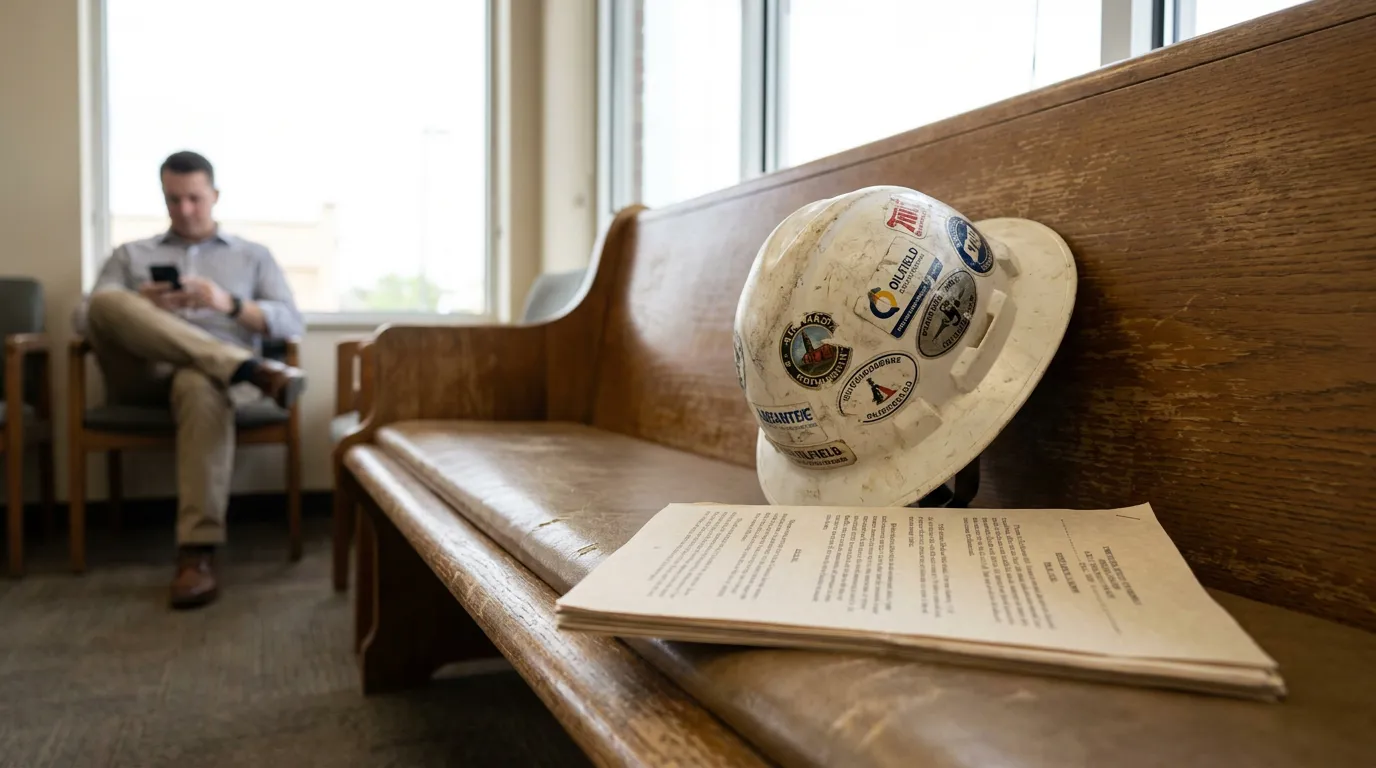
Texas Chapter 95 Property Owner Liability, Explained in Plain English
Texas Chapter 95 is a tort-reform statute, officially titled "Property Owner’s Liability for Acts of Independent Contractors and Amount of Recovery," that shields commercial property owners from many injury claims brought by contractors and their employees. In an oilfield case, it means the site operator or landowner usually cannot be held liable for your injury unless you prove two things: that the owner controlled how the work was done, and that the owner actually knew about the danger and failed to warn you. You must prove both.
This statute has quietly limited worker recoveries for decades. It was added by the 74th Legislature in 1995 and took effect on September 1, 1996, and it remains in force under the current codification found in the Texas Chapter 95 statute within Title 4 of the Civil Practice and Remedies Code. Operators invoke it because, when it applies, it can convert a clear safety failure into a case the defense argues should be dismissed.
💡 Pro Tip: Ask any attorney reviewing your case whether Chapter 95 applies before you assume liability is straightforward. The answer shapes your entire strategy from day one.
Why Chapter 95 Comes Up in Almost Every Oilfield Injury Case
Chapter 95 surfaces in oilfield litigation because the statute is written to cover exactly the kind of work rig hands and pipeline crews perform. Under Tex. Civ. Prac. & Rem. Code § 95.002, the chapter applies to claims for personal injury, death, or property damage asserted by a contractor, subcontractor, or their employee who constructs, repairs, renovates, or modifies an improvement to real property, and only when the claim arises from the condition or use of that improvement. Oilfield accidents often arise from that type of work, but recent decisions require that the hazard relate to the same improvement the worker was servicing, so the statute does not reach every workplace injury.
Who Counts as a "Property Owner"
A "property owner" under this statute is narrower than many workers assume. Section 95.001 defines it as a person or entity that owns real property used primarily for commercial or business purposes, which describes most oil and gas operators and commercial landowners in the Permian and Eagle Ford regions. Because this definition is specific, and because courts have declined to extend it to an owner’s agents or employees, whether a particular defendant even qualifies is a fact question your attorney can challenge.
What Counts as an "Improvement to Real Property"
An "improvement to real property" generally includes the permanent oilfield structures crews build and service. Wells, pipelines, storage tanks, and fixed rigs frequently fall within this language, which is how operators invoke the premises liability oilfield defense. Whether a specific piece of equipment qualifies as an improvement, however, is not automatic and can be contested based on the facts.
The Two-Part Test That Can Block Your Claim
The heart of the Chapter 95 defense is Section 95.003, which bars recovery against the property owner unless you prove both required elements. You can review the plain text of Section 95.003’s two-part test directly, but here is what it means for an injured worker in real terms. Because you must satisfy both prongs, this statute can block an otherwise valid claim when either piece is missing.
Both prongs must be met before an operator can be held accountable. The statute allows liability only when:
- Control: The property owner exercised or retained some control over the manner in which the work was performed, beyond simply ordering work to start or stop, inspecting progress, or receiving reports.
- Actual knowledge: The property owner had actual knowledge of the danger or condition that caused the injury, death, or damage, and failed to adequately warn.
Prong One: Control Over the Manner of Work
Control means the operator dictated how the job was done, not just that it wanted the job finished. Courts distinguish between an owner that directs safety methods and equipment choices and one that merely oversees results. This distinction is fact-intensive, and the outcome often turns on emails, safety directives, and testimony about who actually ran the site.
Prong Two: Actual Knowledge of the Danger
Actual knowledge is a demanding standard, requiring proof the owner truly knew of the specific hazard. Constructive knowledge, meaning the owner "should have known," generally is not enough under Section 95.003, although actual knowledge can be proven through circumstantial evidence rather than only a direct admission. Building this record takes incident reports, prior complaints, and internal documents that show the danger was known and ignored.
How a San Antonio Oilfield Injury Lawyer Fights Back Against Chapter 95
A skilled oilfield injury lawyer does not accept Chapter 95 as the end of the story, because the statute has real limits. The fight is about leveling the playing field between a catastrophically injured worker and a well-funded operator backed by an insurer determined to pay nothing. Paula Wyatt, a nationally recognized trial lawyer for victims of catastrophic injury and wrongful death, approaches these cases prepared to try them, not simply settle them.
Attacking the defense generally happens on several fronts. First, an attorney tests applicability: Was the equipment truly an "improvement," was the injured person actually a "contractor" within the statute, and did the injury arise from the condition or use of the improvement being worked on? Second, the legal team builds the retained-control record and gathers proof of actual knowledge. Finally, counsel leverages recent decisions in which the Texas Supreme Court has narrowed Chapter 95’s protections, including holding that the statute does not protect an owner’s agents or employees and confining it to injuries arising from the same improvement. Whether these arguments succeed always depends on the specific facts of your case.
Chapter 95, Third-Party Claims, and Workers’ Comp: Your Real Path to Recovery
Even when Chapter 95 complicates a claim against the operator, it does not close every door to recovery. Many injured oilfield workers pursue compensation through third-party claims against negligent contractors, subcontractors, or equipment manufacturers whose failures caused a blowout, explosion, or fatal equipment collapse. These claims often exist alongside any workers’ compensation benefits, though comp offsets and subrogation can affect the net recovery.
Understanding how these paths fit together is essential to maximizing what you recover. Chapter 95 governs the property owner’s liability, but it does not shield every defendant, which is why identifying all responsible parties matters so much. Our discussion of filing a third-party claim after an oilfield injury explains the mechanics in greater depth. Outcomes depend on the facts, so a case-specific review is important.
Do Not Wait, Because the Deadline to File Is Ticking
Every oilfield injury claim is governed by a filing deadline, and missing it can permanently bar your case. A statute of limitations is a legally set deadline for filing a lawsuit, and under Texas law these deadlines are found in the Civil Practice and Remedies Code and vary by claim type. If you do not file in time, you will generally lose the right to pursue your claim in court.
Certain narrow exceptions may apply, but courts interpret them strictly. Tolling and discovery-rule arguments can extend a deadline in limited circumstances, but they never apply automatically and should never be assumed. Because catastrophic oilfield cases require months of investigation, waiting to speak with counsel can quietly forfeit your rights.
Frequently Asked Questions
What is Texas Chapter 95 in an oilfield injury case? It is a statute that allows commercial property owners to escape liability for injuries to contractors and their employees, unless the worker proves both control and actual knowledge under Section 95.003.
How can I overcome the Chapter 95 defense? You generally must prove the owner both controlled the manner of the work and had actual knowledge of the danger, and you can also attack whether the statute applies to your facts at all.
Does Chapter 95 stop me from suing the operator or landowner? Not automatically. Its scope is limited and heavily contested, and recent Texas Supreme Court decisions have narrowed who counts as a property owner and when the defense fits.
Can I still recover if Chapter 95 applies? In many cases, yes, through third-party claims against negligent contractors or equipment manufacturers and through available workers’ compensation benefits, subject to offsets.
How long do I have to file an oilfield injury claim in Texas? Deadlines are set by the Civil Practice and Remedies Code and depend on the type of claim, so you should confirm your specific deadline promptly with an attorney.
Standing Up to the Chapter 95 Defense
Chapter 95 is a powerful obstacle, but it is not an automatic bar to justice for a catastrophically injured worker or grieving family. The statute demands proof of control and actual knowledge, its scope is narrower than operators claim, and courts have increasingly limited its reach. With over 40 years of combined experience and more than a billion dollars recovered for clients, Wyatt Law Firm knows how to build the record that defeats this defense and holds powerful operators accountable.
You are not powerless, and your case matters. Make your voice heard and choose a relentless advocate ready to stand between you and the corporations that hurt you by connecting with the team at Wyatt Law Firm today.