
No, Chapter 95 Does Not Bar Every Oilfield Injury Case
If you were catastrophically hurt on a San Antonio oilfield, you have likely heard that Chapter 95 protects the property owner and ends your case. That is not true. Chapter 95 does not apply to every oilfield injury claim, and even when it does, it is not an automatic shield. Understanding texas chapter 95 premises liability rules is the first step in seeing why a blowout, explosion, crush injury, or fatal fall may still lead to full accountability.
If you or someone you love was catastrophically hurt on a San Antonio oilfield, do not let a statute silence you. Call Wyatt Law Firm at 210-340-5550 or reach out through our confidential case review form to discuss your options. With over $1 billion recovered and more than 40 years fighting corporate defendants and insurers, our texas chapter 95 premises liability lawyer team knows how to hold negligent owners answerable.
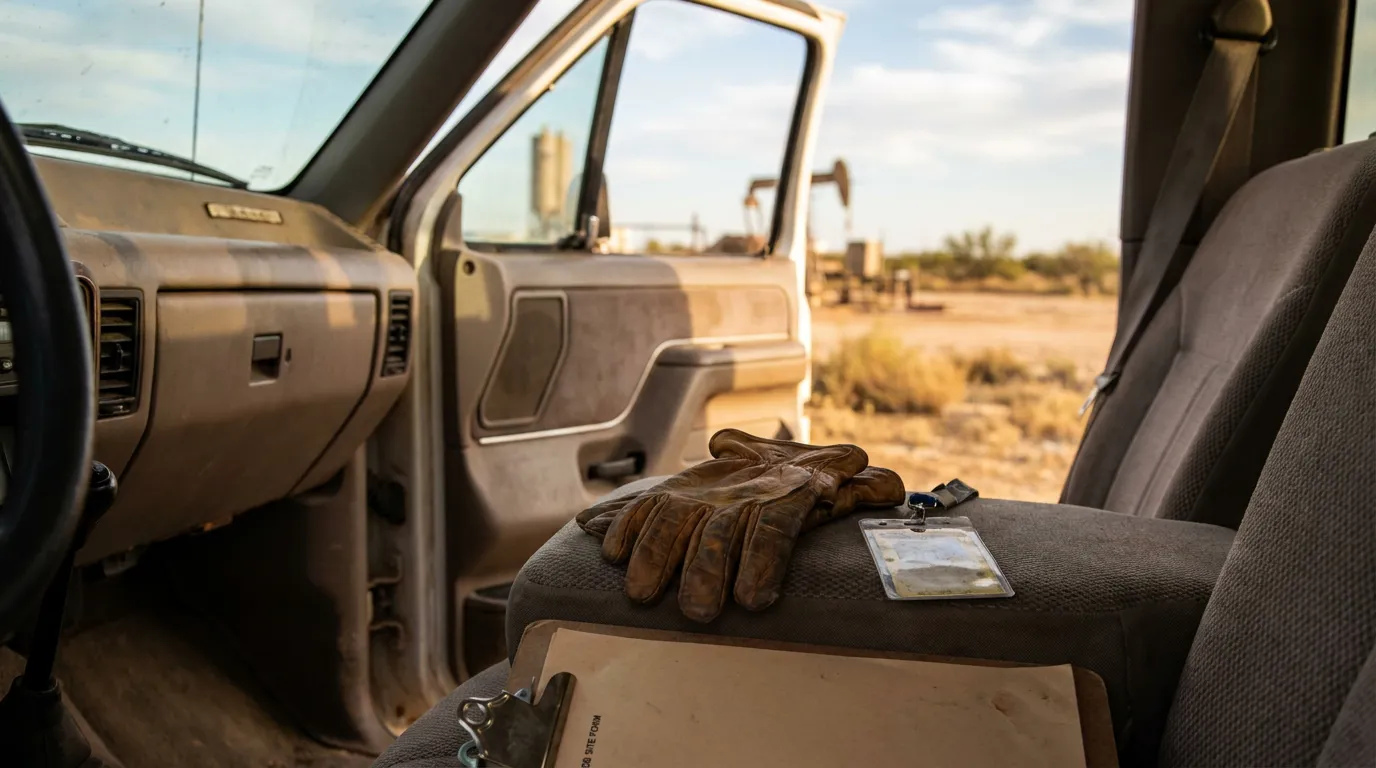
What Is Texas Chapter 95, in Plain English?
Texas Chapter 95 limits a property owner’s liability for injuries to contractors, subcontractors, and their employees. It applies only when two conditions are met: the claim is against a property owner, contractor, or subcontractor for injury to a contractor or their employee, and the injury arises from the condition or use of an improvement to real property the contractor was working on. Even when it applies, an injured worker can still recover by proving the owner retained control over how the work was done, had actual knowledge of the danger, and failed to adequately warn.
Formally titled "Property Owner’s Liability for Acts of Independent Contractors and Amount of Recovery," the statute was added by Acts 1995, 74th Leg., ch. 136, § 2, effective September 1, 1996. You can read the full Chapter 95 statute text to see the exact language courts apply. The key takeaway: Chapter 95 limits liability but does not guarantee immunity.
When Does Chapter 95 Apply? The Two-Part Test
Chapter 95 applicability turns on a strict two-part test, and both prongs must be satisfied. Under Tex. Civ. Prac. & Rem. Code § 95.002, the chapter applies only to a claim (1) against a property owner, contractor, or subcontractor for personal injury, death, or property damage to an owner, contractor, subcontractor, or their employee, AND (2) that arises from the condition or use of an improvement to real property where that contractor constructs, repairs, renovates, or modifies the improvement.
Here is the test broken down:
- Prong 1 (Who and what kind of claim): The defendant must be a property owner, contractor, or subcontractor, and the injured person must be a contractor, subcontractor, or their employee.
- Prong 2 (What caused the harm): The injury must arise from the condition or use of an improvement to real property that the contractor was building, repairing, renovating, or modifying.
If either prong fails, the statute does not apply. That is why careful factual investigation matters from day one.
Prong 1: Who Counts as a "Property Owner"?
A "property owner" is narrowly defined. Section 95.001(3) defines a property owner as "a person or entity that owns real property primarily used for commercial or business purposes." Most drilling sites are commercial land, so operators often meet this definition. But a subcontractor, staffing company, equipment supplier, or an owner’s employee or agent that does not actually own the site generally cannot claim the statute’s protection.
Prong 2: What Is an "Improvement to Real Property"?
The improvement to real property question is frequently where an oilfield case is won or lost. Proposed legislative language in Tex. H.B. 1288 described an improvement as a structure permanently affixed to or incorporated into real property. You can review how Texas defines an improvement in that bill text. Texas courts apply a broad, case-by-case definition, and some temporary structures have been treated as improvements. If your injury came from mobile equipment, a portable rig component, or a temporary structure rather than a permanent fixture, the second prong may be harder to satisfy.
When Chapter 95 Does NOT Apply to Your Oilfield Injury
Several common oilfield situations fall completely outside Chapter 95, leaving the owner exposed to ordinary negligence liability.
- The harm did not arise from an improvement. A defective portable tool, chemical release, or unsafe transport may not involve a permanent improvement to real property.
- The defendant is not the legal owner. In Ineos USA, L.L.C. v. Elmgren, No. 14-0507 (Tex. June 17, 2016), the Texas Supreme Court held that Chapter 95’s protection extends only to the actual legal owner of the premises, not to the owner’s agents or employees.
- The injured person or the work does not fit the statute. If you were not a contractor, subcontractor, or their employee working on that improvement, the chapter may not apply.
Even When It Applies, Here Is How Injured Workers Still Win
Chapter 95 exceptions exist so owners cannot hide behind a statute after a preventable tragedy. Under Tex. Civ. Prac. & Rem. Code § 95.003, a property owner is not liable for a contractor’s or employee’s injury or death unless: (1) the property owner exercises or retains some control over the manner in which the work is performed, other than the right to order the work to start or stop or to inspect progress or receive reports; and (2) the property owner had actual knowledge of the danger or condition resulting in the injury and failed to adequately warn. Proving this "control plus actual knowledge plus failure to warn" standard is the roadmap to recovery.
This is a demanding two-part burden. A worker must show both that the owner controlled how the dangerous work was done and that the owner actually knew of the specific hazard and failed to adequately warn. The outcome depends heavily on evidence such as safety directives, incident reports, and witness testimony.
What Texas Courts Have Said About Texas Chapter 95 Premises Liability
Texas Supreme Court decisions have both broadened and narrowed the statute. In Abutahoun v. Dow Chemical Co., 463 S.W.3d 42 (Tex. 2015), the Court held that Chapter 95 reaches all independent-contractor negligence claims when the § 95.002(2) requirements are met, not just pure premises-defect theories. Simply re-labeling a claim as "ordinary negligence" will not dodge the statute if both prongs are satisfied.
But the Court has also drawn hard limits that favor workers. In Los Compadres Pescadores, LLC v. Valdez, No. 19-0643 (Tex. Mar. 26, 2021), the Texas Supreme Court narrowed Chapter 95, holding that the injury must arise from a dangerous condition of the specific improvement the worker was building, repairing, renovating, or modifying, not the workplace in general. Paula Wyatt, a nationally recognized trial lawyer and Top 10 Trucking Trial Lawyer honoree, uses this body of law to expose the gaps corporate defendants hope you never find.
Chapter 95, Workers’ Comp, and Third-Party Claims for San Antonio Oilfield Workers
For most oilfield worker injury Texas situations, Chapter 95 sits atop a larger question: workers’ compensation versus a third-party claim. Workers’ compensation generally covers medical care and lost wages regardless of fault but does not fully compensate catastrophic loss. A separate action against a negligent property owner, operator, or equipment maker can pursue the full measure of damages. Learn more about a third-party claim after an oilfield injury and how it works alongside comp benefits.
These fights play out across Texas energy country, from the Eagle Ford Shale near San Antonio to the Permian Basin and Gulf Coast offshore platforms. The catastrophic force of a blowout, well explosion, or derrick collapse leaves families facing severe burns, amputations, spinal cord damage, and wrongful death. A seasoned San Antonio oilfield accident lawyer can map how Chapter 95, comp, and third-party liability intersect for your specific incident.
💡 Pro Tip: Preserve everything early. Photographs of the equipment, names of on-site supervisors, safety meeting records, and the identity of the actual landowner can determine whether Chapter 95 even applies.
Frequently Asked Questions
Does Chapter 95 apply to every oilfield injury in Texas? No. Both prongs of the § 95.002 test must be met: the right parties and an injury arising from the condition or use of an improvement to real property. When either prong fails, the statute does not govern.
Can I still sue the property owner if Chapter 95 applies? Yes. Section 95.003 allows recovery if you prove the owner retained control over how the work was performed, had actual knowledge of the danger, and failed to adequately warn.
What counts as an "improvement to real property" on an oil rig? Generally, a structure permanently affixed to or incorporated into the land, though Texas courts apply a broad, fact-specific definition. Temporary items such as scaffolding, ladders, and mobile equipment may fall outside the statute.
Does calling my case "ordinary negligence" get around Chapter 95? No. Under Abutahoun, re-labeling the theory will not avoid Chapter 95 if the two-part applicability test is met, so the analysis focuses on the facts, not the label.
How soon should I act on a Texas oil rig injury claim? As soon as possible. Evidence disappears quickly, and civil deadlines apply, so early legal review helps protect your rights.
The Statute Is Not the Final Word on Your Case
Chapter 95 is a limit on property-owner liability, not a locked door, and texas chapter 95 premises liability rules leave real paths to justice for catastrophically injured workers. The statute applies only when a narrow two-part test is met, several oilfield scenarios fall outside it, and even when it applies, exceptions can open the way to full accountability. A statute written in dense legal language should never scare a grieving family away from the answers and compensation they deserve.
You Are Not Powerless. Make your case matter and let a firm with the courage and record to take on the energy industry stand in your corner. Reach out to Wyatt Law Firm today, and let us fight to hold the responsible parties accountable.