
Understanding Blowout Preventers and Why They Fail on Texas Oil Rigs
Key Takeaways: Blowout preventers (BOPs) are critical safety devices preventing uncontrolled releases during drilling. BOP failures on Texas rigs stem from rubber component degradation, ram washouts, and maintenance certification gaps. Texas law provides multiple avenues for holding operators liable, and injured workers may pursue claims beyond workers’ compensation when gross negligence is involved. The Texas Railroad Commission tracked at least 56 blowout incidents between 2016 and 2019.
A blowout preventer is a mechanically complex valve assembly installed at the wellhead to seal, control, and monitor oil and gas wells during drilling. When functioning properly, a BOP acts as the last line of defense against uncontrolled releases, preventing catastrophic blowouts that can kill or permanently disable rig workers. BOPs use hydraulic rams and annular sealing elements to shut in a well when pressure surges beyond safe limits. When these systems fail, the consequences are devastating: explosions, fires, toxic gas exposure, severe burns, traumatic brain injuries, and death.
If you have been catastrophically injured in a rig blowout or BOP malfunction, Wyatt Law Firm is prepared to fight for the full compensation you deserve. Call Paula Wyatt at 210-340-5550 or reach out for a case review today.
How BOP Equipment Fails and Causes an Oil Rig Blowout
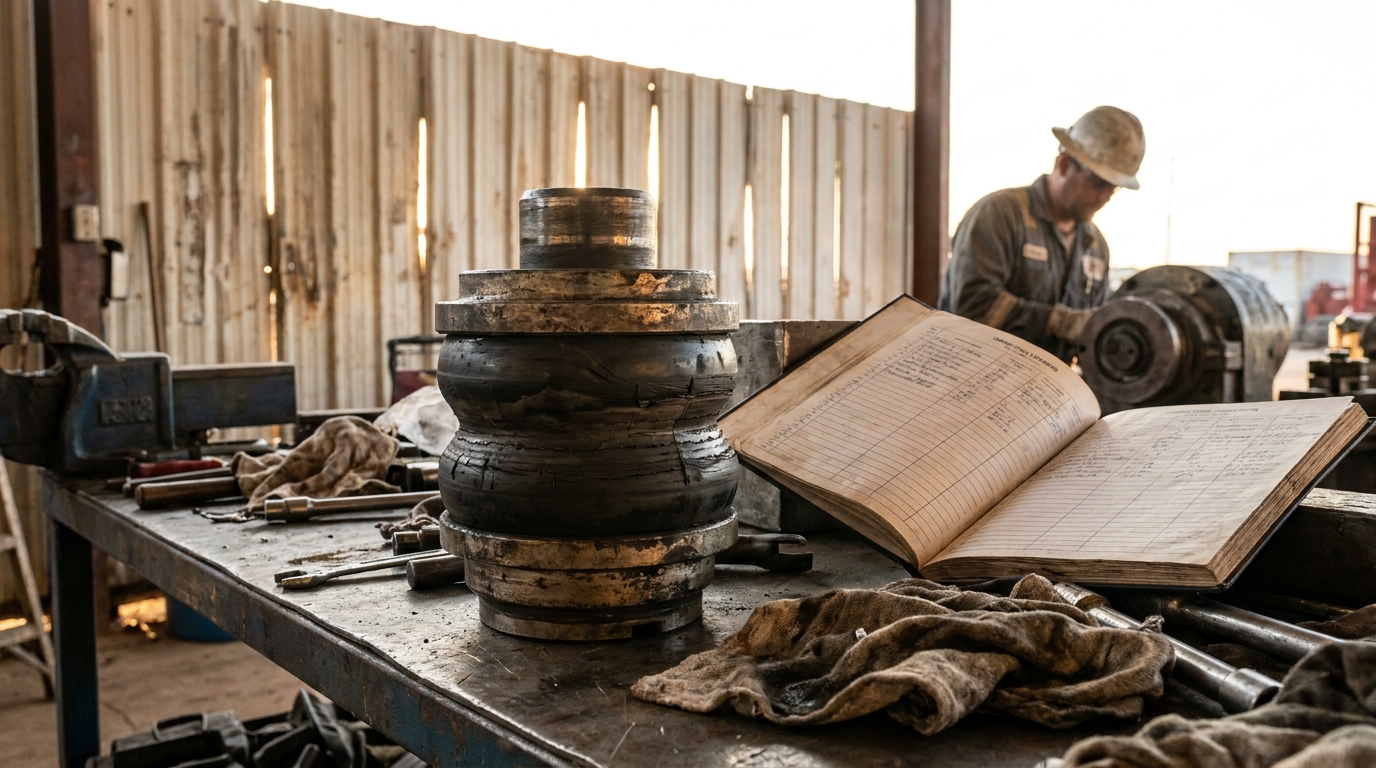
Blowout preventer failures occur through several mechanical and material breakdown pathways, each capable of turning routine drilling into fatal disaster. One common failure mode involves rubber component degradation. Texas Railroad Commission records document cases where "rubbers failed on the BOP causing the uncontrolled release of CO2 and approximately 5 barrels of produced water." Rubber seals inside BOPs face extreme pressure, heat, and corrosive well fluids. When these components degrade, the BOP cannot form the seal needed to contain well pressure.
Ram failures represent another critical breakdown point. State records document incidents where BOP rams washed out entirely, with one report noting a "stuffing box blew out because BOP and rams had washed out." When rams fail, there is no mechanical barrier between the high-pressure formation and the rig floor. BOP-related failures have contributed to blowouts across multiple Texas counties, as documented in Texas Railroad Commission records, but the specific incidents attributed to Gaines County (BOP ram washouts), Karnes County (orphaned well pressure buildup), and Frio County (stuffing box packing failures) as BOP-related failures cannot be independently verified in public regulatory records. Additionally, orphaned well pressure buildup is a distinct phenomenon from BOP mechanical failure and should not be categorized as a BOP-related failure mechanism.
Overnight Failures and Unmonitored Risk
Some of the most dangerous BOP failures occur when rigs are not actively monitored. BOP failures during overnight or unmonitored shut-in operations are a recognized risk in the oil and gas industry. Annular BOPs and ram BOPs are distinct device types and each can fail and contribute to blowouts; however, specific incidents described in marketing materials with precise timestamps and the phrase "annular BOP rams" cannot be independently verified in public regulatory records and use technically imprecise terminology. These nighttime blowouts leave workers with no warning and no time to reach safety.
💡 Pro Tip: If you were injured during an overnight or shut-in period when monitoring was reduced, this fact may strengthen a negligence claim by showing the operator failed to maintain adequate safety protocols.
Texas Regulatory Standards for BOP Equipment
Texas Statewide Rule 13 establishes the baseline safety requirements for blowout preventer equipment on every well in the state. Under Section §3.13(a)(6)(B)(vii), all BOP control equipment must be "consistent with API Standard 53," which covers recommended practices for BOP equipment systems. The Railroad Commission requires that BOP control equipment be certified as operable every five years by an independent testing company, including verification of closing unit valving, pressure gauges, and accumulator fluids.
The "Consistent With" Standard and Its Limitations
The RRC deliberately chose the phrase "consistent with" API Standard 53 rather than requiring strict compliance. According to the Commission’s clarification of well control issues, this language was selected "to preserve the flexibility already built into this publication and to accommodate flexibility with respect to sound engineering and operations." This gives operators room for engineering judgment, but also creates ambiguity that negligent operators may exploit to justify cutting corners.
The Commission has also acknowledged that the term "certification" for BOP operability lacks a clear definition in either API standards or Rule 13 itself. For injured workers, this means an operator may claim its equipment was "certified" without meeting rigorous testing that API Standard 53 actually contemplates.
💡 Pro Tip: Request copies of the BOP certification records for the rig where your injury occurred. An operator’s inability to produce valid, timely certification documents can be powerful evidence of negligence.
Equipment Specification Gaps
API Standard 53 references API 16C for choke and kill systems, which imposes strict material and specification requirements. Under API 16C, Section 1.4.2, valves must meet a minimum Product Specification Level (PSL) of 3 and material class EE. Many aging rigs across Texas continue operating with equipment that predates these requirements, creating serious risk for workers.
| BOP Failure Type | Documented Cause | Potential Consequence |
|---|---|---|
| Rubber seal degradation | Exposure to heat, pressure, corrosive fluids | Uncontrolled release of gas and fluids |
| Ram washout | Mechanical wear and erosion | Complete loss of well containment |
| Annular BOP ram failure | Failure during shut-in or overnight periods | Blowout with no crew warning |
| Non-compliant choke/kill valves | Outdated PSL or material class components | Inability to control well pressure during kick |
| Certification gaps | Undefined testing standards | Undetected equipment deficiencies |
💡 Pro Tip: If your injury involved equipment that had not been recertified within the five-year window required by Rule 13, document this immediately. Lapsed certification is strong evidence of regulatory noncompliance.
Legal Liability When a BOP Fails on a Texas Rig
Texas law imposes significant duties on drilling operators with respect to well equipment and safety. Under Texas Natural Resources Code Chapter 89, operators bear primary responsibility for the physical operation and control of wells. When a BOP fails and causes catastrophic oil field injuries, the operator’s duty to maintain safe equipment becomes a central liability issue.
Texas Natural Resources Code § 91.101 grants the Railroad Commission authority to adopt and enforce rules and orders to prevent pollution of surface water or subsurface water in the state, relating to the drilling of wells, production of oil and gas, and the discharge, storage, handling, and disposal of oil and gas waste. An operator’s failure to maintain a blowout preventer in working order may constitute a violation of regulatory standards, supporting a negligence per se argument.
When Liability Protections Disappear
Operators who handle oil and gas waste may receive certain liability protections under Texas Natural Resources Code § 122.003, but those protections do not eliminate liability in actions for damages arising from exposure to fluid oil and gas waste or a treated product. Under the current Texas Natural Resources Code § 122.003(b), the liability protection for persons who treat fluid oil and gas waste for beneficial use does not eliminate their liability in an action for damages for personal injury, death, or property damage arising from exposure to fluid oil and gas waste or a treated product. Language limiting liability except for "gross negligence or intentional, wrongful act or omission" appears in proposed amendments (see HB 49, 89th Texas Legislature, 2025) and is not part of the current codified statute. In BOP failure cases, plaintiffs often allege that operators knowingly ignored maintenance protocols, training requirements, or certification deadlines. When proven, this conduct may expose defendants to full tort liability, including exemplary damages where authorized.
💡 Pro Tip: Gross negligence is not just carelessness. It involves conscious indifference to the rights, safety, or welfare of others. If your employer knew about BOP deficiencies and chose production over safety, that may qualify.
Workers’ Compensation and Third-Party Claims After a Blowout
Texas is the only state where private employers are not required to carry workers’ compensation insurance. Under Texas Labor Code § 406.002, employers may elect to obtain coverage, but the decision is voluntary. This means many oil field workers injured in a blowout may not have access to workers’ comp benefits and may need to pursue direct negligence claims against the operator, drilling contractor, or equipment manufacturer.
For workers whose employers do carry coverage, workers’ compensation generally serves as the exclusive remedy against the subscribing employer, but does not prevent separate third-party lawsuits. Under Texas Labor Code § 402.084(b)(7), workers’ compensation claim information may be released to third-party litigants in lawsuits arising from the same incident. This allows injured workers or their families to access claim records that can help build a negligence or products liability case against responsible parties beyond the employer. To better understand what causes an oil rig blowout, workers should examine both mechanical failures and the chain of negligent decisions that allowed those failures to happen.
The Scope of Documented Blowouts in Texas
The Texas Railroad Commission tracked at least 56 blowout and well control incidents across the state between 2016 and 2019. These incidents spanned counties from the Eagle Ford to the Permian Basin, involving fields such as Phantom (Wolfcamp) in Reeves County and Pearsall (Buda Lime) in Frio County. Each incident represents a moment where workers faced life-threatening danger because safety equipment failed.
💡 Pro Tip: RRC incident records are public and can serve as valuable evidence in a BOP failure lawsuit. These records often document the operator’s name, the cause of the blowout, and the equipment that failed.
Frequently Asked Questions
1. What is a blowout preventer and how does it protect rig workers?
A blowout preventer is a large valve system installed at the wellhead designed to seal and control a well during drilling. It uses hydraulic rams and annular elements to shut in the well if pressure exceeds safe limits, preventing uncontrolled releases that can cause explosions, fires, and fatal injuries.
2. How often must BOP equipment be certified in Texas?
Under Texas Statewide Rule 13, BOP control equipment must be certified as operable every five years by an independent testing company. However, the RRC has acknowledged that "certification" itself lacks a clear definition, which may affect what testing actually occurs.
3. Can I sue my employer if I was hurt in a BOP failure on a Texas rig?
Your ability to sue depends on whether your employer carries workers’ compensation insurance. If your employer is a subscriber, workers’ comp generally provides your exclusive remedy against the employer, but you may still pursue third-party claims. If your employer is a non-subscriber, you may file a direct negligence lawsuit.
4. What makes a BOP failure case involve gross negligence?
Gross negligence requires showing that the defendant had actual awareness of a risk and consciously chose to disregard it. Evidence that an operator knew about degraded rubber seals, lapsed certifications, or non-compliant equipment and continued operations without repair may support a gross negligence finding, opening the door to exemplary damages.
Protecting Your Rights After a Catastrophic Oil Rig Blowout
A blowout preventer failure is not just a mechanical problem, it is the result of choices made by operators, contractors, and equipment providers who prioritized production over worker safety. Texas law provides meaningful legal pathways for injured rig workers and their families to hold these parties accountable, from regulatory noncompliance arguments under Rule 13 to gross negligence claims that strip away liability protections. Every day that passes after an injury, critical evidence may disappear.
Paula Wyatt and the Wyatt Law Firm fight relentlessly for oil field workers and families devastated by preventable disasters. Call 210-340-5550 or contact us today to discuss your case with a legal team that will stand by your side.