
How a Coworker’s Mistake Cannot Shield a Non-Subscriber Employer
A blowout on a Texas rig can turn a routine shift into a fight for your life in seconds. When a coworker’s error triggers an explosion, dropped drill string, or high-pressure release, injuries are rarely minor, severe burns, traumatic brain injuries, amputations, and deaths that shatter families. If your employer opted out of workers’ compensation, you may have heard you cannot sue because a fellow employee caused the harm. That is wrong. Under texas labor code 406.033, a non-subscriber employer cannot escape responsibility by blaming a coworker. Our San Antonio texas labor code 406.033 lawyer team has watched corporate defendants try this tactic, and we know how to shut it down.
If you or someone you love was catastrophically hurt on an oilfield, you should not face the operator’s lawyers alone. Wyatt Law Firm has recovered more than $1 billion for injured people and grieving families, and we are ready to stand in your corner. Call us at 210-340-5550 for a FREE CONSULTATION, or reach out now to protect your rights before critical evidence disappears.
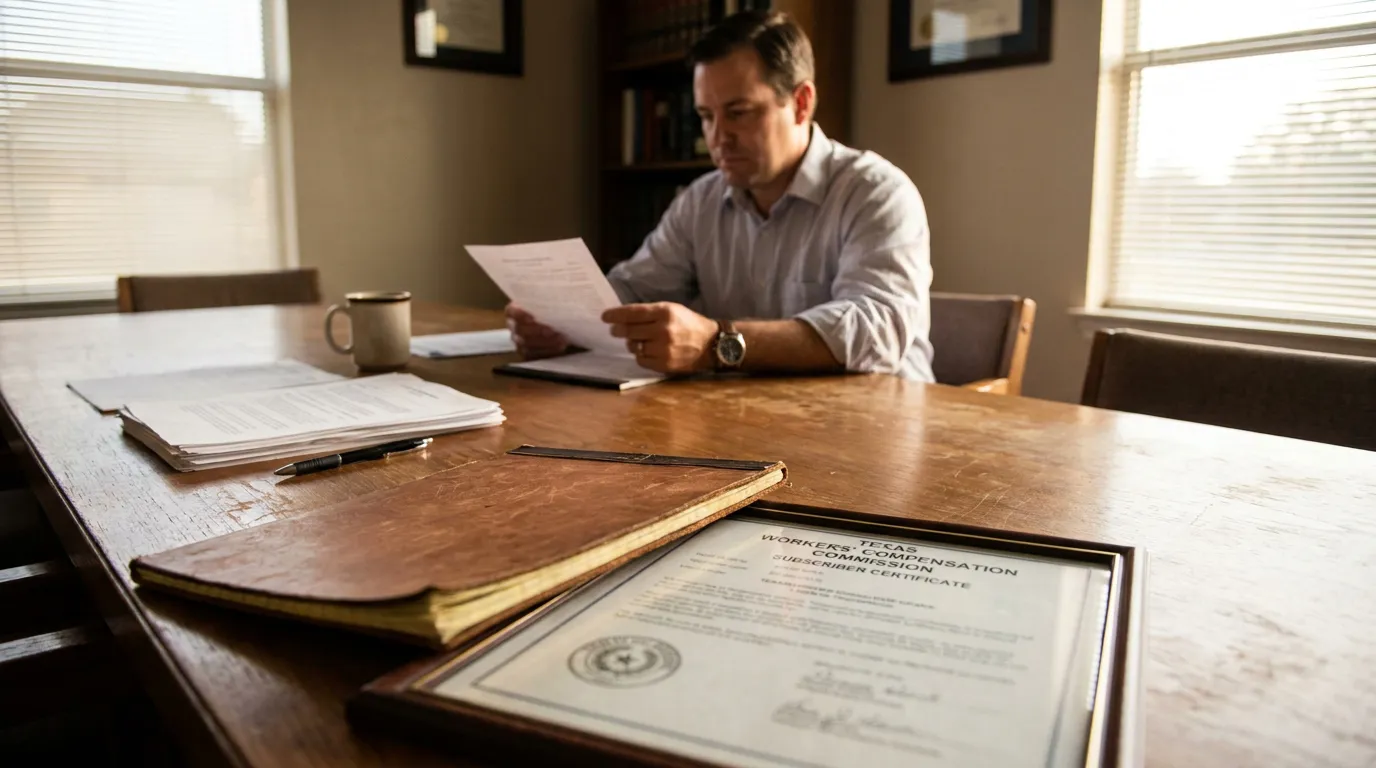
What a Non-Subscriber Employer Actually Is in Texas
A non-subscriber is an employer that has opted out of the state workers’ compensation system. Under Texas Labor Code § 406.033, a non-subscriber cannot use the fellow servant rule, meaning it cannot escape liability by blaming a coworker’s negligence for your injury. Texas is the only state that lets private employers opt out this way.
This opt-out is a formal, regulated choice. An employer that declines coverage must notify the Division of Workers’ Compensation in writing (Tex. Lab. Code § 406.004(a)). You can review the state’s explanation through the Texas Department of Insurance non-subscriber rules.
The trade-off for opting out is steep and favors injured workers. When an employer becomes a non-subscriber, it gives up the legal shield that a covered employer enjoys. Injured employees may sue that employer directly for negligence, and the opt-out decision strips the company of common-law defenses, broadening employer liability rather than shrinking it.
How Texas Labor Code 406.033 Kills the Fellow Servant Rule
The fellow servant rule was an old common-law defense that let employers avoid liability when a coworker caused the injury. For generations, an employer could argue that because a fellow employee made the mistake, it owed the injured worker nothing. That doctrine has been abolished for non-subscribers. The governing statute, Texas Labor Code § 406.033, states plainly that it is not a defense that the injury or death was caused by the negligence of a fellow employee (§ 406.033(a)(3)).
This traces back more than a century. The current statutory language remains substantially similar to the original 1913 Act, reflecting a legislative decision to penalize employers who refuse coverage. The Texas Supreme Court has recognized that the Act discouraged the opt-out choice by abolishing traditional common-law defenses for non-subscribers (Tex. Workers’ Comp. Comm’n v. Garcia, 893 S.W.2d 504, 511).
The Three Defenses a Non-Subscriber Loses
Section 406.033(a) strips three powerful weapons from the employer’s hands. When a company opts out, it forfeits defenses that covered employers can still raise:
- Contributory negligence, the argument that your own carelessness bars recovery.
- Assumption of risk, the argument that you knew the job was dangerous and accepted it.
- The fellow servant rule, the argument that a coworker’s error, not the employer, caused your injury.
What remains for the employer is narrow. After § 406.033 does its work, a non-subscriber generally keeps only two limited statutory defenses under § 406.033(c): that the employee intended to bring about the injury, and that the injury occurred while the employee was intoxicated. A non-subscriber may still contest whether it was actually negligent and may attribute fault to responsible third parties, but it cannot revive the three barred defenses. That is a dramatic shift in leverage toward the injured worker.
Why This Fight Matters for San Antonio Oilfield Workers
Oilfield work carries some of the most catastrophic injury risks in Texas. Blowouts, well explosions, hydrogen sulfide exposure, falls from derricks, and crushing equipment failures can cause permanent disability or death in an instant. For more than 40 years, we have taken on powerful corporate interests that harm working people.
Non-subscriber status is common in this industry and changes everything about your claim. When an oil and gas company or drilling contractor opts out of workers’ compensation, an injured worker can pursue a direct negligence claim rather than accepting limited comp benefits. That matters enormously for a worker facing a lifetime of medical care.
When a Labor Agent or Staffing Crew Supplies the Workers
Many Permian Basin and Eagle Ford crews are supplied through labor agents and staffing companies, creating an added layer of potential accountability. Texas law recognizes that more than one company may be responsible for a contract worker’s injury. In many staffing arrangements, a client company can qualify as a joint or borrowing employer through its right to control the work, and it may also face direct liability for its own negligence in supervising the site or crew. Texas does impose joint and several liability in one specific context: under Tex. Lab. Code § 406.163(b), governing migrant and seasonal farm and ranch workers, if a labor agent supplying such workers lacks workers’ compensation coverage, the contracting company is jointly and severally liable. Because that statute is limited to agricultural labor, an injured oilfield contract worker’s path to holding the operator accountable usually runs through joint-employer and direct-negligence principles.
This layered-liability analysis can determine whether an injured contract worker recovers anything. We investigate the full chain of companies involved so no negligent operator hides behind a staffing arrangement.
What You Still Have to Prove and the Backdoor Employers Try
Losing the fellow servant rule does not mean the case proves itself. Section 406.033(d) provides that the plaintiff must prove the negligence of the employer, or of an agent or servant of the employer acting within the general scope of employment, and that this negligence proximately caused the injury. Proximate cause means the employer’s negligence was a real, substantial reason the harm happened.
Here is the part most articles skip, and it can decide your case. Even though the three defenses are formally abolished, defense lawyers try to bring them back through the backdoor. Legal scholarship on non-subscriber defenses has documented how courts sometimes accept an employer’s attempt to attack the duty and proximate-cause elements of the claim, effectively reviving the barred defenses under a different name.
The stakes of proving causation are high. Once negligence and proximate cause are established, a non-subscriber cannot reduce what it owes by blaming the injured worker’s own carelessness, so an employer whose fault was a proximate cause can be liable for full damages even where its share of fault is slight, though it may still try to shift responsibility to other at-fault parties. That is why the defense fights so hard on causation. We counter with meticulous preparation, including detailed 61-page settlement and mediation presentations that document how corporate negligence caused catastrophic harm.
💡 Pro Tip: After a serious oilfield incident, ask in writing whether your employer is a subscriber or non-subscriber to workers’ compensation. That single answer can reshape your entire legal strategy.
Non-Subscriber Claim vs. Workers’ Comp vs. Third-Party Claim
These three paths are not the same, and confusing them can cost you. A non-subscriber claim is a direct negligence lawsuit against your own opt-out employer. A workers’ compensation claim is a no-fault benefit available only when the employer carries coverage. A third-party claim targets someone other than your employer, such as an equipment manufacturer or separate contractor on site.
| Path | Who You Pursue | Must You Prove Fault? |
|---|---|---|
| Non-subscriber claim | Your opt-out employer | Yes, negligence and causation |
| Workers’ compensation | Covered employer’s insurer | No, benefits are no-fault |
| Third-party claim | A separate at-fault company | Yes, negligence and causation |
In catastrophic oilfield cases, more than one path may apply at once. A worker hurt by defective equipment on a non-subscriber’s site might have both a direct negligence claim and a separate product claim. To understand how outside defendants fit in, see our guide to a third-party claim after an oilfield injury.
Frequently Asked Questions
Can my employer blame a coworker for my oilfield injury in Texas? No. If your employer is a non-subscriber, the fellow servant rule is barred under § 406.033(a)(3), so the company cannot avoid liability by pointing to a coworker’s mistake as long as the employer’s own negligence played a part.
What is Texas Labor Code 406.033? It is the statute that penalizes non-subscribing employers by stripping away three common-law defenses: contributory negligence, assumption of risk, and the fellow servant rule.
Do I still have to prove anything if my employer is a non-subscriber? Yes. Under § 406.033(d), you must prove that the employer, or its agent acting within the scope of employment, was negligent and that this negligence proximately caused your injury.
What if a staffing company or labor agent supplied the crew? More than one company may be responsible. A client company can be a joint or borrowing employer through its right to control the work and can be sued for its own negligence. Section 406.163(b) makes a contracting company jointly and severally liable when an uninsured labor agent supplies migrant or seasonal workers, though that provision is limited to farm and ranch labor.
How much fault does the employer need to owe damages? Because a non-subscriber cannot offset its liability with the injured worker’s own negligence, an employer whose fault was a proximate cause can owe full damages even where its share of fault is slight, subject to any fault attributed to responsible third parties.
Standing Between Injured Workers and Corporate Denials
A non-subscriber employer in Texas cannot hide behind a coworker’s mistake, and you deserve an advocate who knows how to prove it. The abolished defense doctrine under texas labor code 406.033 puts the law on your side, but insurers and corporate defense teams will still fight duty and causation to protect their bottom line. Paula Wyatt is a fierce, relentless trial lawyer, recognized among the Top 10 Trucking Trial Lawyers, who has spent decades fighting for victims of catastrophic injury and wrongful death. When operators try to sneak barred defenses through the backdoor, we are your voice.
You have carried enough. Let us carry the fight. If you were seriously hurt or lost a loved one in an oilfield disaster, the attorneys at Wyatt Law Firm are ready to stand with you, and if we do not win, you do not pay. Get justice. Get compensation.